Key Takeaways
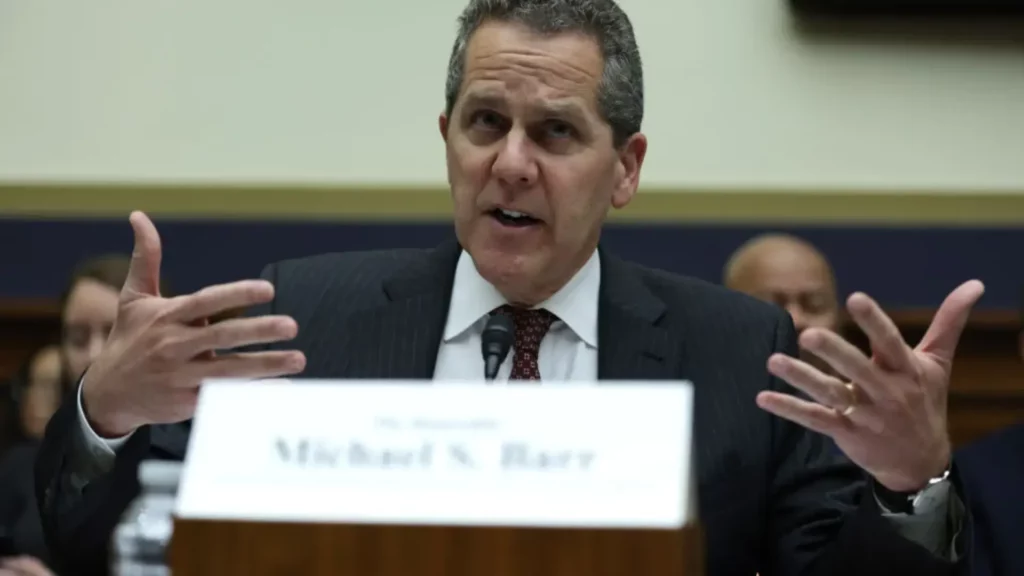
- Federal Reserve Vice Chair Michael Barr, known for his strict anti-crypto stance, will resign on Feb. 28.
- Barr’s exit could herald a shift towards a more crypto-friendly regulatory environment.
- His successor might ease restrictions on banks’ engagement with crypto.
Michael Barr, the Federal Reserve’s Vice Chair for Supervision, has announced his resignation effective Feb. 28, setting the stage for potential shifts in U.S. financial regulation, particularly the crypto industry.
Barr had initially planned to serve his full term until July 2026; however, he has decided to resign to avoid conflict with the incoming administration.
Despite his resignation, Barr will remain a member of the Fed’s board of governors.
Barr’s Crypto Stance
Throughout his tenure, Barr was a vocal advocate for strict cryptocurrency regulations.
He consistently opposed banks holding crypto assets on their balance sheets, a position that widened the rift between traditional financial institutions and the crypto industry.
“At this stage of development, banks should adopt a careful and cautious approach to engaging in crypto-asset-related activities,” Barr said.
His efforts included a crackdown on stablecoins and an initiative to limit crypto companies’ access to banking, known as Operation Chokepoint 2.0.
Barr’s departure coincides with significant developments in the crypto world, including the nearing conclusion of the Ripple-SEC case.
His advisory role with Ripple further highlights his complex relationship with the crypto industry.
Potential Shifts in Crypto Regulation
With Barr stepping down, there’s speculation that his successor could usher in a more crypto-friendly era. Rumors indicate Fed Governor Michelle Bowman, known for her openness to blockchain technology, may take over the role.
Bowman has explored the potential of tokenization, questioning whether tokenized financial products could replicate traditional bank deposits and payment systems while maintaining legal protections for customers.
She also raised the possibility of the Fed controlling its own ledger for a central bank digital currency (CBDC).
Additionally, Barr’s resignation could lead to the end of Operation Chokepoint 2.0, ultimately opening the door for banks to engage more actively with the crypto industry.
A more favorable regulatory environment might encourage banks to adopt blockchain technology and explore crypto-based financial products.
The financial world now watches closely to see how Barr’s departure will influence the relationship between traditional banks and the crypto sector, as well as the broader implications for U.S. financial regulation.

Giuseppe Ciccomascolo began his career as an investigative journalist in Italy, where he contributed to both local and national newspapers, focusing on various financial sectors.
Upon relocating to London, he worked as an analyst for Fitch's CapitalStructure and later as a Senior Reporter for Alliance News. In 2017, Giuseppe transitioned to covering cryptocurrency-related news, producing documentaries and articles on Bitcoin and other emerging digital currencies. He also played a pivotal role in establishing the academy for a cryptocurrency exchange website. Crypto remained his primary area of interest throughout his tenure as a writer for ThirdFloor.