Key Takeaways
- Finnish homes are using Bitcoin mining equipment to supply heating and hot water.
- US electricity prices make “free heat” harder to achieve, although mining income could offset some heating costs.
- The expected 2028 halving could weaken returns before buyers recover their installation costs.
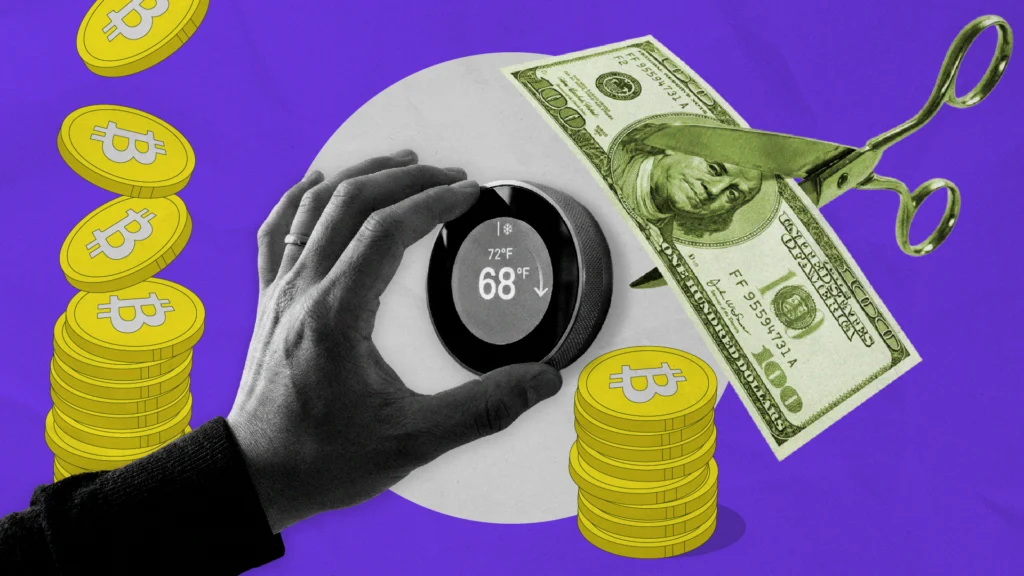
Bitcoin mining could help some Americans reduce their heating costs, but electricity bills come first.
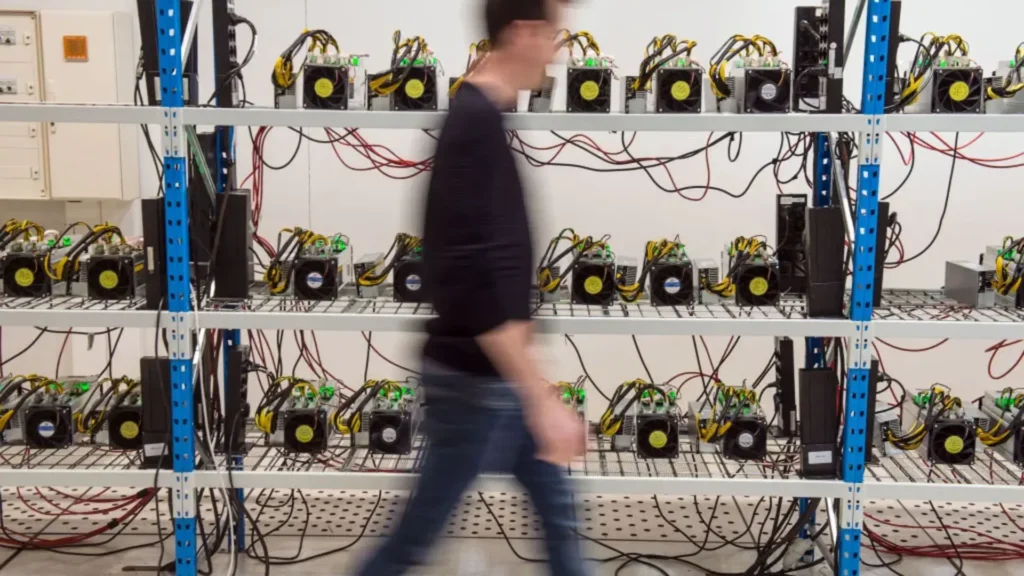
Finnish company SunBit is putting mining equipment to work as household heating, capturing the warmth it produces while earning BTC.
Its installations include a 180-square-meter home in the Finnish town of Nokia that replaced district heating with a Bitcoin Boiler and a separate hot-water tank.
For US homeowners, however, importing the idea means confronting different electricity prices, heating systems, and installation costs.
How Finland’s Bitcoin Mining Heating Works
SunBit’s system transfers heat from liquid-cooled Bitcoin miners into water used for radiators, underfloor heating and domestic hot water.
Its specifications list heating output of 5.3 or 10.6 kilowatts and water temperatures up to 60°C.
The company’s case studies show several real-world configurations.
In examples provided, a house in the Finnish town of Kotka retains its oil boiler as backup, while a manor house in the city of Tampere uses mining heat alongside an existing wood boiler.
SunBit founder Elmeri Suomi told CoinDesk that 30 systems were operating, almost entirely in Finland.
“The heating itself works regardless of the market, and only the payback time moves,” Suomi told the publication.
What Would the Electricity Cost in the US?
US residential electricity averaged 18.16 cents per kilowatt-hour in August 2026, according to the Energy Information Administration’s latest monthly figures.
For context, the average US residential customer consumed 865 kWh monthly in 2024 and paid $144.
The following calculation shows the electricity expense before any Bitcoin earnings:
| Electricity-price scenario |
Price per kWh |
Monthly miner electricity cost |
Annual cost |
| Illustrative low-cost tariff |
$0.10 |
$387 |
$4,643 |
| US residential average, August 2026 |
$0.1816 |
$703 |
$8,431 |
| Massachusetts residential average, August 2026 |
$0.3048 |
$1,179 |
$14,151 |
CCN calculations use SunBit’s stated 5.3-kW power draw and assume continuous operation throughout a 365-day year. Actual operating hours and electricity costs will vary.
Under the SunBit model, estimated annual mining income was approximately $6,100 after its service charge, before an additional pool fee.
That scenario assumed Bitcoin at around $82,000 and network computing power of 1,040 exahashes per second.
Holding that modeled income constant, the US-average electricity scenario would leave approximately $2,331 annually to cover, before equipment, maintenance, and other costs.
While that would not provide free operation, it could still offer inexpensive heating if enough of the output replaces an otherwise costly heat source.
Could It Actually Reduce an American Heating Bill?
It is possible that, under suitable conditions, Bitcoin mining could reduce heating costs, whereas earning a mining profit is a different outcome.
The clearest comparison is a household already using electric resistance heating.
Both a resistance heater and a miner convert electricity into heat, which means the miner also offers an opportunity to earn BTC.
Utility-backed guidance describes resistance heating as delivering one unit of heat per unit of electricity.
If mining heat replaces that existing consumption, the Bitcoin earnings can reduce the effective heating cost.
However, the household must still recover the additional equipment and installation expense.
But the calculation changes when mining replaces a heat pump.
The University of Maryland Extension explains:
“Because heat pumps move heat rather than create it, they can deliver two to four times more heating energy than the electricity they consume.”
At 18.16 cents per kWh, supplying 1,000 kWh of useful heat would cost $182 with resistance heating.
Meanwhile, a heat pump delivering three units of heat per unit of electricity would cost about $61.
A miner would therefore need more than $121 in earnings per 1,000 kWh consumed to beat that heat pump’s electricity cost — before comparing purchase prices or maintenance.
Is Bitcoin Mining Home Heating Possible in the US?
The technology is possible, including at a smaller scale than a whole-house boiler.
Installing the Finnish system itself would require a property-specific assessment.
SunBit lists three-phase power and a water-based heating connection in its specifications, so those requirements would need to be reconciled with the US property’s electrical supply and heating equipment.
The strongest potential candidates are households with substantial heating demand, favorable electricity tariffs, and an expensive existing heat source.
Homes with limited heating needs or an efficient heat pump face a tougher financial case.
Unnecessarily running mining equipment to earn income can increase total household energy spending.
The 2028 Halving Adds a Payback Risk
Bitcoin’s next halving is expected in 2028, when the subsidy falls from 3.125 BTC to 1.5625 BTC per block.
A buyer installing now would encounter that change before the end of SunBit’s advertised three- to six-year payback period.
Upfront costs remain substantial.
SunBit publishes an example price of €14,500 plus VAT, rising to around €18,150 plus VAT where a separate tank and condenser are required.
The company also estimates that mining units typically last five to eight years before replacement becomes economically sensible.
Bitcoin heating could help some US households offset winter heating costs.
But whether the equipment pays for itself depends on local electricity prices, useful heat demand, installation costs, and mining returns beyond 2028.
The information provided in this article is for informational purposes only. It is not intended to be, nor should it be construed as, financial advice. We do not make any warranties regarding the completeness, reliability, or accuracy of this information. All investments involve risk, and past performance does not guarantee future results. We recommend consulting a financial advisor before making any investment decisions.

Kurt Robson is a London-based reporter at CCN, specialising in the fast-moving worlds of crypto and emerging technology. He began his career covering local news in Cornwall after graduating from Falmouth University with First Class Honours in Journalism. There, he cut his teeth on everything from council meetings to missing swans.
He quickly rose through the ranks to become a frontline journalist at several of the UK’s leading national newspapers. Over the years, he has interviewed musicians and celebrities, reported from courtrooms and crime scenes, and secured multiple front-page exclusives.
Following the upheaval of the COVID-19 pandemic, Kurt shifted his focus to technology journalism—just ahead of the AI boom. With a natural curiosity and a trained eye for emerging trends, he has found a new rhythm in reporting on innovation.
At CCN, Kurt's work focuses on the cutting edge of crypto, blockchain, AI, and the evolving digital world. Drawing on his background in people-first reporting and his deep interest in disruptive tech, Kurt delivers stories that are insightful, entertaining, and human-centric.