Coinbase to debut on S&P 500 while eToro and Vinanz aim to list in New York. l Credit: Derek Fenech/CCN
Share
Key Takeaways
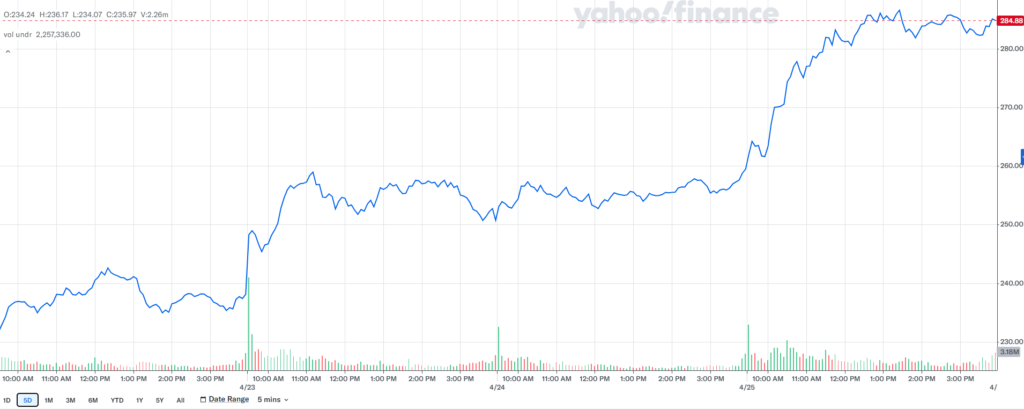
Tesla’s earnings missed market estimates, but the stock jumped by double digits last week.
Meta and Apple gained strength as regulatory charges were lower than feared.
PlayStation rental figures increased in Japan, boosting sentiment over Sony stock.
Last week delivered a sharp reminder that bad news isn’t always bad for stocks in today’s markets. Tesla missed earnings estimates by a wide margin, yet investors cheered new plans for cheaper EVs and autonomy.
Meanwhile, Meta and Apple faced regulatory fines in Europe but escaped with modest penalties that barely dented their share prices.
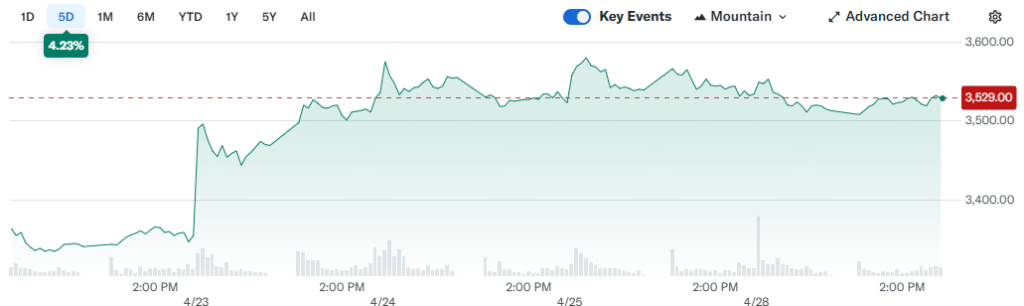
Sony found an unexpected tailwind, as soaring demand for PlayStation 5 rentals in Japan lifted its stock.
Tesla Jumps Despite Earnings Miss Market Expectations
Tesla’s first-quarter results were rough, with earnings and revenue missing expectations. EPS dropped 40% to $0.27, and revenue fell 9% to $19.3 billion, well short of Wall Street’s $21.3 billion forecast. Net income plunged 71% to $409 million.
Deliveries dropped 13% to 336,681 vehicles, with production down 16% to 362,615. Tesla cited fewer deliveries, lower average selling prices, and production updates as factors.
Despite weak numbers, Tesla’s cash position remains strong, rising 38% year-over-year to nearly $37 billion.
Tesla jumped by double digits last week despite earnings missed market estimates. | Credit: Yahoo! Finance
The news that Elon Musk will gradually cut his duties at DOGE to focus on Tesla also boosted sentiment.
Tesla confirmed plans for lower-cost, streamlined versions of the Model 3 and Model Y and highlighted progress toward launching its ride-hailing pilot in Austin this June, with Cybercab production targeted for 2026.
The EV maker also held steady its 11,509 Bitcoin (BTC) holdings, valued at about $951 million at quarter-end.
With BTC rebounding, Tesla’s crypto portfolio has topped $1 billion again under new FASB accounting rules.
Meta and Apple Get Modest EU Fines
In the first enforcement action under the European Commission’s Digital Markets Act (DMA), Apple and Meta were fined a combined €700 million for violations of the new regulations.
While notable, the fines are modest compared to previous EU penalties, like Apple’s €1.8 billion fine in March for music streaming abuses.
The softer approach follows February threats from former U.S. President Donald Trump to retaliate against penalties targeting American companies.
European Commission President Ursula von der Leyen defended the enforcement, stressing that rules are applied “fairly, proportionally, and without bias,” regardless of a company’s origin.
Under DMA rules, fines for repeated violations can reach up to 10% of global turnover—or 20%.
Meta‘ stock jumped 9.1% to $553.20, while Apple’s increased by 6.2% to around $210 per share.
Apple and Meta have been under scrutiny for years. The DMA aims to curb anti-competitive practices by major “gatekeeper” platforms. Regulators have criticized Apple for limiting the promotion of alternative app stores.
At the same time, Meta’s “pay or consent“ model was found to pressure users into surrendering their data without offering a genuine alternative.
The Trump Administration demanded clarity from the EU in February, with U.S. lawmakers accusing the EU of unfairly targeting American firms.
The EU responded, calling the allegations baseless and emphasizing the shared goal of promoting fair competition and innovation.
Although PS5 hardware sales have declined in Japan since launch, a growing rental market offers an alternative for gamers deterred by high prices.
Japanese retailer GEO, which operates over 1,000 stores, began offering PS5 rentals in February. Demand has exceeded expectations, often leaving consoles sold out.
GEO rents PS5s for 980 yen ($7) per week or 1,780 yen ($12.50) for two weeks—cheaper than previous rental options—thanks to its in-house repair capabilities and rental network.
PS5 rentals figures boosted Sony stock last week. | Credit: Yahoo! Finance
The rental surge comes amid rising costs across the gaming industry. In 2024, Sony raised PS5 prices globally by about 19%, citing inflation and economic challenges.
Additional price hikes followed in 2025, linked to fluctuating exchange rates and Trump’s tariffs, which raised import duties on Chinese goods to 145%. Since Sony manufactures most PS5s in China, it remains heavily impacted.
Ownership is becoming a growing issue. While gamers once owned physical copies, digital subscriptions like PlayStation Plus and Xbox Game Pass only offer access licenses, which can be revoked. Recent live-service failures, such as Sony’s Concord, which became unplayable two weeks post-launch, highlight these risks.
As prices rise, subscriptions and cloud gaming may gain traction. Nintendo’s upcoming Switch 2 will debut at $449.99, with Mario Kart World launching at a record $79.99.
According to GlobalData, the cloud gaming market—valued at $4 billion in 2024—is expected to grow to $22 billion by 2030, with Microsoft and Sony leading the space.
Last week, Sony’s stock increased by 4.2% in Tokyo, topping 3,500 yen per share.
Giuseppe Ciccomascolo began his career as an investigative journalist in Italy, where he contributed to both local and national newspapers, focusing on various financial sectors.
Upon relocating to London, he worked as an analyst for Fitch's CapitalStructure and later as a Senior Reporter for Alliance News. In 2017, Giuseppe transitioned to covering cryptocurrency-related news, producing documentaries and articles on Bitcoin and other emerging digital currencies. He also played a pivotal role in establishing the academy for a cryptocurrency exchange website. Crypto remained his primary area of interest throughout his tenure as a writer for ThirdFloor.