Key Takeaways
- Over $448,000 in cryptocurrency was stolen in a cyber-heist in Cyprus after a private investor’s email account was hacked.
- The breach began on June 11, but was only reported to authorities six weeks later, complicating recovery efforts.
- Crypto theft is rising sharply, with personal wallet breaches representing nearly a quarter of stolen funds.
- Cyprus authorities have urged the public to strengthen digital security using secure wallets.
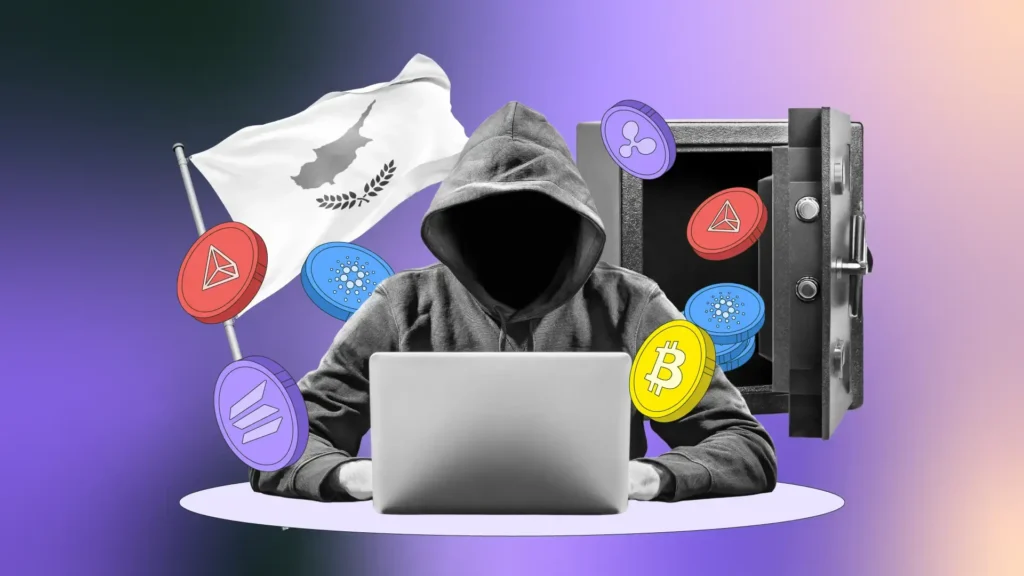
A cyber-heist targeting a private investor in Cyprus has raised new concerns about email security, crypto custody, and the increasing sophistication of digital fraud.
Over $448,000 worth of cryptocurrency vanished overnight in what authorities call one of the region’s most targeted and technically precise crypto thefts ever seen.
The theft, which occurred on June 11 and was only recently confirmed by law enforcement, involved the coordinated breach of a personal email account, social engineering tactics, and an unauthorized transfer of assets from a centralized exchange wallet.
With no forced entry, malware alerts, or apparent phishing activity, the case has become a case study in silent digital theft, which may have broader implications for crypto users worldwide.
Understanding the Victim: How a Public Profile Made a Crypto Investor Vulnerable
The victim, a 48-year-old investor, is believed to be a mid-level crypto investor and software entrepreneur based in Limassol.
While not a public figure in the blockchain space, he was known to be active in tech investment circles and had spoken at regional fintech events in recent years.
Investigators said the funds were held across two centralized exchanges, with the majority stored in a single custodial wallet.
The holdings included Bitcoin (BTC), Ether (ETH), and several mid-cap altcoins.
How a Compromised Email Led to a $448K Crypto Theft
According to multiple news reports, the crypto heist began on June 11, 2025, when hackers accessed the investor’s email account.
The compromised email reportedly contained credentials or sensitive information linked to the victim’s crypto wallet.
Using this access, the attackers could retrieve the necessary login details to breach the wallet and transfer approximately €381,653 (around $448,000) in digital assets to an unknown address.
Authorities have not disclosed exactly how the email was breached, whether through phishing, poor password hygiene, or another method, but confirmed it was the entry point that led to the asset theft.
The incident highlights how even a compromised personal account, primarily email, can be a gateway to much larger financial losses, particularly in the self-custodied crypto space where security responsibilities are squarely on the user.
Cyprus police were notified of the breach more than a month later, on July 26, prompting an investigation by the cybercrime unit.
Timeline of the Crypto Theft: From Email Breach to Asset Drain
A rough sequence of events, reconstructed from transaction logs and IP activity, shows a chilling level of coordination:
- The hack occurred on June 11, 2025, when attackers accessed the victim’s email account and used it to obtain his crypto wallet password. Within a few hours, they transferred €381,653 out of his wallet.
- The 48-year-old Cypriot victim did not report the incident until July 26, 2025—over six weeks later—prompting authorities to investigate cybercrime.
- Cyprus police confirmed that the stolen funds were moved swiftly after the email breach, and warned recovery would be challenging due to the anonymous nature of blockchain transactions.
When the victim contacted customer support, the wallets were drained, and the exchanges flagged the incident as an “external breach.”
Crypto Heists on the Rise
Cyprus has indeed seen major crypto-related scams targeting individuals.
For instance, a Limassol resident lost €430,000 through a fraud incident involving theft from an electronic wallet under false promises of investment returns between mid‑2024 and early 2025.
Police reported that a Cyprus-based firm lost €458,000 in cryptocurrency following a cyberattack. According to authorities, the breach occurred in April, when hackers accessed the company’s digital wallet and moved multiple cryptocurrencies to unidentified wallets.
Crypto theft increased overall in 2025. Chainalysis reports £2.17 billion stolen in the first half of 2025, exceeding the total for all of 2024, and projected losses hitting up to $4 billion by year-end.
Personal wallet breaches now account for around 23% of total stolen funds, indicating a growing focus on targeting individuals rather than platforms.
What Victims Can (and Can’t) Do
The reality for victims is bleak. Once funds are moved through decentralized protocols and privacy networks, they’re virtually impossible to recover.
Law enforcement can trace the initial movements, but on-chain anonymity tools break the link between source and destination, stalling investigations.
Cyprus’ Cybercrime Unit has received a formal complaint, but authorities are unlikely to recover the funds.
Following the incident, the Cyprus police released a public advisory encouraging stronger personal security measures for digital assets.
Authorities advised individuals to use secure wallets with advanced protection features, rely on reputable platforms that offer two-factor authentication, and create unique, complex passwords for each account.
What Victims Can Do:
- Report the breach immediately to local cybercrime authorities and the affected exchange.
- Track on-chain movements of the stolen assets using blockchain explorers to support investigation efforts.
- Notify the exchange’s fraud team to flag suspicious wallet addresses and potentially freeze funds if they remain within the platform.
- Enhance personal security (email, exchange, wallet) to prevent further losses.
- Use chain analytics firms (e.g., Chainalysis, TRM Labs) if working with legal or recovery teams.
What Victims Can’t Do:
- Reverse blockchain transactions — all confirmed transactions are irreversible by design.
- Expect full refunds from exchanges, unless the breach occurred due to platform-side vulnerabilities.
- Unmask anonymous wallets without advanced law enforcement tools or subpoena powers.
- Recover assets once they’re routed through privacy mixers, cross-chain swaps, or decentralized protocols designed to obfuscate flow.
This stark reality reinforces a hard truth in crypto: prevention is the only reliable protection. Once users lose digital assets, there are few and slow technical and legal recovery options, and rarely successful.
Cyprus Moves Toward Stricter Digital Asset Regulation
After the theft, Cyprus’ Ministry of Digital Affairs officials have called for stricter safeguards and consumer protection measures, especially as the island grows its reputation as a crypto hub.
Furthermore, on June 18, 2025, Cyprus passed Law 96(I)/2025, aligning its Anti-Money Laundering (AML) rules with the EU’s MiCA framework.
The law strengthens oversight of crypto-asset service providers (CASPs), payment firms, and e-money institutions, closing regulatory gaps in digital finance.
Key updates include modernized definitions for crypto assets and new rules for self-hosted wallets. Also, stricter transaction traceability requirements, and removal of the local CASP registry in favor of EU-wide standards.
Non-EU firms must now appoint a contact point in Cyprus, and penalties apply for CASPs and PSPs that fail to comply with data and reporting obligations.
Conclusion
The Cyprus crypto heist is a stark reminder of how vulnerable digital assets remain. Even for moderately experienced investors—when basic digital hygiene is compromised.
In this case, a single point of failure, a personal email account, became the gateway to a near half-million-dollar loss.
This also illustrates a growing trend: crypto thefts evolve from high-profile protocol breaches to targeted, surgical attacks on individuals.
As more retail and mid-tier investors enter the crypto space, attackers shift their strategies, exploiting weak personal security rather than complex technical vulnerabilities.
With blockchain anonymity tools making fund recovery nearly impossible, prevention, not remediation, is the only viable defense.
Ultimately, this incident underscores the urgent need for individuals to treat email access, password management, and wallet custody with the same seriousness as any high-value financial account.
As the digital asset ecosystem matures, so must its users—and their security practices.
FAQs
Over $448,000 worth of cryptocurrency was stolen from a private investor in Cyprus after hackers gained access to his personal email, which contained credentials linked to his crypto wallet. The funds were then transferred to unknown addresses.
The initial breach began with unauthorized access to the victim’s email on June 11, 2025. From there, attackers retrieved login details for his centralized exchange wallet and moved the crypto assets without triggering malware alerts or phishing warnings.
Recovery is extremely difficult. While initial transactions can be traced, once funds enter privacy mixers or decentralized protocols, they become nearly impossible to recover.
Investors should secure their email and exchange accounts with strong, unique passwords, use hardware or cold wallets for crypto storage, enable multi-factor authentication, and remain vigilant for suspicious activity or communications.

Giuseppe Ciccomascolo began his career as an investigative journalist in Italy, where he contributed to both local and national newspapers, focusing on various financial sectors.
Upon relocating to London, he worked as an analyst for Fitch's CapitalStructure and later as a Senior Reporter for Alliance News. In 2017, Giuseppe transitioned to covering cryptocurrency-related news, producing documentaries and articles on Bitcoin and other emerging digital currencies. He also played a pivotal role in establishing the academy for a cryptocurrency exchange website. Crypto remained his primary area of interest throughout his tenure as a writer for ThirdFloor.


 Easy
Easy