BlackRock Challenges the OCC's 20% Stablecoin Cap: Here Is What Is at Stake for BUIDL
Share
Key Takeaways
BlackRock argues that maturity, liquidity, and credit quality should determine reserve asset risk.
The debate is taking place under the GENIUS Act, which was enacted in 2025 and has a deadline of January 2027 for final guidelines.
If the cap is imposed, the $2.6 billion BUIDL fund will suffer scaling constraints.
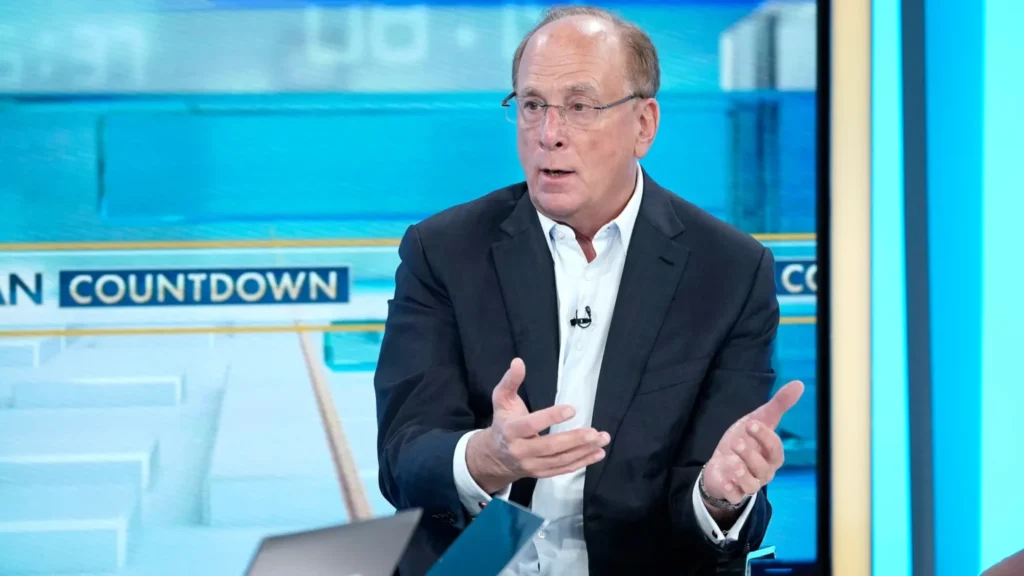
BlackRock has thrown down the gauntlet in response to a potential US regulatory limit that could hinder the growth of tokenized Treasury products in the stablecoin market. On the final day of the public review period, one of the world’s largest asset managers, wrote a detailed 17-page letter to the Office of the Comptroller of the Currency (OCC). In it, BlackRock requested the regulator to lift a planned 20% cap on tokenized reserve assets.
With tokenized US Treasuries already topping $15B in market capitalization by early 2026, the outcome could impact how institutions integrate blockchain into traditional finance for years to come.
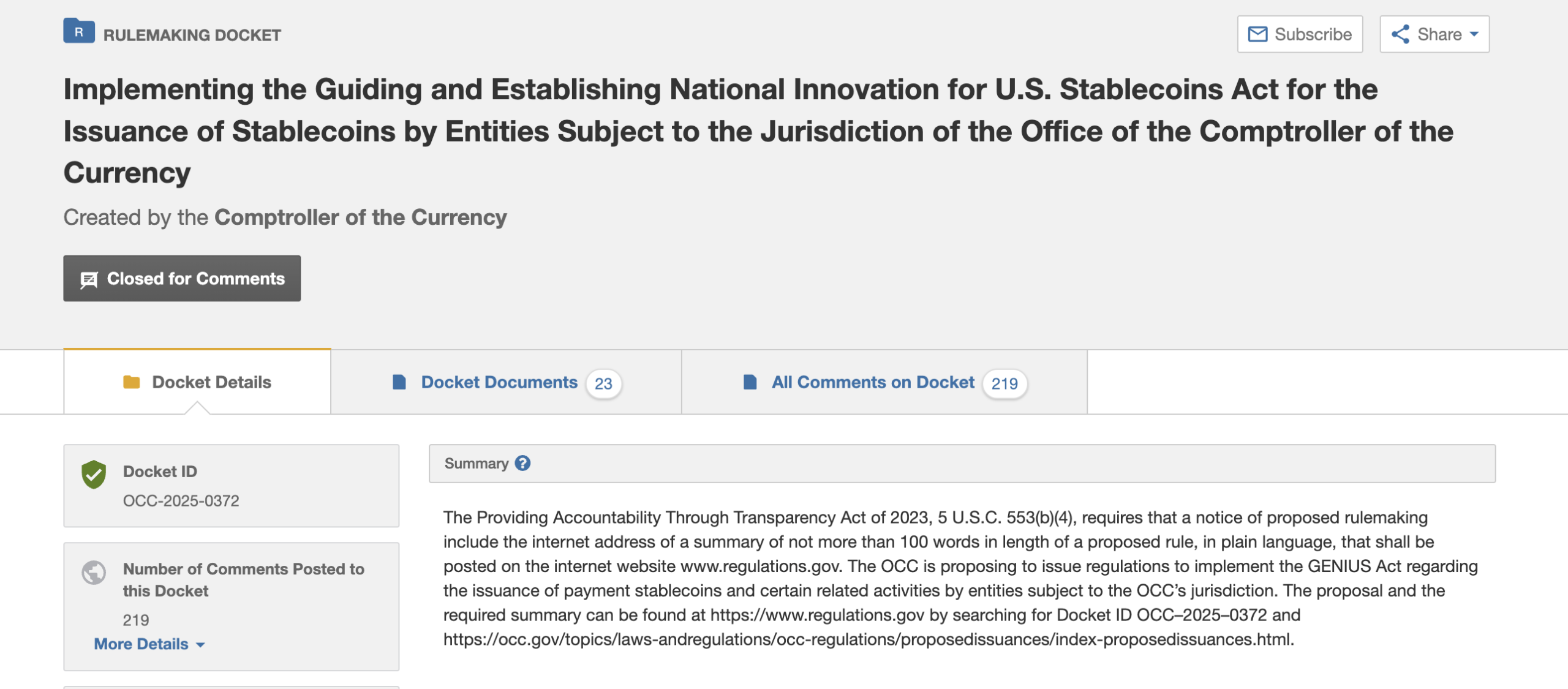
BlackRock’s letter filed in the public docket | Credit: Regulations.gov
The letter disputes a proposed quantitative cap of 20% on tokenized reserves in the portfolios of stablecoin issuers. According to BlackRock, this limit is ‘extraneous’ to the OCC’s security and stability reasons. It emphasizes that the risks originate from the underlying asset characteristics rather than the usage of blockchain for issuance or transfer.
Beyond the cap, BlackRock requests the following:
Treasury ETFs that invest in eligible assets are clearly acknowledged to be reserves.
Extending safe harbor protections akin to to those for government money market funds.
The eligible assets list now includes short-term US Treasury floating-rate notes (up to two years).
A principles-based approach to diversification that includes an optional safe harbor rather than mandated guidelines.
BlackRock also calls for a transparent approval procedure for future reserve assets.
BlackRock just filed a 17-page comment letter with the OCC asking regulators to scrap a proposed 20% cap on tokenized stablecoin reserves.
BlackRock's BUIDL, the tokenized U.S. Treasury fund with $2.6B in assets, backs over 90% of the reserves for two major stablecoins:… pic.twitter.com/gdZ28mgHQP
In late February 2026, the OCC released draft rules as part of broader federal attempts to enforce the GENIUS Act. In an effort to reduce run risks and promote innovation, these regulations address reserve composition, liquidity, capital, custody, and more for federally regulated stablecoin issuers. In 2024, BlackRock introduced its USD Institutional Digital Liquidity Fund (BUIDL) on Ethereum, providing institutional investors with on-chain exposure to short-term Treasuries that have daily liquidity and yield. According to RWA.xyz data, BUIDL had almost $2.6B in assets by May 2026 and provided the majority of backing for innovative stablecoins like Ethena’s USDtb and Jupiter’s JupUSD on Solana.
Why is there a pushback now? A strict 20% cap would force stablecoin issuers that rely on tokenized Treasuries to diversify greatly into traditional (non-tokenized) versions, restricting BUIDL’s position as a scalable, primary reserve asset.
Regulatory Fear of Concentration Risk
The 20% cap prevents a single stablecoin issuer from investing more than one-fifth of its reserves in a single tokenized vehicle.
The OCC considers the 20% cap a circuit breaker for systemic risk. The regulator wants to prevent anyone from holding too much of the US dollar’s on-chain stability by forcing issuers to spread their reserves among several funds and providers. This principle is similar to traditional banking norms that limit a bank’s exposure to a single counterparty. Regulators are concerned about novel risks in tokenized systems, including as smart contract vulnerabilities, settlement finality, and operations challenges. Tokenized versions of high-quality assets such as Treasuries, according to BlackRock, bear similar or manageable risks to their traditional counterparts, particularly with proper custody and transparency.
Potential Outcomes and Regulatory Implications
Institutional adoption of tokenized reserves could be accelerated if the OCC lowers or raises the 20% cap. This would provide for better yield potential for stablecoin holders, faster 24/7 settlement, and increased transparency. This could strengthen DeFi protocols that integrate compliant tokenized Treasuries, connecting on-chain liquidity with traditional finance. Maintaining the cap, on the other hand, could prevent BUIDL’s expansion and similar products, forcing issuers to rely on cash, direct Treasuries, and other non-tokenized assets. Although US federal compliance is still appealing due to its legitimacy and scope, it may also promote innovation in hybrid solutions or offshore structures.
What does this imply in the big picture? The ruling will determine whether US regulators place structural restrictions on blockchain integration or give priority to technology-neutral regulations centered on economic risk. Results may have an impact on RWA capital flows, the expansion of the stablecoin market, and asset manager competition.
What Is at Stake for BUIDL and Tokenized Finance
BUIDL’s success has fueled tokenized Treasury growth, with Circle’s USYC leading at almost $2.9B, indicating strong demand.
By limiting BUIDL’s use as stablecoin collateral, a binding cap runs the risk of redirecting billions in potential inflows. BlackRock’s plan, which includes modifications like its GENIUS-compliant BSTBL fund, may be validated if it succeeds here. It may also pave the way for a broader usage of tokenized assets in reserves. For the space, this is about more than just one fund. It questions if the advantages of tokenization, such as programmability, efficiency, and worldwide accessibility, will be fully realized in stablecoin reserves and other financial infrastructure. Failure to accommodate might limit the estimated multi-trillion-dollar potential of RWAs, but balanced rules could solidify US leadership.
According to the data for 2026, BUIDL manages around $2.6B in assets.
Is it certain that the 20% cap will be applied?
No, it was suggested as a possible comment limit. Before finalizing regulations by January 2027, the OCC will examine comments.
Is 20% stablecoin cap only affecting BlackRock?
No, it has an influence on tokenised Treasury instruments used as stablecoin reserves, as well as the overall growth of on-chain RWAs.
What changes did BlackRock suggest?
Treasury ETF clarification, the introduction of floating-rate notes, and modifications to safe harbours for diversification
Disclaimer:
The information provided in this article is for informational purposes only. It is not intended to be, nor should it be construed as, financial advice. We do not make any warranties regarding the completeness, reliability, or accuracy of this information. All investments involve risk, and past performance does not guarantee future results. We recommend consulting a financial advisor before making any investment decisions.
Curious about how technology and crypto reshape global finance, Elizaveta Savenko explores blockchain, AI, decentralized systems, their applications, and regulatory requirements. She contributes to research, educational initiatives, and industry collaborations, examining trends in digital assets and fintech innovation, increasing awareness of the crypto space and its impact on financial systems.


 Intermediate