All You Need to Know About the Somnia Mainnet | Credit: Hameem Sarwar
Share
Key Takeaways
Somnia (SOMI) launched its mainnet on Sept. 2.
The launch went smoothly with only minor issues.
Will the SOMI price pump or dump after launch?
Somnia (SOMI) has officially launched its long-awaited mainnet, marking a significant milestone after more than 18 months of development.
The rollout was smooth overall, despite a few minor hiccups that briefly disrupted activity.
With exchange listings already secured, let’s analyze the SOMI price movement to see where it will go next.
Somnia Mainnet Launch
After 18 months of development, Somnia went live on the mainnet on Sept. 2 and immediately gained support from several large centralized exchanges, including Binance and Bitget.
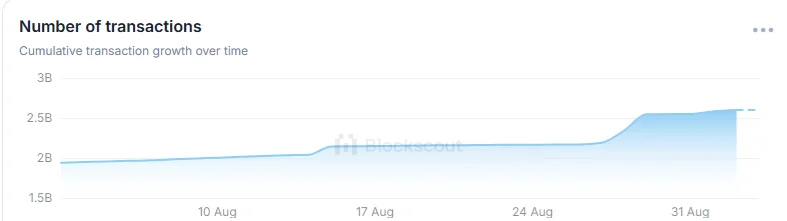
The network claims to have a throughput of more than one million transactions per second and a finality of less than one second, combined with low fees.
Get These Top Crypto Casino Offers Now!
Sponsored
Disclosure
We sometimes use affiliate links in our content, when clicking on those we might receive a commission at no extra cost to you. By using this website you agree to our terms and conditions and privacy policy.
The launch went successfully, but there were some minor issues with it.
The claims page broke under heavy traffic, which also caused the Quill allocation issue.
The Remote Procedure Call (RPC) was targeted by a DDoS attack, which was fixed in 30 minutes.
Quickswap hit a last-minute issue, but it has been fixed since.
With that in mind, let’s analyze the SOMI price action to figure out what lies ahead.
SOMI Price Analysis
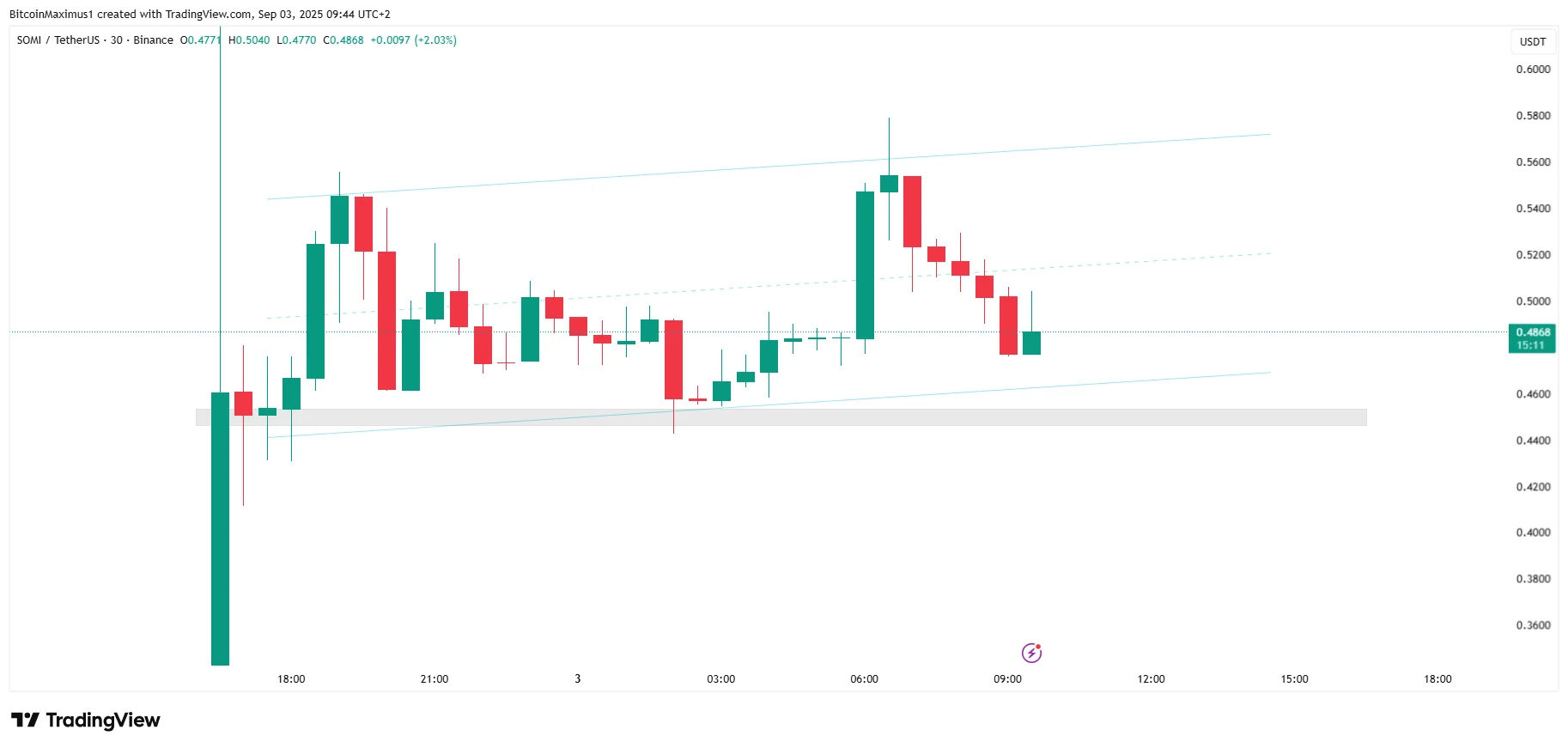
There is insufficient price action to make a SOMI prediction, so the analysis should be taken with a grain of salt.
Nevertheless, since its launch, the SOMI price has traded inside an ascending parallel channel and is currently in the channel’s lower portion.
Not only do these channels usually contain corrective movements, but the fact that SOMI trades in the lower portion makes a breakdown even more likely.
Disclaimer:
The information provided in this article is for informational purposes only. It is not intended to be, nor should it be construed as, financial advice. We do not make any warranties regarding the completeness, reliability, or accuracy of this information. All investments involve risk, and past performance does not guarantee future results. We recommend consulting a financial advisor before making any investment decisions.
Valdrin Tahiri is a cryptocurrency analyst and reporter at CCN, specializing in technical analysis with a focus on Elliott Wave theory, on-chain metrics, and fundamental research. He brings over seven years of experience in the crypto space as both a trader and writer.
He discovered cryptocurrencies in 2017 while earning his MSc in Financial Markets at the Barcelona School of Economics, which sparked a deep interest in blockchain and market dynamics. Since then, he’s contributed to top crypto outlets like BeInCrypto and CoinGape.
Valdrin also served as Community Manager of BeInCrypto’s Telegram group for three years, helping grow it into one of the largest crypto communities worldwide. His expertise in market structure and price patterns allows him to break down complex trends into clear, actionable insights.
He’s published thousands of articles covering altcoins, Bitcoin cycles, and macro trends.