Key Takeaways
-
Fetch.ai CEO Humayun Sheikh accuses Ocean Protocol of breaching ASI Alliance governance.
-
On-chain data linked to roughly 286 million FET tokens has fueled speculation of fund misuse.
-
Sheikh urges the crypto industry to adopt auditable governance and full public accountability.
The fallout from the Artificial Superintelligence (ASI) Alliance has escalated into one of crypto’s most contentious governance disputes of 2025.
The ASI alliance began as an experiment in decentralized AI collaboration between Fetch.ai (FET), Ocean Protocol (OCEAN), and SingularityNET (AGIX).
It has now unraveled into a legal confrontation, allegations of fund mismanagement, and a community trust crisis.
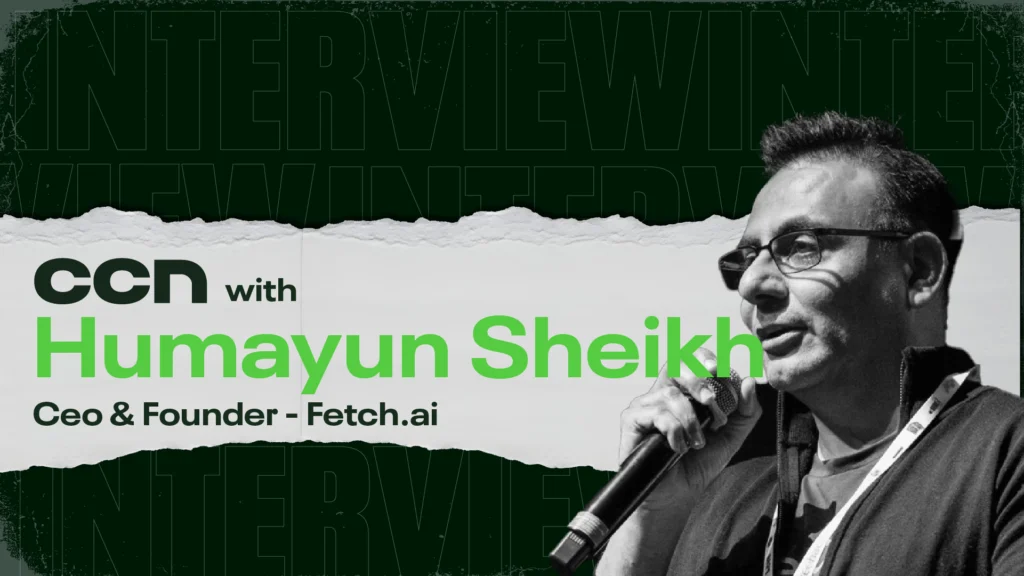
In an exclusive Q&A with CCN, Fetch.ai CEO Humayun Sheikh detailed his concerns over Ocean Protocol’s “unilateral actions” and lack of transparency, calling the moves a betrayal of the ASI vision and the crypto community’s principles of open governance.
Fetch.AI CEO Alleges Market Manipulation
When asked about allegations that Ocean Protocol’s recent token movements amounted to market manipulation, Sheikh avoided speculation but pointed to on-chain movements and timing that raise serious questions.
”We are not here to speculate,” Sheikh said. We have identified on-chain movements and timing that raise serious questions about how community-designated funds were used. Our legal team will present the facts and on-chain records; we’ll let the adjudicatory process determine culpability. Our priority is clarity, recovering funds, and protecting the community.
The dispute centers around nearly 286 million FET tokens, which some community members claim were moved without full disclosure.
This has sparked concerns of a partial rug pull and reignited debates about accountability in decentralized alliances.
Governance Breakdown
According to Sheikh, the collapse of the ASI Alliance stems from a fundamental breakdown in governance and communication.
He alleges that Ocean Protocol acted outside the Alliance’s decision-making structure and used community-designated assets without consultation.
”Ocean Protocol made unilateral decisions with community-designated funds, acting outside the agreed governance framework of the ASI Alliance and without consultation with its partners or token holders,” Sheikh said. ”They broke the trust of the Alliance members and their community.”
The ASI Alliance began as a step toward a unified AI ecosystem built on interoperability, transparency, and collective governance.
Sheikh said Ocean compromised those principles by choosing independence without what he considers proper disclosure or accountability.
Additionally, he told CCN that the ASI vision was always collaboration-first: interoperable tech, shared purpose, and community accountability.
According to Sheikh, using community funds without apparent disclosure conflicts with the spirit and expectations of the Alliance.
Transparency Test in Decentralized AI
The dispute has rattled holders of both FET and OCEAN, two of the leading AI-related tokens in the market.
Sheikh reassured the Fetch.ai community that the team remains focused on protecting holders through ongoing transparency and supply-reducing mechanisms.
We hear that communities and trust are our top priorities. To protect $FET holders, we’re pursuing legal clarity, pushing for full transparency, and continuing supply-reducing actions — buybacks, burns, and revenue-linked ‘earn & burn’.
Looking beyond the immediate legal case, Sheikh emphasized that the industry must learn from this episode to prevent similar breakdowns in the future.
He emphasized the importance of making governance explicit and auditable, with clearly identified signatories, transparent on-chain accounting, multisig security measures, and community consultation for all treasury decisions.
He noted that community funds should be managed as shared assets, with transparency embedded into every partnership from the very beginning.
Ocean Protocol’s Response
Yesterday, Ocean Protocol posted a response to the accusations.
Ocean states that it joined the ASI Alliance under clear terms: each foundation retains full sovereignty over its treasury, decisions must be made jointly, and no member should be compelled to take action.
It claims repeated red flags have been raised since the Alliance’s launch in March 2024 through Ocean’s exit in October 2025.
There were a lack of proper audits, rushed token‐merger steps, and governance mechanisms that didn’t match the original decentralized vision.
These are the core principles of decentralization — non-coercion, non-compulsion, individual agency, and sovereign ownership. Ocean will go its own way, as we have every right to do so
Ocean accuses the other alliance members of exerting undue pressure, especially converting Ocean’s community treasury, pushing token migrations and decisions without consensus, and failing to honor the agreement that each member would act independently.
It emphasizes that it maintained strict fiscal discipline, did not liquidate tokens aggressively, and acted solely for the benefit of its community.
It alleges that the others drained liquidity, moved large token volumes, and allowed risky deals that harmed the token ecosystem.
We hope the ASI Alliance can continue its work, and we wish them well. Meanwhile, Ocean will focus on protecting its community and rebuilding trust through transparency.
In short, Ocean portrays itself as the party trying to uphold decentralization, transparency, and community interests.
It claims it ultimately had no choice but to leave the ASI Alliance for these reasons.
However, Mr. Sheikh rebutted that Ocean Protocol should have voiced these concerns instead of dumping the FET treasury tokens and promised a response to all the points raised.
There are rumors that Ocean Protocol will return the tokens, ending one of the most publicized feuds of this crypto cycle.
ASI Alliance Fallout
The ASI Alliance, once seen as a model for decentralized collaboration in AI, has become a cautionary tale about the limits of trust in open governance.
As legal proceedings move forward, the outcome will shape the future of Fetch.ai and Ocean Protocol.
It could also set an essential precedent for decentralized ecosystems’ shared power and accountability management.
The information provided in this article is for informational purposes only. It is not intended to be, nor should it be construed as, financial advice. We do not make any warranties regarding the completeness, reliability, or accuracy of this information. All investments involve risk, and past performance does not guarantee future results. We recommend consulting a financial advisor before making any investment decisions.

Valdrin Tahiri is a cryptocurrency analyst and reporter at CCN, specializing in technical analysis with a focus on Elliott Wave theory, on-chain metrics, and fundamental research. He brings over seven years of experience in the crypto space as both a trader and writer.
He discovered cryptocurrencies in 2017 while earning his MSc in Financial Markets at the Barcelona School of Economics, which sparked a deep interest in blockchain and market dynamics. Since then, he’s contributed to top crypto outlets like BeInCrypto and CoinGape.
Valdrin also served as Community Manager of BeInCrypto’s Telegram group for three years, helping grow it into one of the largest crypto communities worldwide. His expertise in market structure and price patterns allows him to break down complex trends into clear, actionable insights.
He’s published thousands of articles covering altcoins, Bitcoin cycles, and macro trends.