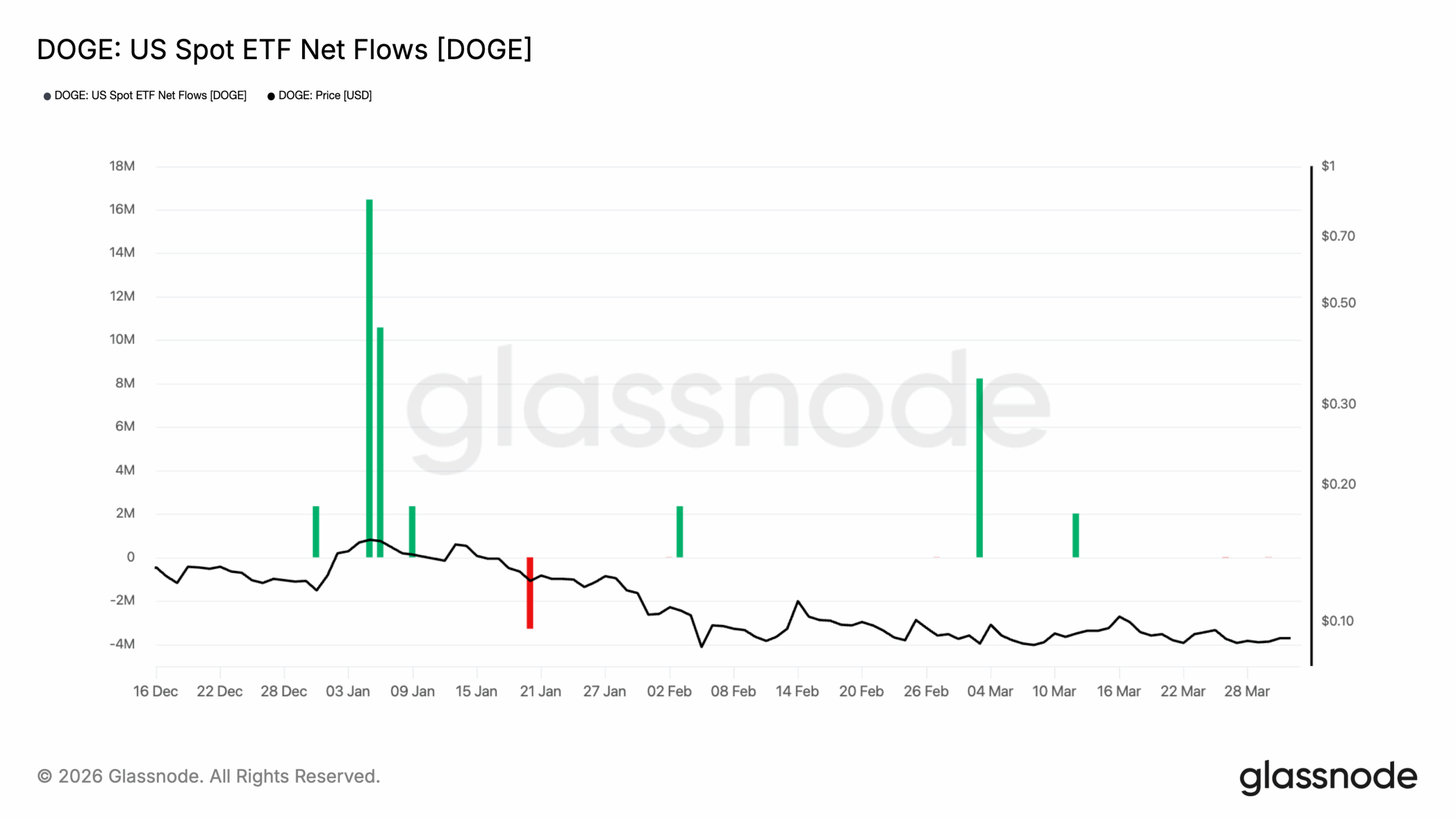
US spot DOGE ETFs have accumulated less than $10 million in total net assets since launching in November 2025, pointing to near-zero institutional participation.
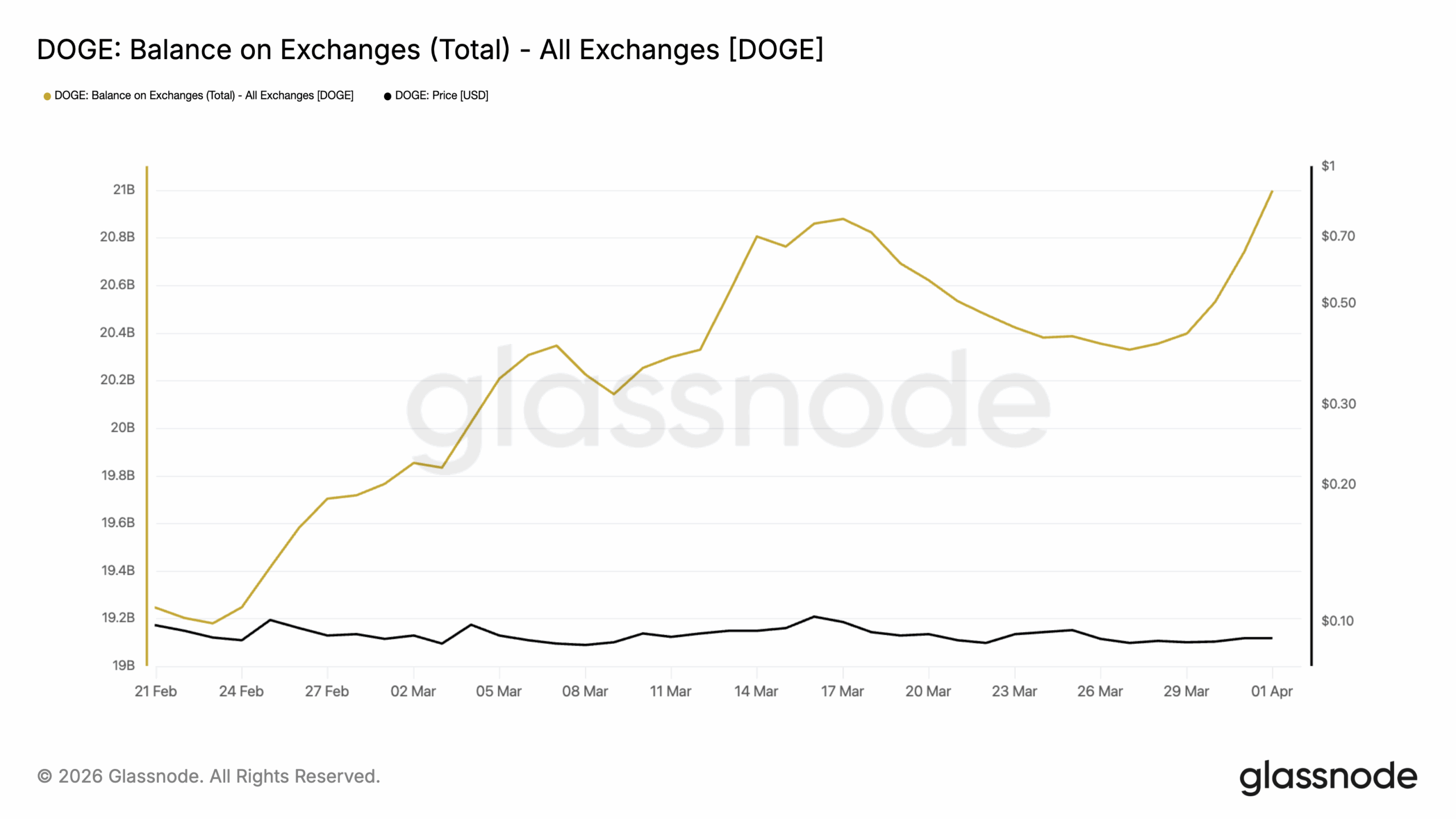
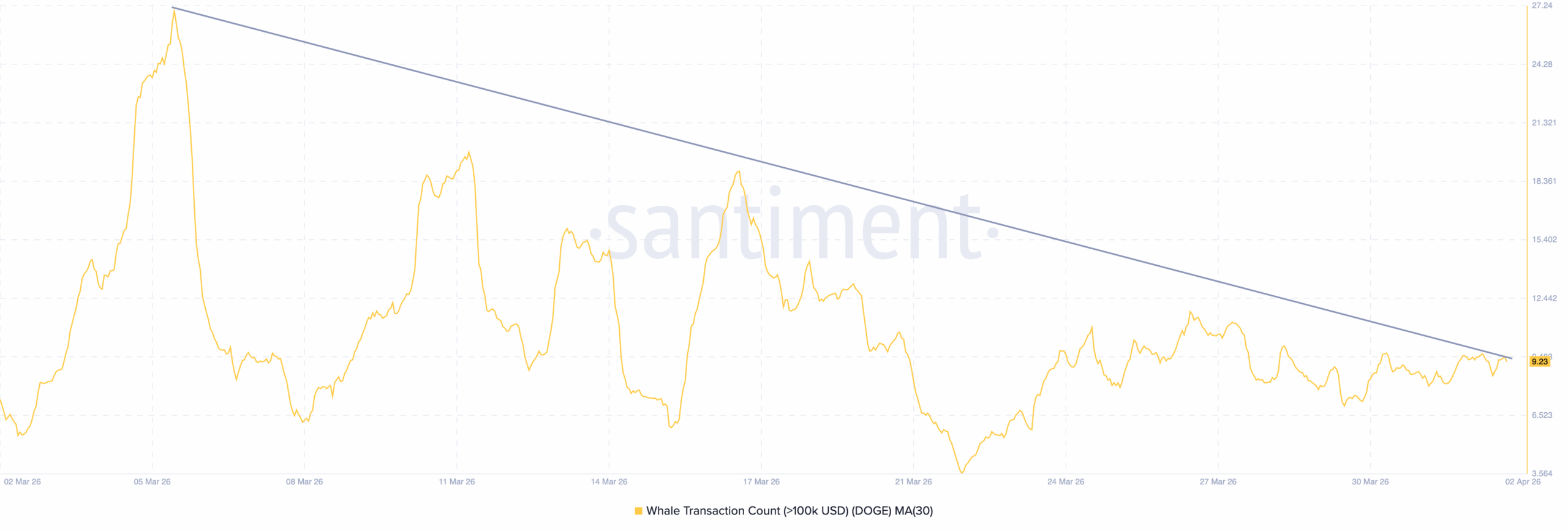
DOGE’s total exchange balance has climbed over the past month, while whale transaction counts have dropped since March 5 — signaling growing sell-side pressure and fading conviction among large holders.
DOGE faces downside risk toward its year-to-date low of $0.08001 if institutional demand and macro sentiment fail to improve in Q2.
The first US-listed spot Dogecoin exchange-traded fund (ETF) was launched by Grayscale on NYSE Arca on November 24, 2025.
Bitwise and 21Shares followed shortly after, launching BWOW on November 26, 2025, and TDOG on January 22, 2026, respectively.
Four months on, these products have collectively accumulated less than $10 million in total net assets — a clear indication that institutional capital has not followed.
What does this tell us?
Seven Green Days and a Lot of Silence
Since these products launched, meaningful inflow activity has been scarce.
Glassnode data shows that since the launch of the first US spot DOGE ETF, inflows have been recorded in just seven trading sessions.
According to the data provider, the largest daily inflow into DOGE ETFs so far occurred on January 5, when $2.49 million in capital was added to these products.
The timing of this is significant. It coincided with DOGE trading near its year-to-date highs of $0.15. However, as sentiment worsened and DOGE’s price began its sustained decline, interest in these products fell along with it.
The only outflow of note came on January 20 and totaled $408,000. Every other session has posted zero net flows.
This level of inactivity is notable because it reflects Wall Street’s continued reluctance to treat meme-based products as legitimate investment vehicles.
It also fits into a broader pattern of market participants withdrawing from DOGE positions, a trend that threatens to weigh on the meme coin’s price performance in Q2.
Smart Money Is Moving Away From DOGE
According to Glassnode, DOGE’s total exchange balance has climbed 11% since February 21. It sits at a 30-day high of 21 billion DOGE at the time of writing.
As geopolitical tensions surrounding the US-Iran-Israel conflict dampen risk appetite across financial markets, DOGE remains range-bound. This has forced many holders to move their coins onto exchanges, a behavior that historically precedes increased selling activity.
When an asset’s exchange balance rises this sharply, sell-side pressure is accumulating. In a market already starved of institutional demand, there is no corresponding demand to absorb this rising DOGE supply, hinting at further declines into Q2.
Furthermore, DOGE’s lackluster performance has triggered a decline in whale activity over the past month. Per Santiment, the 30-day moving average of daily DOGE whale transactions exceeding $100,000 has plummeted 66% since March 5.
At 9.23 at press time, the sustained decline in this metric signals that large holders have progressively stepped back from the market. This reflects the growing conviction among these key players that any meaningful DOGE recovery in the near term is unlikely.
Momentum Indicators Confirm Bears Are in Control
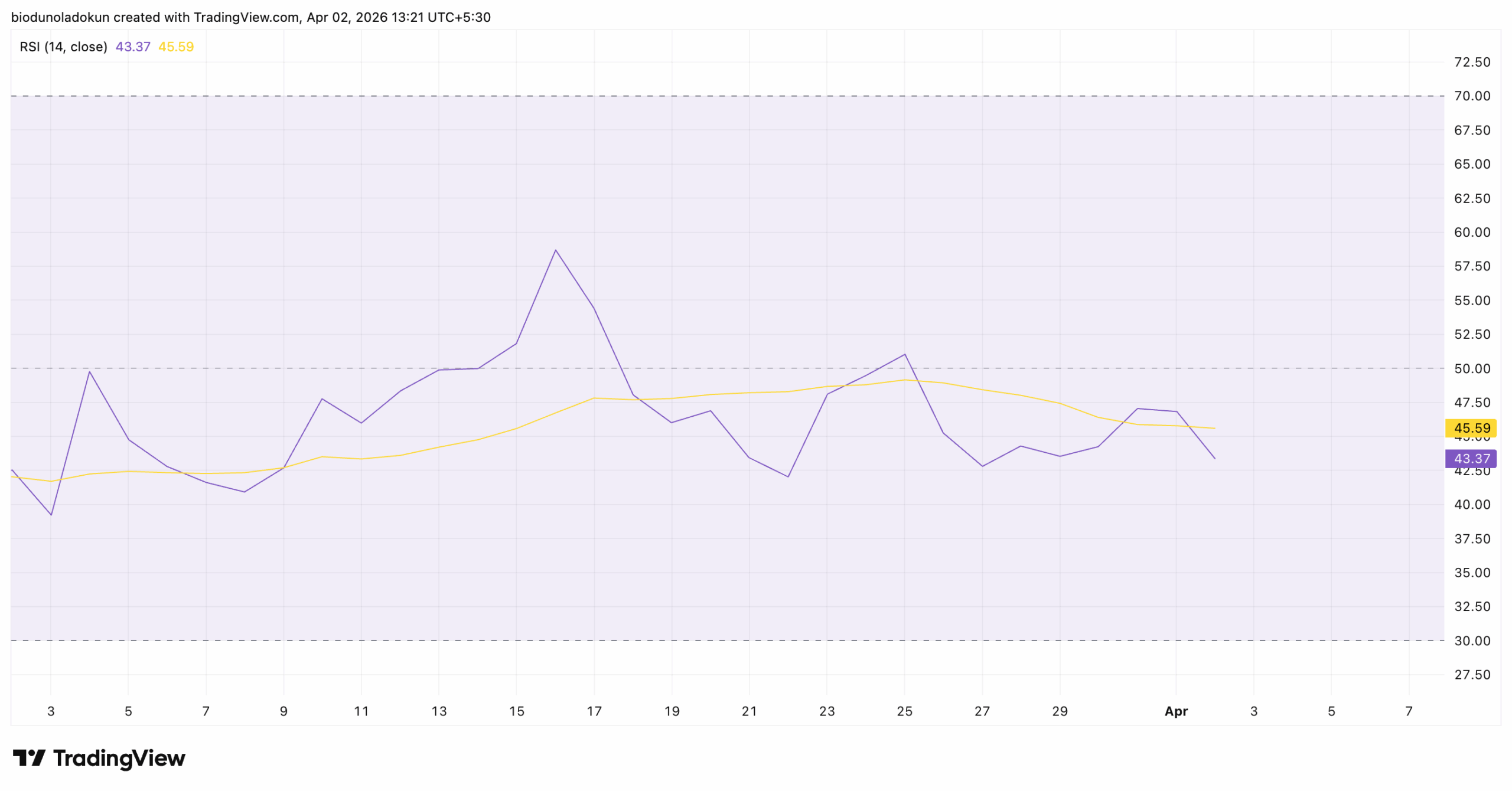
Across the spot markets, sentiment is also poor. For example, DOGE’s Relative Strength Index is at 43.37 at press time, sitting below the neutral 50 level, signaling a dip in demand.
The RSI indicator measures an asset’s overbought and oversold market conditions. It ranges between 0 and 100. Values above 70 suggest the asset is overbought and due for a price decline, while values below 30 indicate the asset is oversold and due for a rebound.
At 43.37 and falling, DOGE’s RSI confirms that buying pressure is fading. The indicator has failed to reclaim the 50 level on multiple attempts in the past month, with each recovery quickly reversed.
Until the meme coin’s RSI can sustain a move above 50, the momentum structure remains tilted toward sellers.
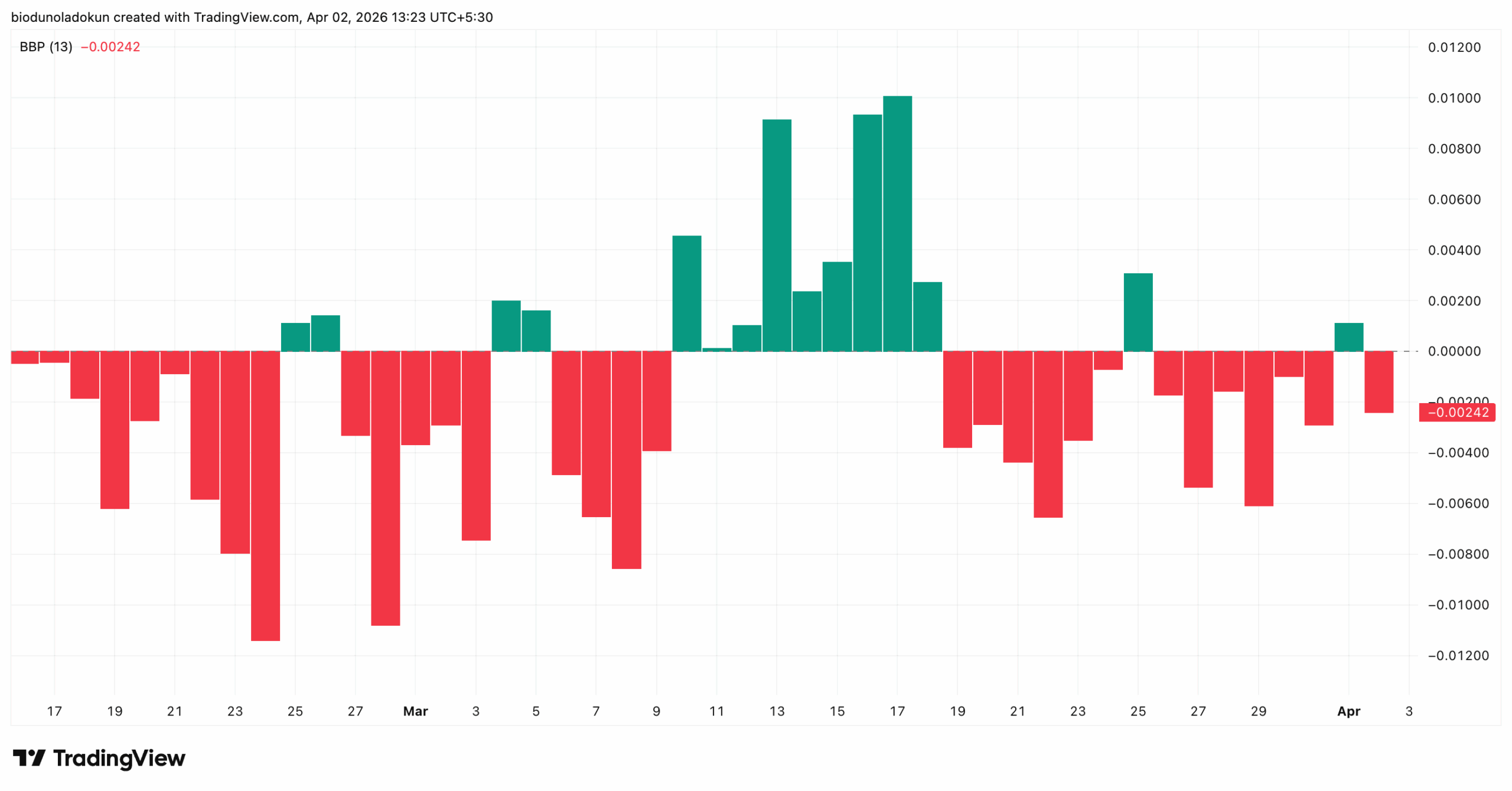
Moreover, DOGE’s Bull Bear Power (BBP) has been predominantly negative since the start of March. When DOGE attempted a rally from March 10 to March 16, the indicator briefly remained green.
However, as the price reversed and resumed its sideways trend, BBP turned negative again and has mostly returned values below zero.
The BBP indicator measures buying and selling pressure by analyzing the relative strength of bulls and bears against an asset’s exponential moving average (EMA).
When the indicator is negative like this, it signals that sellers are in control and are pushing prices lower.
DOGE Eyes Its Year-to-Date Low
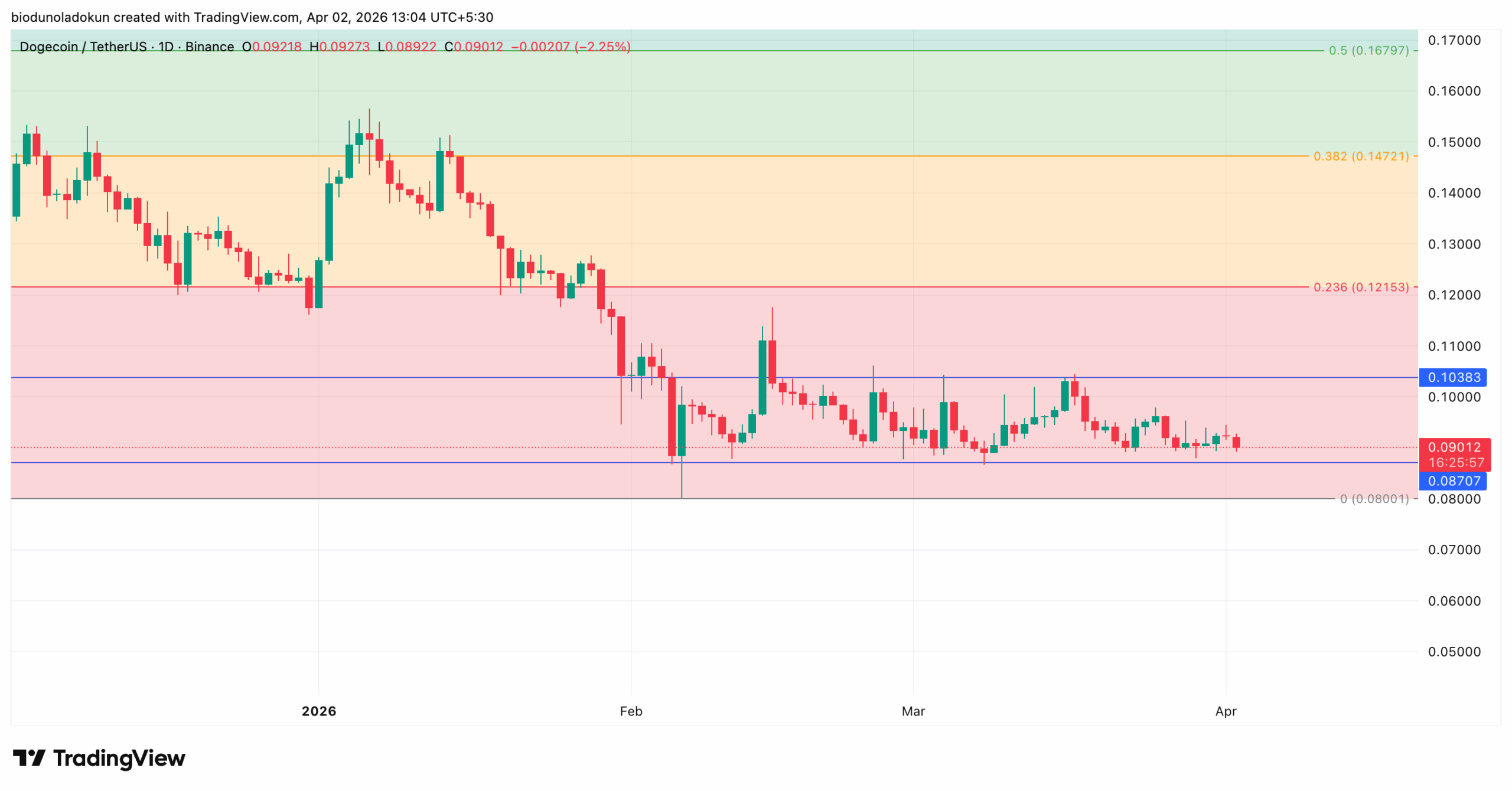
At press time, DOGE trades at $0.09012, consolidating within a tight range between support at $0.08707 and resistance at $0.10383.
If selling pressure intensifies, driven by continued institutional indifference, rising exchange balances, and deteriorating macro sentiment, DOGE risks losing that support and revisiting its year-to-date low near $0.08001.
However, if fresh demand resurfaces and sentiment improves, a reclaim of the $0.10383 resistance level could open the door toward $0.12153.
[You-may-like]
Disclaimer:
The information provided in this article is for informational purposes only. It is not intended to be, nor should it be construed as, financial advice. We do not make any warranties regarding the completeness, reliability, or accuracy of this information. All investments involve risk, and past performance does not guarantee future results. We recommend consulting a financial advisor before making any investment decisions.
Abiodun Oladokun is a Research Analyst at CCN, where he covers cryptocurrency markets with a focus on on-chain analysis, technical assessments, and emerging trends across decentralized finance (DeFi), real-world assets (RWA), artificial intelligence (AI), decentralized physical infrastructure networks (DePIN), Layer 2s, and meme coins.
Prior to CCN, he served as a Senior On-Chain Analyst at BeInCrypto, producing market reports spanning diverse crypto sectors.
Before that, he conducted technical analysis and market assessments of various altcoins at AMBCrypto, where he also contributed long-form quarterly research papers on DeFi, NFTs, DAOs, and scaling architectures, leveraging on-chain platforms including Messari, Santiment, DefiLlama, and Dune Analytics.
He began his crypto career as a research analyst at SixthSense DAO, developing blockchain forensic tools to trace the history of stolen assets.
Abiodun is a lawyer called to the Nigerian Bar and the founder of Ilé Ijó, a Lagos-based electronic dance music collective.