Esports Betting Landscape in 2024 | Credit: Derek Fenech
Share
Key Takeaways
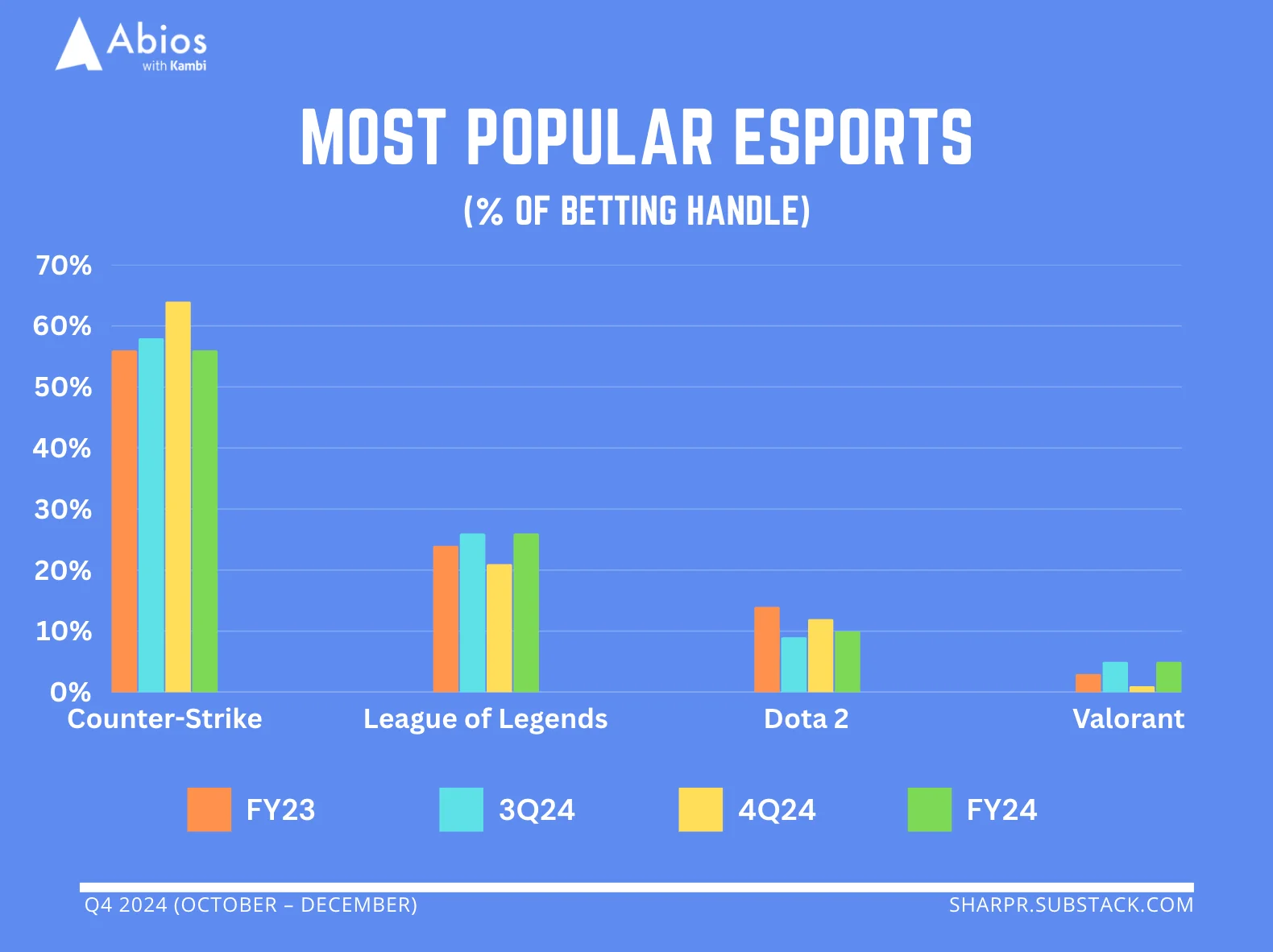
CS: GO has dominated esports betting in 2024.
Valorant is the biggest riser based on betting growth.
Dota 2 is quickly losing ground in viewership and bets.
Esports betting surged in 2024, reaching new heights as more fans turned gaming into wagers.
Titles like Counter-Strike: Global Offensive (CS: GO), Valorant, and League of Legends became the biggest drivers of betting action, though each told a different growth story.
Let’s look at the data for the esports betting landscape in 2024.
Esports Betting in 2024
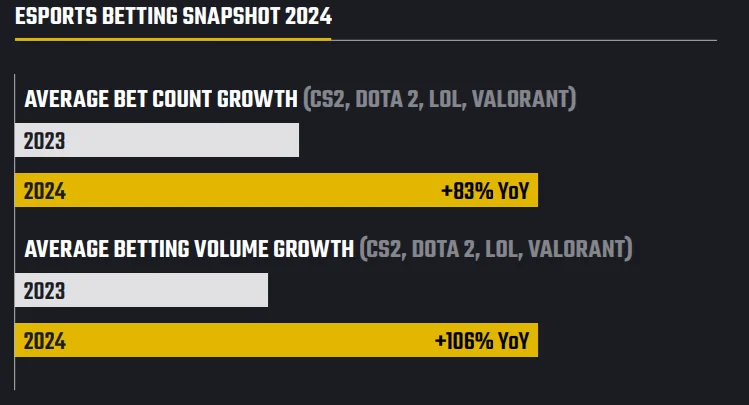
Esports betting grew dramatically in 2024, with some titles seeing an up to 175% increase year over year (YoY).
The average number of bets grew 83%, while the total betting volume jumped 106%.
2024 is also the first year that Gen Z bettors outpaced millennials, filing more than 44% of total esports bets.
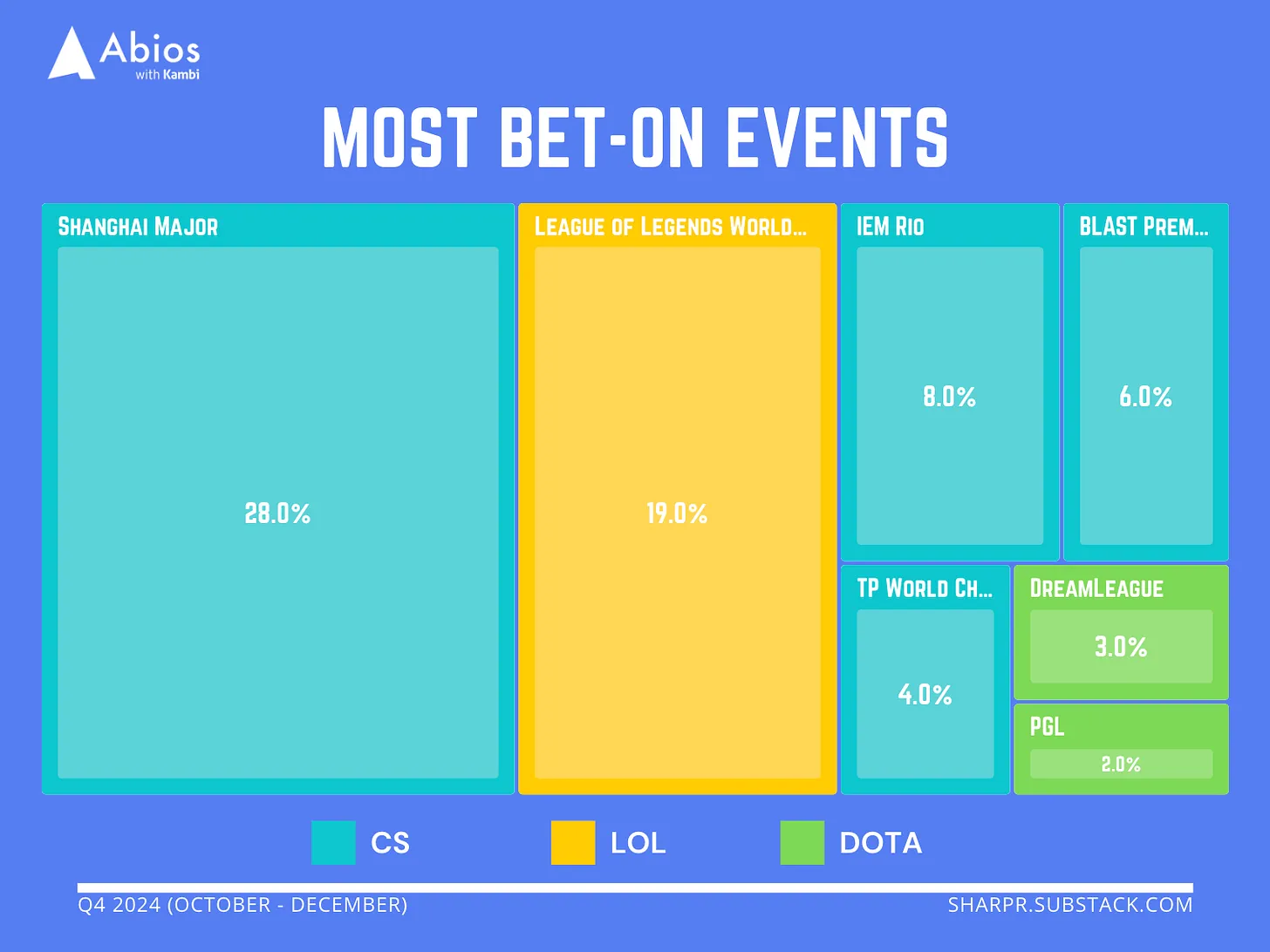
The Shanghai Major in CS: GO was the single most bet-on event, followed by the League of Legends World Championship, with other Counter-Strike events filling out the rest of the top five.
So, CS: GO is the esports gaming leader for betting.
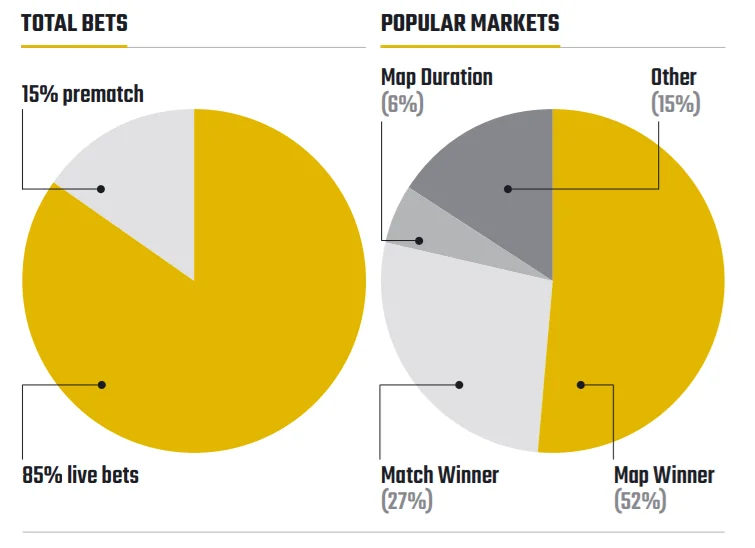
Besides its popularity, one of its advantages is its propensity for prop bets such as “Total Kills by Player”, or the over-under on kills, which made up 13% of all Counter-Strike betting in the fourth quarter.
Dota 2 Loses Ground to Valorant
Despite the general increase in esports betting, Dota 2 has lost the most ground.
While the Shanghai major captured 28% of the Q4 betting handle, the two most bet on events for Dota 2 were Dreamleague and PGL at 3% and 2%, respectively.
We sometimes use affiliate links in our content, when clicking on those we might receive a commission at no extra cost to you. By using this website you agree to our terms and conditions and privacy policy.
Therefore, most Dota 2 betting happens when viewers are watching the game and make a bet based on the team’s performance rather than having preconceived notions of the team.
As viewership declines, live bets could be significantly affected, which is worrying since they contain most of the total betting.
Valorant is seemingly replacing the momentum that Dota 2 is losing, and could surpass it as soon as next year.
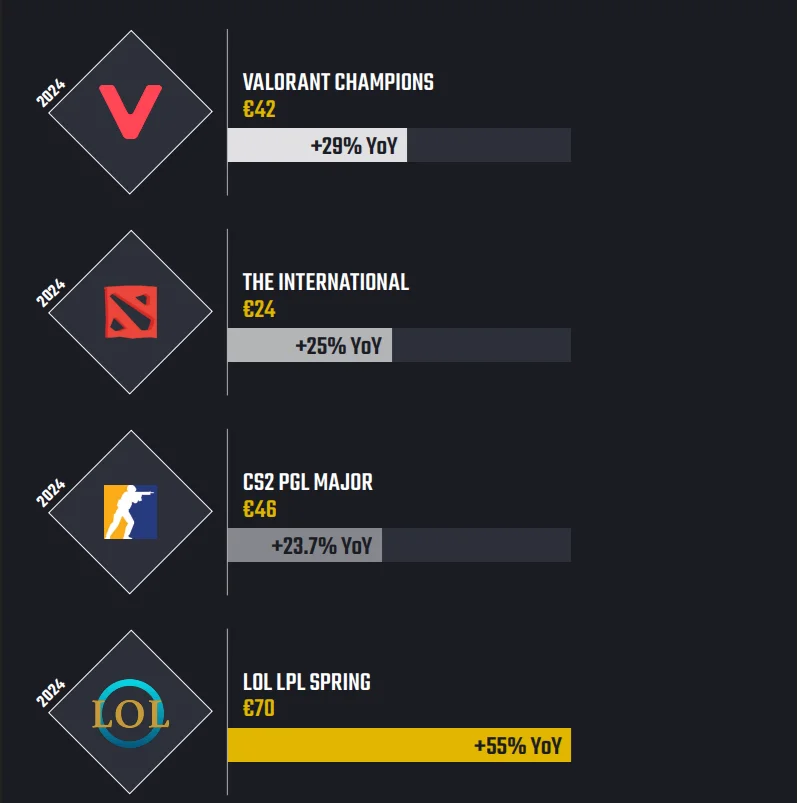
One thing that Dota 2 has going for it is the increased Average Stakes per Bet, which has increased 25% this year.
However, Valorant beat this one based on growth increasing from €32 to €42 per ticket, a growth of 29%, while Dota 2 has the smallest average stake at 24 euros.
Final Thoughts
2024 cemented CS: GO’s dominance while opening the door for Valorant to challenge fading titles like Dota 2.
The sharp rise in Gen Z bettors signals a long-term shift in audience dynamics and betting behavior.
Looking ahead, the esports betting landscape seems set for even fiercer competition, with CS: Go holding steady, Valorant on the rise, and Dota 2 fighting to stay relevant.
Disclaimer:
The information provided in this article is for informational purposes only. It is not intended to be, nor should it be construed as, financial advice. We do not make any warranties regarding the completeness, reliability, or accuracy of this information. All investments involve risk, and past performance does not guarantee future results. We recommend consulting a financial advisor before making any investment decisions.
Valdrin Tahiri is a cryptocurrency analyst and reporter at CCN, specializing in technical analysis with a focus on Elliott Wave theory, on-chain metrics, and fundamental research. He brings over seven years of experience in the crypto space as both a trader and writer.
He discovered cryptocurrencies in 2017 while earning his MSc in Financial Markets at the Barcelona School of Economics, which sparked a deep interest in blockchain and market dynamics. Since then, he’s contributed to top crypto outlets like BeInCrypto and CoinGape.
Valdrin also served as Community Manager of BeInCrypto’s Telegram group for three years, helping grow it into one of the largest crypto communities worldwide. His expertise in market structure and price patterns allows him to break down complex trends into clear, actionable insights.
He’s published thousands of articles covering altcoins, Bitcoin cycles, and macro trends.