Key Takeaways
- The U.S. government recently told Nvidia it would need a license to export H20 AI chips to China.
- Without the H20, Nvidia doesn’t have a competitive AI hardware offering for the Chinese market.
- With its latest AI chip, the Ascend 910C, Huawei could fill a gap in the market left by Nvidia.
Following the U.S. administration’s move to restrict Nvidia H20 exports to China, AI developers in the country are turning to alternative GPU suppliers.
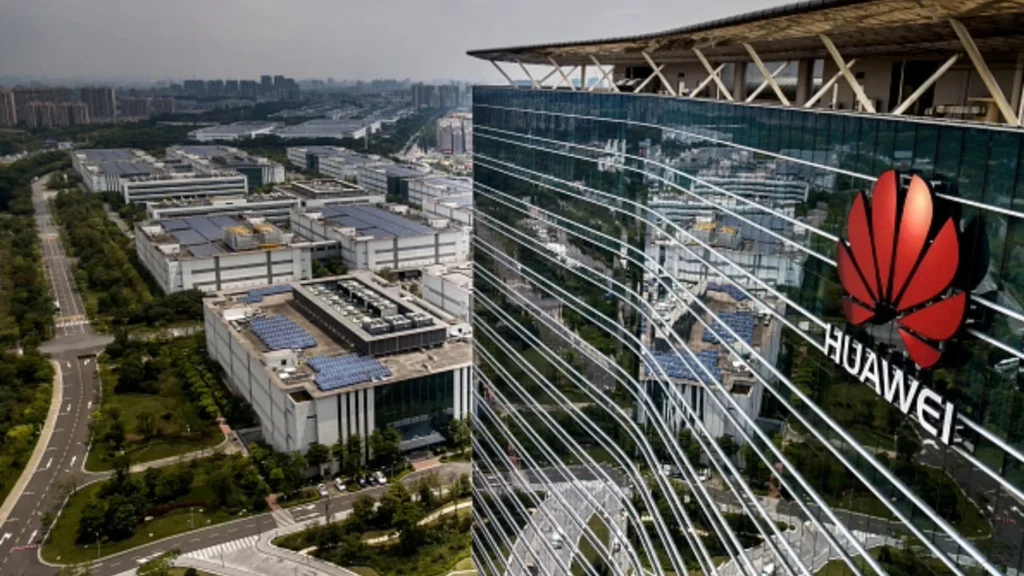
With the world’s leading AI hardware firm essentially locked out of the Chinese market by the latest export restrictions, Huawei has a chance to step up and plans to start shipping a new H20 alternative as early as next month.
Nvidia Hit by China Restrictions
First launched in October 2023, Nvidia’s H20 was designed to circumvent U.S. export restrictions that prohibited the firm from selling more advanced AI chips to China.
Although less powerful than H100 or H200 chips, the H20 proved to be a hit with Chinese customers, leading to shortages among server manufacturers.
Amid heightened trade tensions between Washington and Beijing, the U.S. government recently told Nvidia it would need a license to export H20s to China.
Responding to the news, Nvidia said it expects to incur a $5.5 billion hit from lost sales this quarter alone.
However, Nvidia’s loss could be Huawei’s gain.
Huawei as an Nvidia Alternative
Long before the U.S. government restricted H20 exports, Huawei had emerged as a leading Nvidia competitor in the Chinese market.
As they look to diversify their supply chains and wean themselves off Nvidia hardware, Chinese Big Tech companies have turned to Huawei’s current flagship AI Chip, the Ascend 910B.
Meanwhile, Reuters reported on Tuesday that Huawei has already shipped the first units of its next-generation 910C to Chinese customers, with mass shipments expected as early as next month.
The new chip reportedly combines two 910B GPUs into a single device, doubling its memory and compute capacity and leapfrogging the performance of Nvidia’s H20.
The Evolving Chinese GPU Market
While Nvidia’s H20 is less powerful than the firm’s most advanced AI chips, initially, Chinese alternatives still couldn’t compete with its performance.
Because the new 910B outperforms Nvidia’s China-compliant hardware, Huawei may have been on course to usurp its American rival even without the latest export restrictions.
But by blocking H20 sales in the country, the U.S. government has further accelerated Huawei’s capture of the Chinese AI market.

James Morales is CCN’s blockchain and crypto policy reporter. He has been working in the news media since 2020, writing about topics such as payments, banking and financial technology. These days, he likes to explore the latest blockchain innovations and the evolving landscape of global crypto regulation.
With an educational background in social anthropology and media studies, James uses his platform as a journalist to explore how new technologies work, why they matter and how they might shape our future.