Key Takeaways
- Many semiconductors rely on intellectual property owned by a handful of mostly American firms.
- However, the open-source RISC-V architecture is gaining traction among Chinese tech firms.
- While RISC-V chips were once limited to small devices, recent breakthroughs could open up the data center market.
Among the trillion or so computer chips produced each year, the majority rely on intellectual property (IP) owned by Arm, IBM, Intel, Nvidia and AMD.
However, since 2010, an open-source alternative to proprietary instruction set architectures has been gaining ground. And increasingly, Chinese firms are turning to RISC-V as a way to reduce their reliance on Western IP.
Open-Source Instruction Set Architectures
An instruction set architecture is essentially a software-hardware interface that defines how processors receive and execute instructions.
Some of the most widely used instruction sets include the x86 architecture developed by Intel and AMD, and the ARM architecture developed by Arm, a British design firm owned by Japan’s Softbank.
These companies generate significant income by licensing out IP to third-party chipmakers and play a crucial role in the global CPU market.
However, there are also open-source alternatives that chipmakers can use and modify for free.
PowerPC remains a popular choice for embedded systems and specialized applications, although it is no longer positioned as the alternative to x86 for personal computer chips its inventors originally intended.
More recently, RISC-V has emerged as a viable alternative to x86- and ARM-based chip designs.
Chinese Tech Firms Embrace RISC-V
While Western firms still dominate the landscape of instruction set IP, RISC-V presents an opportunity to decouple from American firms at a time when Chinese companies face rising export restrictions and trade embargoes.
As the technology evolves, Chinese chipmakers are at the forefront of the growing open-source movement.
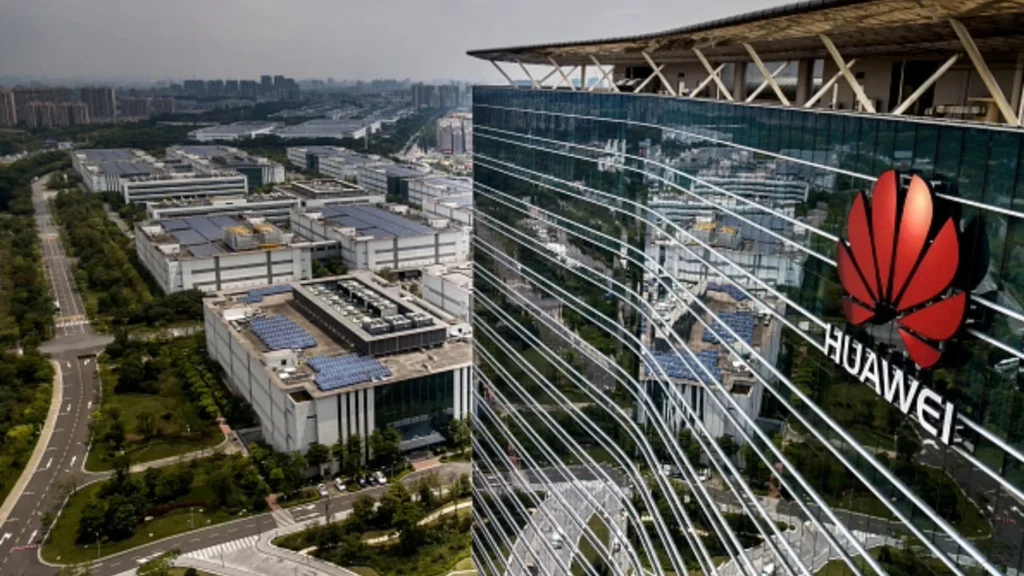
Several of China’s largest tech firms, including Alibaba, Tencent and Huawei, are “Premier” members of the body responsible for maintaining RISC-V, signaling their significant investment in the project.
Meanwhile, RISC-V products like Alibaba’s XuanTie Series are increasingly critical to China’s self-sufficiency drive.
As Beijing promotes a policy of technological sovereignty, it has actively endorsed the standard and encouraged the country’s semiconductor industry to further embrace it.
Evolving Applications
Early adopters of RISC-V included the makers of microcontrollers and other small, energy-constrained devices.
However, there is rising interest in using the open-source instruction set for high-performance computing and machine learning applications.
In March, Alibaba launched its first server-grade processor built on the RISC-V architecture. Earlier this month, RIVAI announced a similar breakthrough.
Meanwhile, in partnership with Alibaba, Tencent and others, the Chinese Academy of Sciences (CAS) plans to produce a datacenter-class RISC-V chip before the end of the year.
As the open-source architecture makes inroads in the data center market, it not only threatens the dominance of ARM and x86, but also Nvidia’s proprietary instruction set.

James Morales is CCN’s blockchain and crypto policy reporter. He has been working in the news media since 2020, writing about topics such as payments, banking and financial technology. These days, he likes to explore the latest blockchain innovations and the evolving landscape of global crypto regulation.
With an educational background in social anthropology and media studies, James uses his platform as a journalist to explore how new technologies work, why they matter and how they might shape our future.