Key Takeaways
- Several countries now accept cryptocurrency as proof of funds or part of the wealth declaration for citizenship or residency-by-investment programs.
- Full payments are usually made in fiat currency, with crypto converted via authorized agents.
- Third-party agencies and licensed agents typically handle conversion and compliance.
As cryptocurrency gains mainstream acceptance, some countries and service providers have started allowing applicants to use crypto as a payment method for passports.
While direct government acceptance is still limited, crypto can often be used through third-party agencies or payment processors that convert your digital assets into fiat currency to cover official fees.
Getting a Passport Using Crypto
Using crypto to get a passport offers benefits like faster, borderless payments and enhanced privacy. However, applicants must still comply with all standard requirements, including identity verification and background checks.
As strict due diligence processes apply, ensuring your cryptocurrency funds come from legal sources is essential.
As this trend grows, more governments may adopt direct crypto payments, making it easier for travelers worldwide to secure passports using digital currencies.
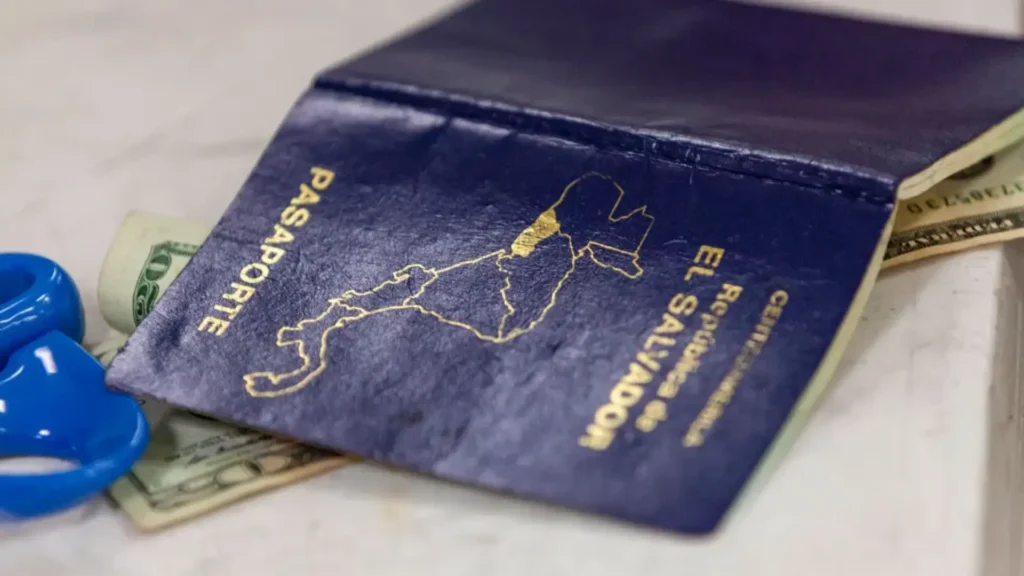
El Salvador
El Salvador was the first country to adopt Bitcoin (BTC) as legal tender.
The Latin American country offers a “Freedom Visa” where investors can secure Salvadoran citizenship by donating $1 million in BTC or Tether (USDT) to the government.
El Salvador also offers immediate permanent residency for investors who invest 3 BTC in the country. The program is run with Tether, reflecting El Salvador’s crypto-forward approach.
“The Salvadoran passport grants visa-free access to 134 countries, including the Schengen Area and Japan. It also offers a fast track to Spanish citizenship after two years,” a representative of El Salvador’s Foreign Ministry told CCN.
The source added that visa access may improve as El Salvador grows its international ties, blending culture with crypto innovation.
Vanuatu
Vanuatu is a popular option and accepts Bitcoin and other cryptocurrencies for its Citizenship by Investment program.
While the government may not accept crypto directly, authorized agents can facilitate crypto conversion into fiat currency for the payment.
An investment programs expert, Lyle Julien, said, “Investors for citizenship can use digital assets to prove the legality of income and money for the investment. However, the legitimacy of crypto origin must be proved.”
Antigua and Barbuda
This Caribbean Nation has been forward-thinking about crypto.
While direct government acceptance of crypto for payments might vary, they have discussed it and generally accept cryptocurrency as proof of funds for their Citizenship by Investment program.
Some legal groups also enable clients to pay for application aspects using cryptocurrency, avoiding traditional banks.
A government representative told CCN in a call that “While the citizenship program doesn’t directly accept cryptocurrency, it does allow investors to convert their cryptocurrency holdings to fiat currency to fulfill the investment requirements. This makes us a relatively crypto-friendly option for those seeking a second passport.”
St. Kitts and Nevis
St. Kitts and Nevis’ Citizenship by Investment Program accepts cryptocurrencies as a source of wealth, though they typically prefer conversion into fiat currency at the final stage of the investment.
The Saint Kitts and Nevis Citizenship by Investment Program now accepts cryptocurrency as part of an applicant’s declared wealth.
While applicants can’t use crypto for the final payment, they can use it to prove their funds if they provide proper documentation and undergo enhanced due diligence.
It’s worth noting that applicants must submit additional documents and pay extra due diligence fees.
Portugal
While Portugal’s Golden Visa program doesn’t accept direct cryptocurrency investments, the country offers a favorable environment for crypto investors.
Through specific investment funds with crypto exposure, investors can indirectly participate in the Golden Visa scheme.
Investors can qualify for residency by investing in regulated crypto-friendly investment funds, leading to EU citizenship in five years.
Additionally, Portugal’s tax policy exempts capital gains on cryptocurrencies held for over a year, enhancing its appeal to long-term crypto holders.
“These funds must be registered with the Comissão do Mercado de Valores Mobiliários (CMVM) and meet certain criteria, such as a minimum investment of €500,000, with at least 60% of the capital invested in Portuguese companies and a minimum fund duration of five years,” a representative of Portuguese consulate in Rome told CCN.
Grenada
Grenada’s Citizenship by Investment program allows individuals to obtain citizenship through real estate or a government donation.
The country considers cryptocurrency a source of income if the servicing platform provides a statement, and applicants usually convert the digital currency to fiat to complete the investment.
Grenadian passport holders using major crypto platforms like Crypto.com must complete the usual KYC verification process.
Cayman Islands
The Cayman Islands offer permanent residency visas to foreign investors with a pathway to citizenship.
Some crypto providers and real estate brokers in the Cayman Islands facilitate real estate purchases using digital assets, which can then qualify investors for a golden visa.
A government representative told CCN, “The Cayman Islands does not offer a specific ‘crypto passport’ or a citizenship-by-investment program linked to cryptocurrency.
“However, we offer residency options for high-net-worth individuals, including those involved in the cryptocurrency space, through a Residency Certificate for Persons of Independent Means,” he added.
This certificate allows individuals to reside in the Cayman Islands without the right to work, provided they meet specific investment and financial criteria.
Additionally, the Cayman Islands maintains a crypto-friendly environment, offers a regulatory framework for virtual asset service providers (VASPs), and actively attracts blockchain and cryptocurrency businesses.
Relevant Considerations
Even in crypto-friendly countries, applicants usually need to make citizenship or visa payments in fiat currency, such as USD or EUR.
While some programs accept cryptocurrency as proof of funds, authorized intermediaries convert it to fiat before completing the investment or fee payments.
Citizenship and residency-by-investment programs enforce strict due diligence.
You’ll need to prove the legal origin of your cryptocurrency funds, providing transaction records and evidence of any applicable tax payments on your crypto gains.

Giuseppe Ciccomascolo began his career as an investigative journalist in Italy, where he contributed to both local and national newspapers, focusing on various financial sectors.
Upon relocating to London, he worked as an analyst for Fitch's CapitalStructure and later as a Senior Reporter for Alliance News. In 2017, Giuseppe transitioned to covering cryptocurrency-related news, producing documentaries and articles on Bitcoin and other emerging digital currencies. He also played a pivotal role in establishing the academy for a cryptocurrency exchange website. Crypto remained his primary area of interest throughout his tenure as a writer for ThirdFloor.