Key Takeaways
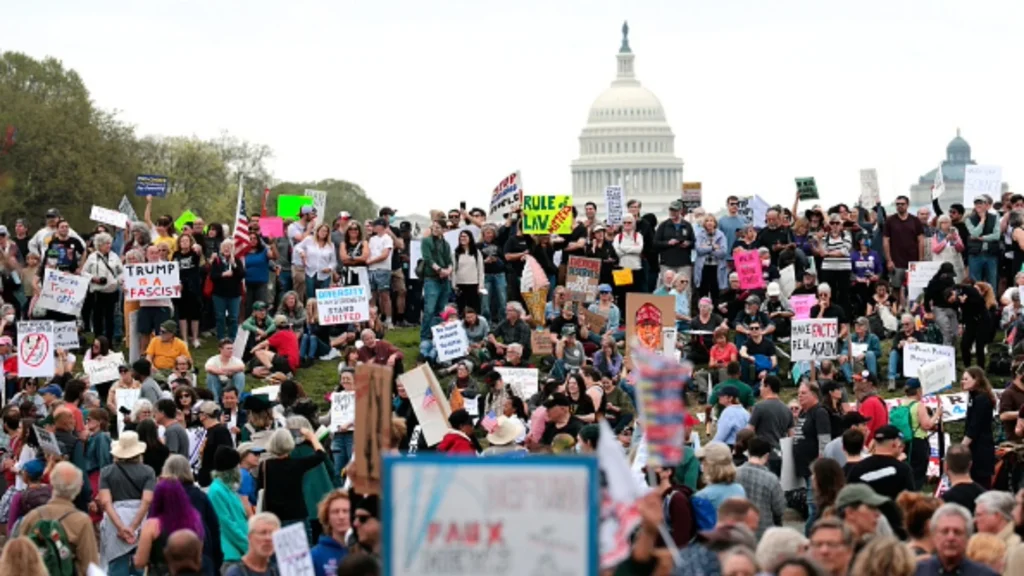
- According to the organizers of the “Hands Off” protests, millions of people turned out for anti-Trump demonstrations.
- Alongside the president, anger was directed toward Elon Musk.
- Anti-Musk sentiment has prompted analysts to downgrade Tesla stock.
Resentment toward Donald Trump’s presidency erupted in protests over the weekend, with hundreds of thousands marching across U.S. and global cities to voice their opposition to the government’s policies.
Anger wasn’t only directed at Trump. The president’s advisor, Elon Musk, has also been the subject of mounting criticism. And his company, Tesla, is paying the price.
Anti-Trump Demonstrations
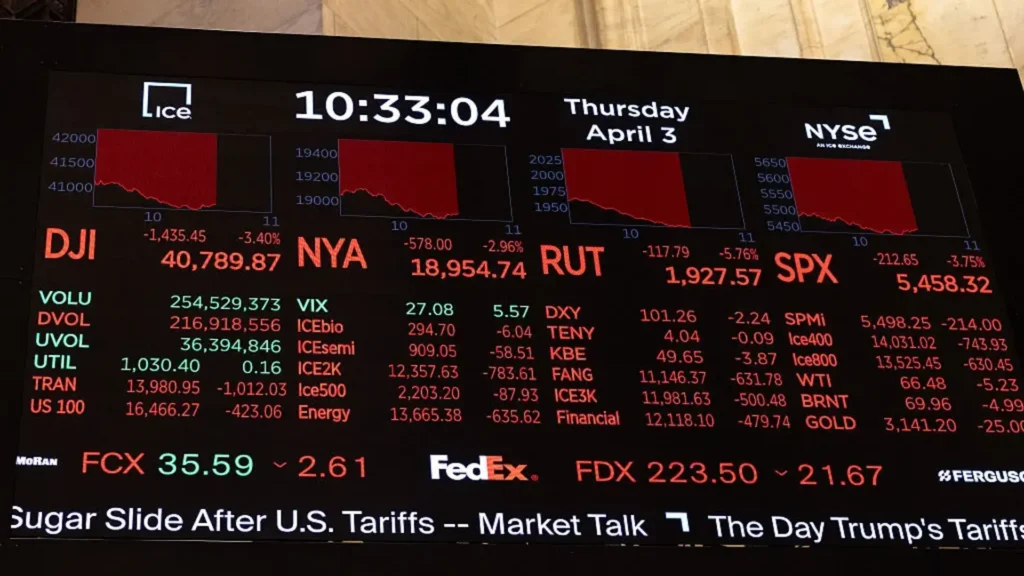
While the initial phase of Trump’s second presidency was met with pockets of resistance, the imposition of market-rocking import taxes last week catalyzed a broader backlash.
According to the organizers of the “Hands Off” protest movement, millions of people turned out for over 1,300 demonstrations.
Events were organized in every U.S. state, with some of the largest occurring in Washington, D.C. and New York.
Demonstrators also gathered across Canada and in European cities, including London, Lisbon and Paris.
Elon Musk at the Center of the Storm
A view of placards at the weekend’s protests reveals that Elon Musk is the subject of just as much ire as Trump, if not more.
The high emotions surrounding Musk’s role in government have had a detrimental effect on Tesla.
In recent weeks, demonstrations have been staged outside Tesla showrooms, vehicles have been vandalized in protest and a growing boycott movement has prompted Tesla’s sales and share price to plummet.
Tesla Stock Continues To Slide
Since the start of the year, Tesla’s market capitalization has fallen nearly 37% to its lowest level since before Donald Trump’s election.
The situation has gotten so bad that even perennial Tesla bulls have expressed concern.
In a note to clients on Sunday, April 6, Wedbush Securities analyst Daniel Ives slashed his Tesla share-price target from $550 to $315.
Ives, who has rated TSLA a buy for the last four years, warned that the electric vehicle maker had become “a political symbol.”
“It is time for Musk to step up, read the room, and be a leader in this time of uncertainty,” he stated.

James Morales is CCN’s blockchain and crypto policy reporter. He has been working in the news media since 2020, writing about topics such as payments, banking and financial technology. These days, he likes to explore the latest blockchain innovations and the evolving landscape of global crypto regulation.
With an educational background in social anthropology and media studies, James uses his platform as a journalist to explore how new technologies work, why they matter and how they might shape our future.