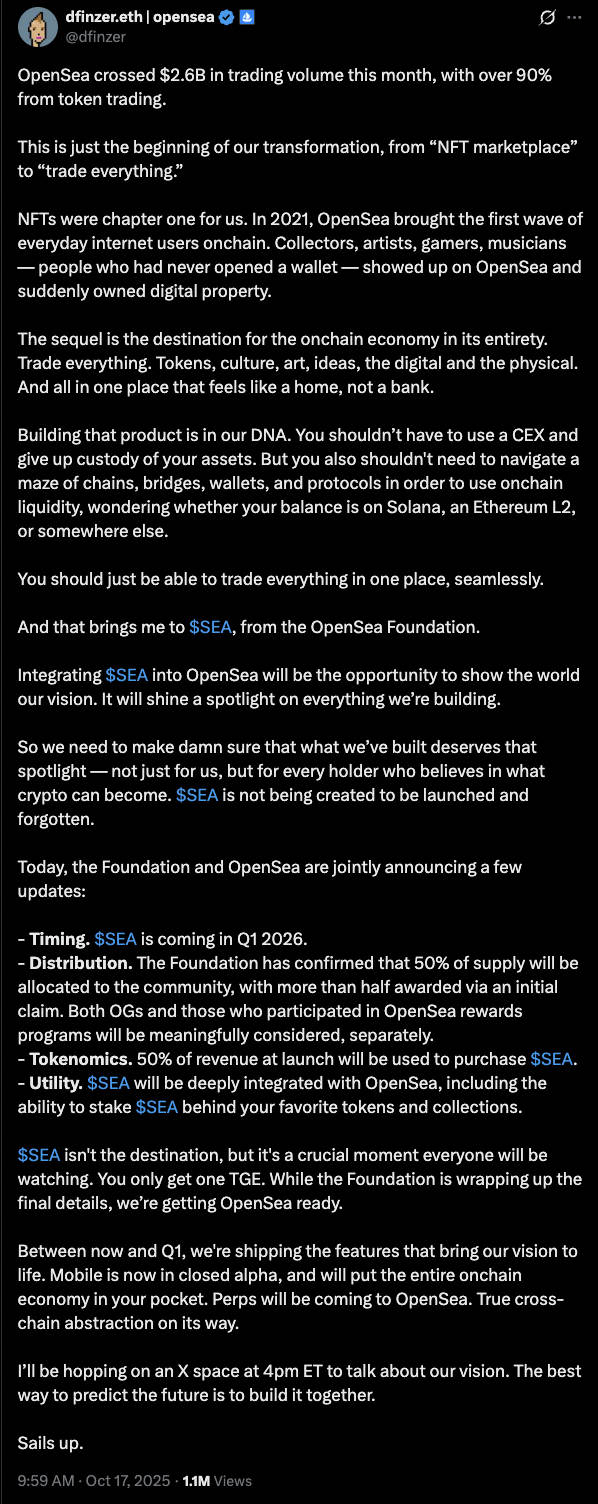
SEA targets Q1 2026, and is positioned as OpenSea’s economic backbone, not a vanity airdrop, via in-marketplace staking and revenue-linked buybacks.
50% of the supply goes to the community, with an initial claim for long-time users alongside a plan for recent users.
Launch buybacks include 50% of OpenSea’s platform revenue at launch, tying token demand to real usage.
SEA emphasizes signal over rewards farming, which can encourage wash trading.
Miami-based non-fungible token (NFT) marketplace OpenSea is launching its own token, $SEA, which will go live in Q1 2026.
Announced by CEO Devin Finzer, the token appears to be far more than a hype airdrop, rather OpenSea’s pivot from an NFT platform to a fully featured avenue for token trading.
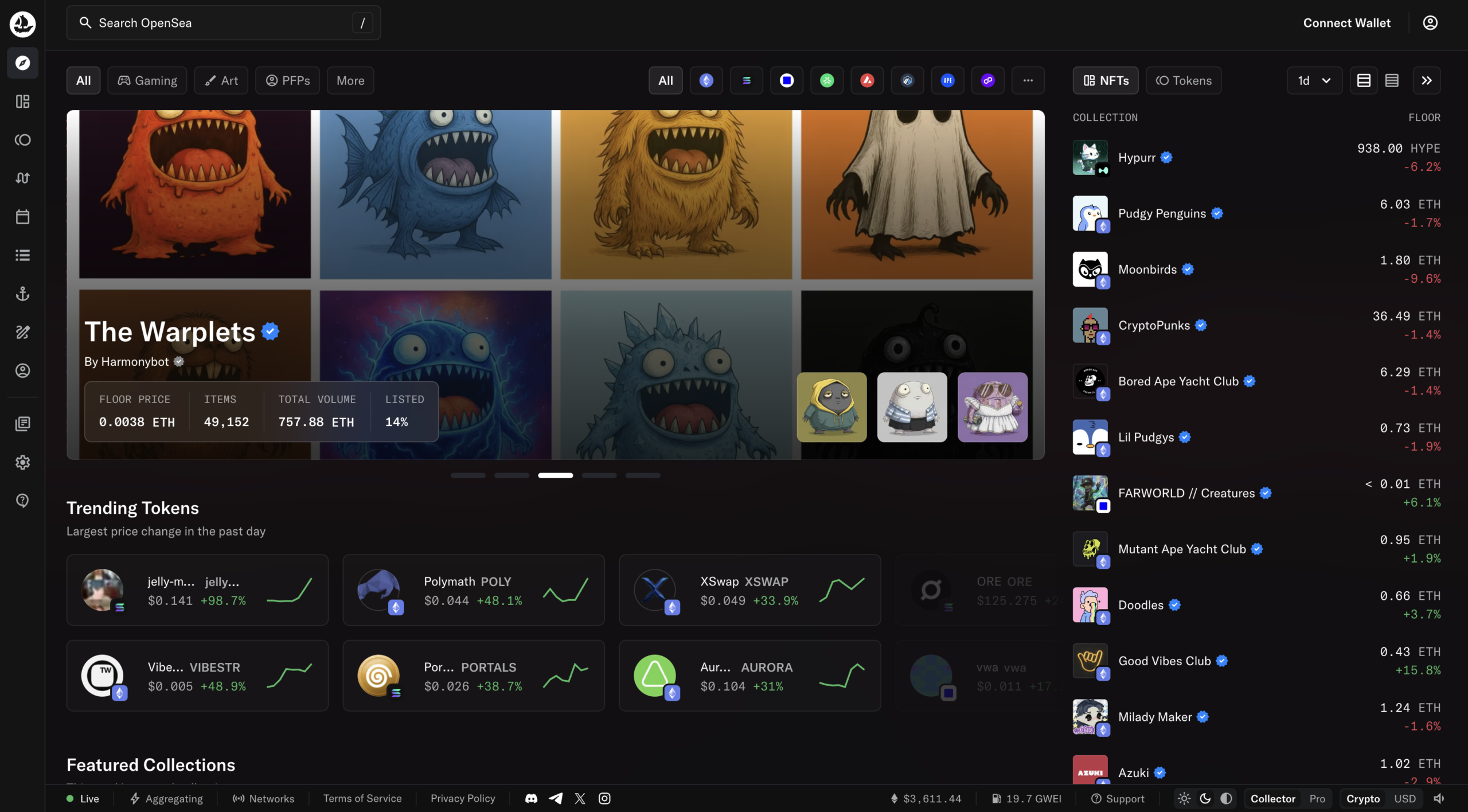
The timing of the launch also reflects broader shifts in the crypto landscape. As NFT trading volumes have fluctuated, OpenSea has sought to diversify beyond art and collectibles, expanding into multi-chain token trading, staking mechanisms, and utility integrations that could rival decentralized exchanges.
The introduction of $SEA will serve as both a governance and utility token, offering holders a stake in OpenSea’s ecosystem and a say in future development decisions.
Why SEA Matters
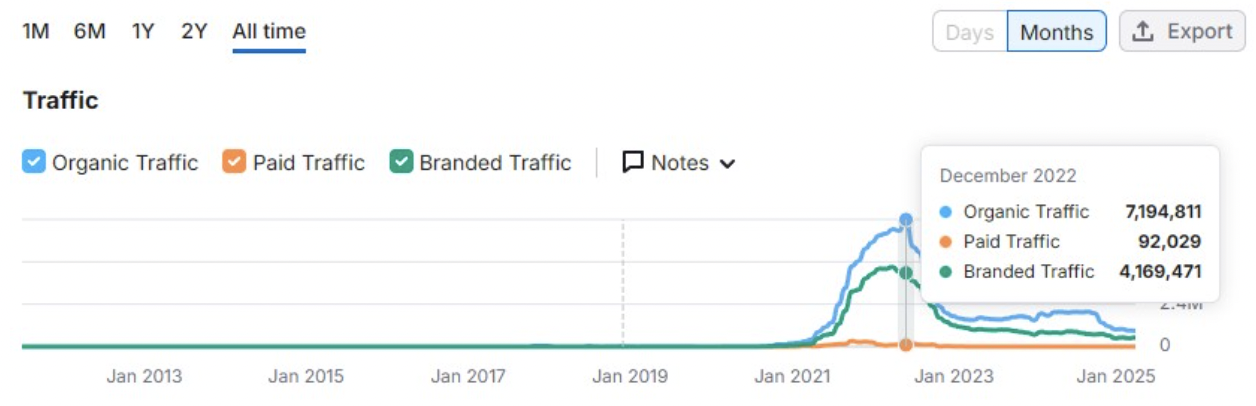
2021’s NFT boom made OpenSea the place to be when it comes to tokenized art, though January 2022, when it cleared $5 billion across Ethereum and Polygon, solidified OpenSea’s appeal.
Source: Semrush
However, this popularity didn’t last. OpenSea reached peak traffic in December 2022, yet those numbers have slowly dropped since. But that’s not OpenSea’s fault. Competition with other token platforms and a broader NFT market downturn led to traffic and trading volumes far below such highs. And either way, page views don’t pay the bills when you’re running a marketplace. Sales do.
We sometimes use affiliate links in our content, when clicking on those we might receive a commission at no extra cost to you. By using this website you agree to our terms and conditions and privacy policy.
Inside the $SEA Token: Utility, Community, and Sustainability
While Finzer’s post doesn’t detail everything about SEA, it outlines a token embedded in the marketplace experience, providing the following features:
Staking Capabilities
It allows users to stake SEA behind NFTs and collections, earning returns on successful projects. It’s also a method of signaling support for projects one believes in, and can bring awareness to meaningful collections, snowballing support.
Community Allocation
The OpenSea Foundation will allocate 50% of SEA’s total supply to the community, with a significant amount rewarded right at launch. Early OpenSea adopters and OpenSea rewards participants will earn more at a later date.
On its surface, this approach ensures legacy collectors and modern traders both benefit. It mirrors successful models like Uniswap’s UNI airdrop.
If you were trading NFTs on OpenSea in 2021 or 2022, your wallet may qualify for an initial SEA claim, but if you only started using the platform in 2024, you can still earn SEA later through continued participation or via staking.
Finzer reveals the plan for SEA. | Source: @dfinzer on X
Buybacks at Launch
Finzer also claims that 50% of OpenSea’s revenue at launch will be used for SEA buybacks.
Imagine OpenSea generates $20 million in trading fees during SEA’s first month. Under its buyback model, $10 million of those fees would go toward purchasing SEA for the platform’s treasury. This will reduce SEA’s circulating supply and potentially cause its price to jump, similar to how Binance and MakerDAO held periodical buybacks and token burns to support long-term value.
OpenSea’s approach appears counter to that of competitor NFT marketplace, Blur, and its handling of tokens. Blur’s token launch approach rewarded trading activity with points and airdrops. It’s an effective approach, but it also encourages wash trading. Because traders earn through volume, they may invest in projects solely to earn rewards, rather than to support the collection. As you can probably imagine, rewards farming isn’t a reliable success indicator.
What Remains Unclear: The Open Questions Around $SEA
Of course, much is still unknown about OpenSea’s long-term approach. Most of what one can derive is from Finzer’s X post. Here’s what we don’t know:
Buyback transparency: How will OpenSea prove it’s buying back tokens? The company needs to publish transactions, buyback periods, and total amounts, at a minimum.
Anti-wash enforcement: While staking inherently requires user risk, potentially minimizing reward farming, OpenSea must enforce penalties for perceived wash trading.
Expanded utility: Finzer notes that OpenSea is expanding beyond NFTs into token trading. Does that mean an exchange a la Coinbase?
OpenSea’s Bid for Relevance in the Next Web3 Cycle
OpenSea dominated the first NFT cycle, and SEA is its bid to enter the on-chain trading era. If OpenSea executes staking as a genuine curation signal and reports buybacks transparently so users can verify its claims, SEA may very well be the solution OpenSea is looking for. But for now, keep your expectations in check until more details arrive.
If OpenSea can deliver on its promises, implementing staking as a genuine curation and discovery tool rather than just a yield mechanic, and conducting transparent, verifiable buybacks tied to real platform revenue, $SEA could become the linchpin that redefines how marketplaces reward participation and build community trust.
Still, much remains speculative. Tokenomics, buyback structure, and regulatory clarity are all unanswered questions. Until those details surface, it’s wise to temper expectations. The vision is ambitious and potentially transformative, but as with every new chapter in crypto, execution will determine whether $SEA becomes OpenSea’s rebirth or just another token in the tide.
Not announced. OpenSea has only said that SEA is coming in Q1 2026 and will be “deeply integrated” in OpenSea.
Will OpenSea publish a real-time buyback dashboard with transaction hashes and totals?
OpenSea hasn’t promised a dashboard, only that 50% of platform revenue at launch will be set for buybacks. This is a key item to watch.
How will SEA governance work?
There will likely be some form of governance for token holders, but what that means isn’t public. Watch for a governance section in the whitepaper or OpenSea documentation.
Will SEA require a know-your-customer (KYC) opt-in?
This is unknown, but OpenSea does not require KYC to browse, list, or trade NFTs as of now. It’s a self-custodial exchange.
Disclaimer:
The information provided in this article is for informational purposes only. It is not intended to be, nor should it be construed as, financial advice. We do not make any warranties regarding the completeness, reliability, or accuracy of this information. All investments involve risk, and past performance does not guarantee future results. We recommend consulting a financial advisor before making any investment decisions.
Max Moeller is a Chicago‑based writer and video editor passionate about games, tech, and crypto. Whether it’s crafting clear, insightful articles or piecing together engaging video retrospectives, he’s driven by curiosity and takes pride in keeping things human. Since 2017, Max has been published in a variety of notable crypto magazines.


 Easy
Easy