Key Takeaways
- Kevin Hassett is a top contender to become the next Federal Reserve Chair, known for his pro-growth and dovish economic stance.
- As Director of the National Economic Council, he’s shaping U.S. fiscal and digital-asset policy with a focus on innovation and competitiveness.
- His views suggest lower interest rates, a softer dollar, and a supportive environment for Bitcoin and crypto adoption.
- A potential Hassett-led Fed could spark global market optimism, but also renewed debates over inflation, bubbles, and Fed independence.
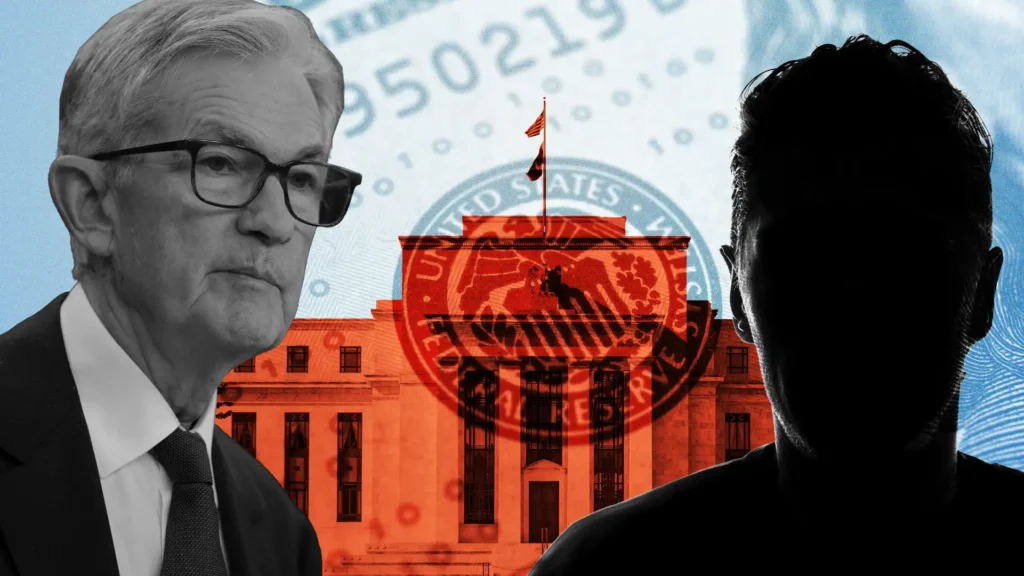
The race for the next Federal Reserve Chair is starting to take shape, and one name now dominating headlines is Kevin Hassett. As Director of the National Economic Council (NEC) and a long-time economic adviser with deep government experience, Hassett has become a powerful voice in shaping U.S. economic strategy.
While he has not yet been officially nominated, President Donald Trump views him as a leading potential contender to succeed Jerome Powell when the current Fed Chair’s term ends in 2026.
His combination of pro-growth fiscal philosophy, dovish stance on interest rates, and openness toward cryptocurrency and digital assets could reshape the U.S. monetary landscape for years to come.
Hassett’s Background and Education
Kevin Hassett was born in 1962 in Greenfield, Massachusetts. He studied economics at Swarthmore College, earning a bachelor’s degree, and went on to complete both a master’s and Ph.D. in economics at the University of Pennsylvania.
Early in his career, Hassett worked as an economist at the Federal Reserve Board of Governors, giving him firsthand experience in monetary policy and financial systems.
He later joined Columbia Business School as an associate professor of economics and finance, teaching courses on macroeconomics and investment theory.
Hassett From Being Think Tank Scholar to National Policy Leader
In the late 1990s, Hassett became a resident scholar at the American Enterprise Institute (AEI), a leading Washington think tank. His research focused on tax policy, corporate investment, and fiscal reform, areas that would define his career.
He co-authored the well-known book Dow 36,000, which argued that stock market valuations were deeply undervalued, a thesis that reflected his optimistic, pro-growth economic outlook.
Over the years, Hassett served as an economic adviser to multiple Republican presidential campaigns, including those of George W. Bush, John McCain, and Mitt Romney. His expertise in corporate taxation and market policy made him one of the most sought-after conservative economists in Washington.
Under President Donald Trump’s first administration, Hassett was appointed Chairman of the Council of Economic Advisers (CEA). In that role, he helped craft and advocate for the 2017 Tax Cuts and Jobs Act, a landmark reform aimed at stimulating corporate investment and job creation.
He later returned to the White House during the COVID-19 pandemic, where he advised on economic reopening strategies and fiscal stimulus efforts.
As of 2025, Hassett serves as Director of the National Economic Council (NEC), coordinating the administration’s economic, financial, and digital-innovation policies.
Hassett’s Achievements in His Current Role
Since taking over the NEC in 2025, Hassett has focused on reviving investment confidence, easing regulatory burdens, and strengthening U.S. capital markets. He has pushed for policies to make the U.S. more competitive globally and to attract corporate investment back to domestic industries.
Under his leadership, the NEC has promoted measures aimed at supporting energy independence, job creation, and technological innovation. Hassett has also played a central role in digital-asset strategy discussions, ensuring that cryptocurrency and blockchain technologies are considered part of the broader innovation agenda.
While still early in his tenure, Hassett’s economic philosophy, balancing fiscal expansion with a more flexible monetary outlook, has already influenced investor expectations and market behavior.
Hassett’s Stance on Interest Rates and Monetary Policy
Kevin Hassett is widely regarded as a monetary-policy dove, meaning he tends to favor lower interest rates and accommodative monetary conditions.
The Economist reported that President Trump has been pressuring the Fed to cut interest rates faster, reflecting his view that the U.S. economy needs stronger monetary stimulus. He has attempted to remove Lisa Cook, a current Fed governor, a move that will be reviewed by the Supreme Court in January. Meanwhile, Trump has already placed another ally, Stephen Miran, on the Fed’s board temporarily; Miran has voted consistently for large rate cuts.
If appointed as chair, Kevin Hassett is expected to steer policy in the same direction, favoring aggressive rate reductions to spur growth and investment.
This means under a potential Hassett-led Fed, the central bank might:
- Move more quickly to reduce benchmark interest rates,
- Support credit expansion to boost consumption and corporate investment,
- Accept a weaker U.S. dollar as a natural consequence of pro-growth monetary easing.
Such a strategy could benefit equity markets and real-asset sectors like housing and manufacturing, but also carries the risk of reigniting inflation if demand outpaces productivity.
Hassett’s Views on Bitcoin, Crypto, and Digital Innovation
Hassett stands out among potential central-bank leaders for his knowledge and openness toward cryptocurrency and blockchain innovation.
He has participated in government working groups on digital-asset policy and is known to have strong professional relationships with industry leaders in the blockchain sector.
Public financial disclosures indicate that Hassett owns at least $1 million worth of Coinbase stock, with some reports suggesting the total could be as high as $5 million based on asset range filings.
In addition to his personal investment, Hassett has also served on Coinbase’s Global Advisory Council, a body formed to strengthen the company’s engagement with regulators, policymakers, and economists.
His connection to Coinbase is unusual for a potential central bank leader and has sparked debate about what it could mean for the future of crypto regulation and monetary policy.
Supporters see it as a positive sign, suggesting that Hassett understands the growing importance of digital assets and could bring a pro-innovation, crypto-aware perspective to the Federal Reserve. A policymaker with first-hand exposure to blockchain companies may be more inclined to pursue balanced regulation that fosters growth without stifling innovation.
However, the Coinbase stake has also raised questions about potential conflicts of interest. If Hassett were to become Fed Chair, he would almost certainly be required to divest or place his holdings in a blind trust to avoid any appearance of bias in decisions that could influence digital-asset markets.
Still, his background and investments indicate that a Hassett-led Fed could mark a more open, collaborative chapter between traditional finance and the crypto sector. For investors, that combination of easier monetary policy and a more supportive regulatory environment could create one of the most crypto-friendly macro backdrops in U.S. central banking history.
Hassett’s potential appointment as Fed Chair is seen as bullish for Bitcoin and digital assets because:
- A dovish monetary policy environment typically boosts risk-asset demand, including crypto.
- His background suggests a more cooperative regulatory tone, balancing innovation with financial stability.
- He has emphasized that digital assets represent the future of financial systems if properly regulated and integrated.
This combination of easier monetary conditions and pragmatic crypto engagement could make the U.S. a global leader in digital finance, attracting investment and talent to the sector.
Impact on the US Dollar and Global Markets
If Kevin Hassett were to lead the Federal Reserve, global investors expect a softer U.S. dollar policy stance. Lower interest rates reduce the dollar’s yield advantage against other currencies, often prompting capital to flow into higher-risk or emerging-market assets.
A weaker dollar could:
- Support U.S. exports by making American goods cheaper abroad,
- Ease global debt burdens in dollar-denominated bonds,
- Increase commodity prices as dollar-priced assets adjust upward.
However, it could also challenge import-driven sectors and fuel inflation if import costs rise. The balance between these forces would depend on how aggressively the Fed under Hassett manages future rate cuts.
Potential Benefits and Risks of a Hassett-Led Fed
Benefits:
- Lower borrowing costs for consumers and businesses, encouraging growth.
- Renewed momentum in technology, real estate, and capital markets.
- Supportive environment for crypto innovation and fintech development.
Risks:
- Reacceleration of inflation if demand overheats.
- Possible erosion of central-bank independence if policy becomes politically aligned.
- Increased volatility in currency and crypto markets due to rapid liquidity expansion.
The Bigger Picture: What to Expect Ahead
Even before any formal nomination, Kevin Hassett’s influence is shaping the policy conversation. Markets are pricing in the possibility of faster rate cuts, a weaker dollar, and a friendlier environment for digital assets.
If his philosophy prevails at the Fed, 2026 could bring:
- A more aggressive easing cycle,
- A rebound in global risk appetite,
- And potentially a “Hassett rally” across equities and crypto markets.
Whether that outcome delivers sustainable growth or new volatility will depend on how well monetary flexibility is balanced with long-term price stability.
FAQs
No. He is currently Director of the National Economic Council and a leading contender for the position when Jerome Powell’s term ends in 2026.
He favors a dovish policy, meaning lower interest rates to boost investment, growth, and employment.
His openness to blockchain innovation and preference for low rates could make the environment more favorable for digital assets.
Possibly. Easier monetary policy often softens the dollar, benefiting exports but increasing import-driven inflation.
The information provided in this article is for informational purposes only. It is not intended to be, nor should it be construed as, financial advice. We do not make any warranties regarding the completeness, reliability, or accuracy of this information. All investments involve risk, and past performance does not guarantee future results. We recommend consulting a financial advisor before making any investment decisions.

Onkar Singh has three years of experience as a digital finance content creator. Throughout his career, he has collaborated with various DeFi projects and crypto media outlets. In his leisure time, he enjoys fitness activities at the gym and watching movies across different genres. Balancing his professional and personal interests, Onkar continues to contribute to the digital finance landscape while pursuing his hobbies.


 Easy
Easy