Secure Your Crypto Wallet While Traveling During This Holiday | Credit: Veronica Cestari /CCNSeason
Share
Key Takeaways
Holiday travel introduces crowded environments and unpredictable networks that increase exposure to digital and physical threats.
Hardware wallets gain stronger protection when users prepare devices at home and carry them discreetly throughout the trip.
Public WiFi, phishing attempts and rushed movement create opportunities for cybercriminals during the holidays.
A structured post-trip review helps restore a secure portfolio and removes unnoticed risks from the travel period.
The holidays bring movement, crowded airports, unfamiliar hotels, and long hours on public networks. This creates the perfect environment for security mistakes that can put digital assets at risk.
The holiday season is meant for relaxation, connection, and peace of mind. Unfortunately, for cryptocurrency holders, this period often creates a security paradox.
According to Chanalysis, 71% of crypto thefts during travel involve lost or stolen phones or seed exposure.
Movement across borders, luggage checks, fast travel schedules, and unpredictable settings raise exposure to cyber threats and theft attempts. Each of these factors increases the pressure on users managing crypto.
Many travelers rely on phones and laptops for payments, communication, and storage. At the same time, scammers and thieves view the holiday season as a prime time for their activities.
This combination creates a fragile environment for anyone carrying a crypto wallet or hardware device.
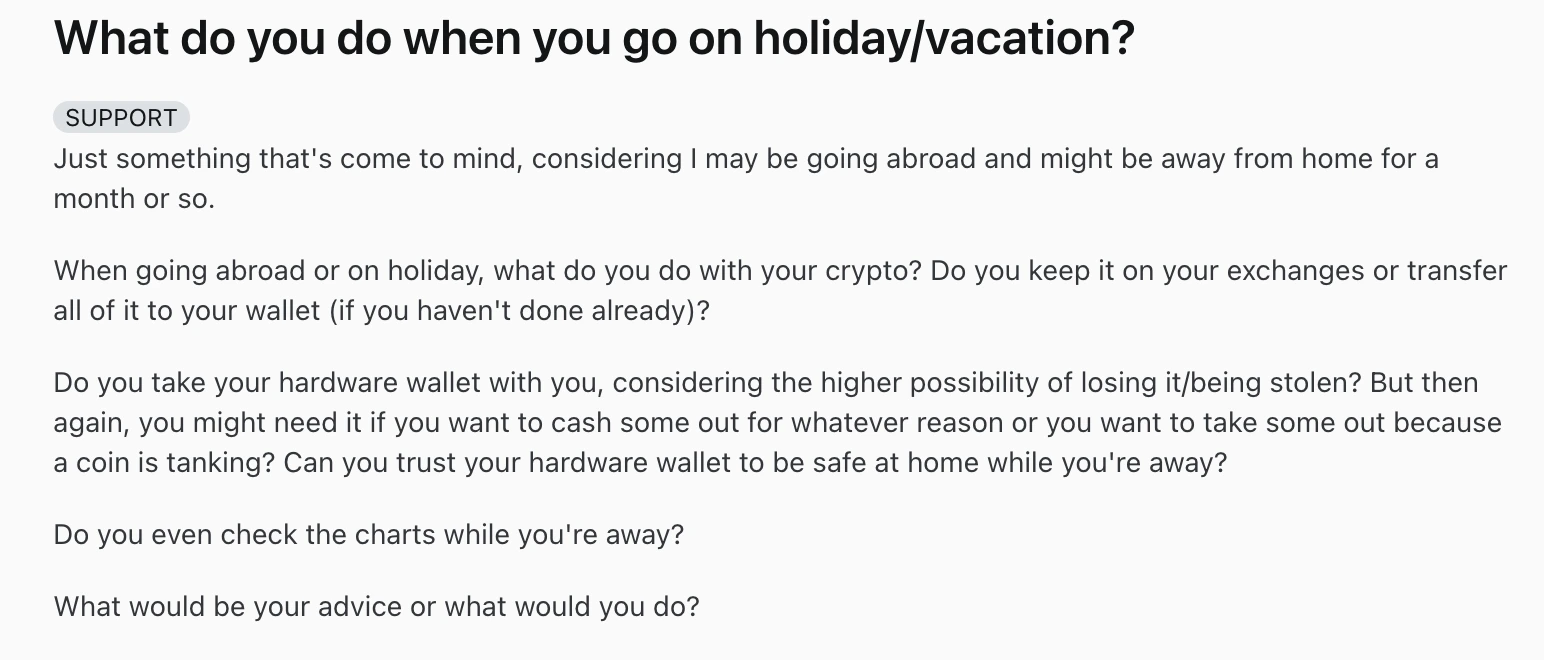
The community has expressed their concerns.
Holidays and crypto | Source: Reddit
Strong preparation and clear routines can significantly reduce the risk during the journey.
This article explains how travelers can protect their wallets before departure, safeguard cold storage devices on the road, strengthen digital hygiene while moving between networks, avoid seasonal scams, and re-secure everything when returning home.
Crypto Security Checklist: Preparing Your Assets Before Departure
Holiday travel introduces many unpredictable situations. A structured routine before leaving home helps users avoid emergencies during the trip. Strong preparation reduces the attack surface and builds confidence for every stage of the journey.
A few simple steps can eliminate the majority of avoidable risks once the trip begins.
The Golden Rule: The One Seed Phrase Mistake That Can Cost Everything
Seed phrases remain the single most valuable secret in cryptocurrency. Bringing the master recovery phrase on a trip poses a significant risk. Loss, theft, or airport bag checks could expose access to the entire portfolio.
According to Chinalysis’ 2025 report, crypto losses reached $ 2.2 billion in 2024, marking a 21% rise compared to 2023, with private key compromises, including device theft, accounting for 43.8% of all cases.
A safer routine stores the seed phrase at home in a secure, non-digital location. Good examples include:
Fireproof storage: Metal seed plates stored in devices designed to resist heat and pressure.
Safe deposit boxes: A controlled environment inside a regulated facility.
Locked home safes: A secure location with limited access.
These options reduce the risk of misplacement or exposure during travel. The best routine keeps recovery information far away from airports, hotels, backpacks, or suitcases.
Firmware Updates and PIN Resets: Device Health Check
A hardware wallet functions like any other computer. It needs updates, strong access controls, and clear security routines. Before a holiday trip begins, users should complete a full device check. This includes:
Installing the latest firmware version to prevent old vulnerabilities.
Setting a strong, unique PIN that cannot be guessed based on birthdays or reused numbers.
These actions help reduce the risk of unauthorized access if the device falls into the wrong hands.
Enabling Biometrics and 2FA: Layering Digital Defenses
Layered protection can create a stronger shield against cyberattacks. Moving authentication away from phone numbers eliminates SIM swap risks during travel. Authenticator apps provide higher protection than text-based verification.
Enabling biometric features on phones and hardware wallet companion apps.
Disabling SMS-based authentication.
Each step can remove a common attack vector during holiday congestion, especially when devices switch networks across borders.
Once all pre-trip preparation is complete, individuals should shift their to safe transport. A secure device requires careful handling during travel, especially when crossing borders or navigating airport checks.
Cold Storage Travel Tips: Keep Your Bitcoin Safe Anywhere
Cold storage provides strong protection, but only when handled with care. The holiday rush introduces crowded areas, unpredictable checks, and the risk of physical tampering. Planning ahead helps preserve safety throughout the journey.
Hardware wallets remain the safest way to store crypto, yet the device itself becomes a target once travel begins. This section outlines practical strategies for carrying cold storage discreetly and legally through airports, customs, and international borders.
Digital Camouflage: Simple Strategies for Hiding Your Device in Plain Sight
The numbers show how fast attackers target users during busy travel periods and why strong preparation matters before any trip.
A hardware wallet should never draw attention. Travelers benefit from packing devices inside ordinary items rather than specialized cases. A simple approach keeps the device hidden in everyday objects that blend with the rest of the luggage.
Good examples include:
Non-electronic accessories such as toiletries, travel pouches, or organizer bags.
Neutral containers that do not include crypto logos, branded stickers, or metal protective boxes.
Avoiding metal safes or unusual cases reduces scrutiny at checkpoints.
The goal is to avoid creating curiosity from airport staff or nearby travelers.
Airport Security and Customs: Navigating Checkpoints
Most countries treat hardware wallets as normal electronic devices. Still, security staff may ask questions if the device appears suspicious. A calm and simple explanation helps prevent complications.
In 2024, a traveler’s empty Ledger was stolen from their checked luggage at an EU airport, highlighting the preference for carry-on luggage.
Crypto friends, A WORD OF CAUTION.
NEVER pack a hardware wallet in a checked bag through the airport.
Just opened my bag to find someone in security, between the time I checked my bag and collected it, had broken the lock and stolen my (thankfully, completely empty) Ledger.
The safest phrasing describes the device as a “USB storage device” (e.g., Ledger, Trezor) or a “security key,” (like YubiKey), which are accurate and easy to understand.
There is no need to provide additional detail unless required by local law. Some regions have rules regarding the disclosure of digital assets, so learning these regulations before departure can help avoid unnecessary risks.
Activating Duress PINs and Passphrases for Enhanced Wallet Security
Hardware wallets often include security features that protect users during coercion. A passphrase, or the optional BIP-39 passphrase (also known as a 25th word), creates an alternative wallet that opens only when the phrase is entered.
Entering only the PIN opens the main (visible) wallet; entering PIN + passphrase opens a hidden one. This adds a separate vault that cannot be accessed without the additional word.
Some devices also include a duress PIN. When entered, the wallet opens a decoy wallet or account containing minimal or no funds, while the passphrase-protected wallet remains inaccessible and undetectable. This protects the primary assets if a traveler faces pressure from criminals.
Ledger, Trezor, Coldcard, BitBox02, and most major devices support this feature (Trezor calls it “additional passphrase”). It provides strong plausible deniability against coercion (“$5-wrench attacks”). For example, when an attacker simply threatens someone with a cheap wrench (or any weapon) and forces them to unlock their wallet.
Crypto Security On the Road: Safe Network and Device Usage
Travel involves constant switching between hotel Wi-Fi, airport networks, cafes, and cellular data. These environments pose significant risks, particularly when handling cryptocurrency or signing transactions.
Public Wi-Fi, unknown routers, crowded airports, and shared devices create opportunities for cybercriminals to exploit. This section outlines how to maintain safe digital routines while traveling.
The Public Wi-Fi Warning: Never Transact on Hotel or Airport Networks
Public networks carry a high risk of interception. During holiday travel, crowded terminals and hotels become hotspots for cyberattacks. Man-in-the-middle attacks enable criminals to intercept data, redirect users to malicious websites, or modify transactions.
To mitigate this risk, users should refrain from interacting with wallets, exchanges, or sensitive accounts on public networks.
The VPN Lifeline: Encrypting Your Connection
A reliable VPN creates encrypted tunnels that hide traffic from attackers. This protects login details, wallet connections, and all sensitive information during travel.
Cellular data offers better safety than unsecured Wi-Fi, so relying on mobile connections minimizes exposure.
Limited Exchange, Anti-Malware and Clipboard Hygiene
Holiday travel might also create opportunities for malicious software to slip in. Clipboard hijacking malware, like Clipbanker, replaces withdrawal addresses with the attacker’s address during transactions.
Security routines reduce this danger:
Verifying full addresses before every transfer.
Using updated anti-malware solutions on laptops.
Disabling auto-connect features like Bluetooth or AirDrop.
Additionally, users should log out of exchanges and avoid storing passwords on devices to prevent unauthorized access. The principle of least privilege keeps exposure low by limiting access to essential accounts only.
Digital risks persist throughout the journey, but physical dangers and seasonal scams also warrant attention. The following section addresses the social side of security.
Protecting Against Crypto Scams and Physical Theft
Busy travelers often overlook small details, which can open the door to targeted scams or opportunistic theft in crowded venues, during distracted moments, and with frequent interactions with strangers.
Remaining alert can prevent threats from escalating.
The Art of Silence: Avoiding Unnecessary Disclosure
Discussing crypto holdings in public increases the risk of targeted theft. Airports, hotel lobbies, and restaurants contain many unknown individuals who may overhear conversations. Reducing exposure lowers the chances of becoming a target.
This caution also includes removing crypto-themed merchandise, stickers, or branded accessories from devices and luggage.
Holiday Phishing and Transaction Scams
Security teams recorded 10.7 million crypto phishing detections in 2024, an 83.4% jump. Criminals increase phishing attempts during holiday peaks. Criminals adjust their methods when travel activity rises.
Fake QR codes, fraudulent booking confirmations, and disguised customer service emails appear frequently in crowded travel environments. Users must remain careful with unfamiliar links, suspicious attachments, and unexpected requests.
A strong routine includes the send-small-test-amount rule for new transactions, which reduces the risk of sending funds to incorrect addresses.
Securing a phone is crucial because it often becomes the weakest link in a cryptocurrency setup. Phone stores wallet apps, authentication tools, and account access, which means a compromised device can expose sensitive information.
Strong codes, biometric locks, and encrypted storage create a critical layer of protection that keeps wallet data safe and reduces the risk of unauthorized access.
Disabling cloud backups for crypto apps also prevents recovery keys or sensitive data from being accidentally stored online.
After the trip ends, the final stage of security begins. A structured post-travel routine ensures that any unnoticed risks are addressed quickly.
Post-Trip: Crypto Recovery and Re-Securing Your Portfolio
Returning home provides an opportunity to reassess security. This stage helps verify that nothing was compromised during travel and that long-term holdings remain safe.
Some risks remain unnoticed during a busy trip. A careful review ensures that accounts stay secure and that no suspicious activity occurs. This section outlines post-travel tasks that restore full protection.
Auditing Your Accounts: Checking for Compromises
Review account activity: Look for unusual transactions or unexpected sign-ins.
Check device integrity: Identify signs of tampering or suspicious performance.
Move assets safely: Transfer funds to a clean device if any compromise appears likely.
The Post-Holiday Rebalance: Returning Funds to Cold Storage
Transfer remaining travel funds: Move all temporary assets back to cold storage.
Restore original structure: Recreate the same separation between daily-use funds and long-term holdings.
Confirm balances: Ensure all assets appear in the correct secure wallet.
Resetting Passwords and PINs (Best Practice)
Set new wallet PINs: Replace any temporary travel codes.
Create new exchange passwords: Use fresh, unique credentials for accounts accessed remotely.
Refresh device passcodes: Update lock codes on phones and laptops.
A short post-trip routine strengthens every layer of protection. These steps ensure that any unnoticed risks from the holiday period are mitigated and that the entire portfolio returns to a safe and secure environment.
What To Watch for in the Future of Crypto Travel Security
Holiday travel will continue to challenge crypto users as digital payments become more common across borders. Growing adoption of self-custody pushes developers to build stronger protections that work in unpredictable environments like airports, hotels and shared spaces.
Hardware wallet makers are already advancing tamper alerts, offline verification tools and more intuitive passphrase systems that support safer movement between countries.
Future updates across mobile operating systems, VPN services and authentication apps will aim to reduce exposure on public networks.
New security standards for travel devices may also emerge as regulators consider the mobility of digital assets and the risks associated with cross-border data. Seasonal scams will evolve as attackers exploit busy travel periods, which makes ongoing awareness an important part of long-term protection.
The next stage of crypto security will blend better hardware, smarter software and more explicit global rules. These developments will shape how users protect their assets during future holiday seasons and across everyday travel routines.
Do international borders require disclosure of digital asset holdings?
Some countries require disclosure of digital assets above certain values, so travelers benefit from checking local rules before arrival.
How can a traveler confirm that a hardware wallet remains untampered after returning home?
A device integrity check, including PIN changes and firmware verification, reveals possible interference.
Why do holiday events increase social engineering risks for crypto holders?
Higher activity, public conversations and unfamiliar crowds give attackers more opportunities to gather information or trick individuals.
Can phone theft alone compromise a crypto portfolio?
A phone can expose authenticator apps and wallet access, so using strong passcodes and disabling cloud backups reduces this risk.
Disclaimer:
The information provided in this article is for informational purposes only. It is not intended to be, nor should it be construed as, financial advice. We do not make any warranties regarding the completeness, reliability, or accuracy of this information. All investments involve risk, and past performance does not guarantee future results. We recommend consulting a financial advisor before making any investment decisions.
Dr. Lorena Nessi is an award-winning journalist and media technology expert with 15 years of experience in digital culture and communication. Based in Oxfordshire, UK, she combines academic insight with hands-on media practice.
She holds a PhD in Communication, Sociology, and Digital Cultures, and an MA in Globalization, Identity, and Technology.
Lorena has taught at Fairleigh Dickinson University, Nottingham Trent University, and the University of Oxford. She is a former producer for the BBC in London, with additional experience creating television content in Mexico and Japan.
Her research focuses on digital cultures, social media, technology, capitalism, and the societal impact of blockchain innovation.
She has written extensively on digital media and emerging technologies, with her work featured in both academic and media platforms. Her Web3 expertise explores how blockchain technologies shape culture, economics, and decentralized systems.
Outside of work, Lorena enjoys reading science fiction, playing strategic board games, traveling, and chasing adventures that get her heart racing. A perfect day ends with a relaxing spa and a good family meal.


 Easy
Easy