Home / Analysis / Crypto / Technical Analysis / HANTA Solana Memecoin Explodes 100x as Hantavirus Outbreak Goes Viral: Analyzing the How, Why and What Next
HANTA memecoin skyrockets — what next? | Credit: Hameem Sarwar
Share
Key Takeaways
HANTA surged more than 10,000% after traders turned a real-world hantavirus outbreak into a speculative memecoin.
Influencer inflows, Pump.fun exposure, and Moonshot verification fueled aggressive buying, pushing the token higher.
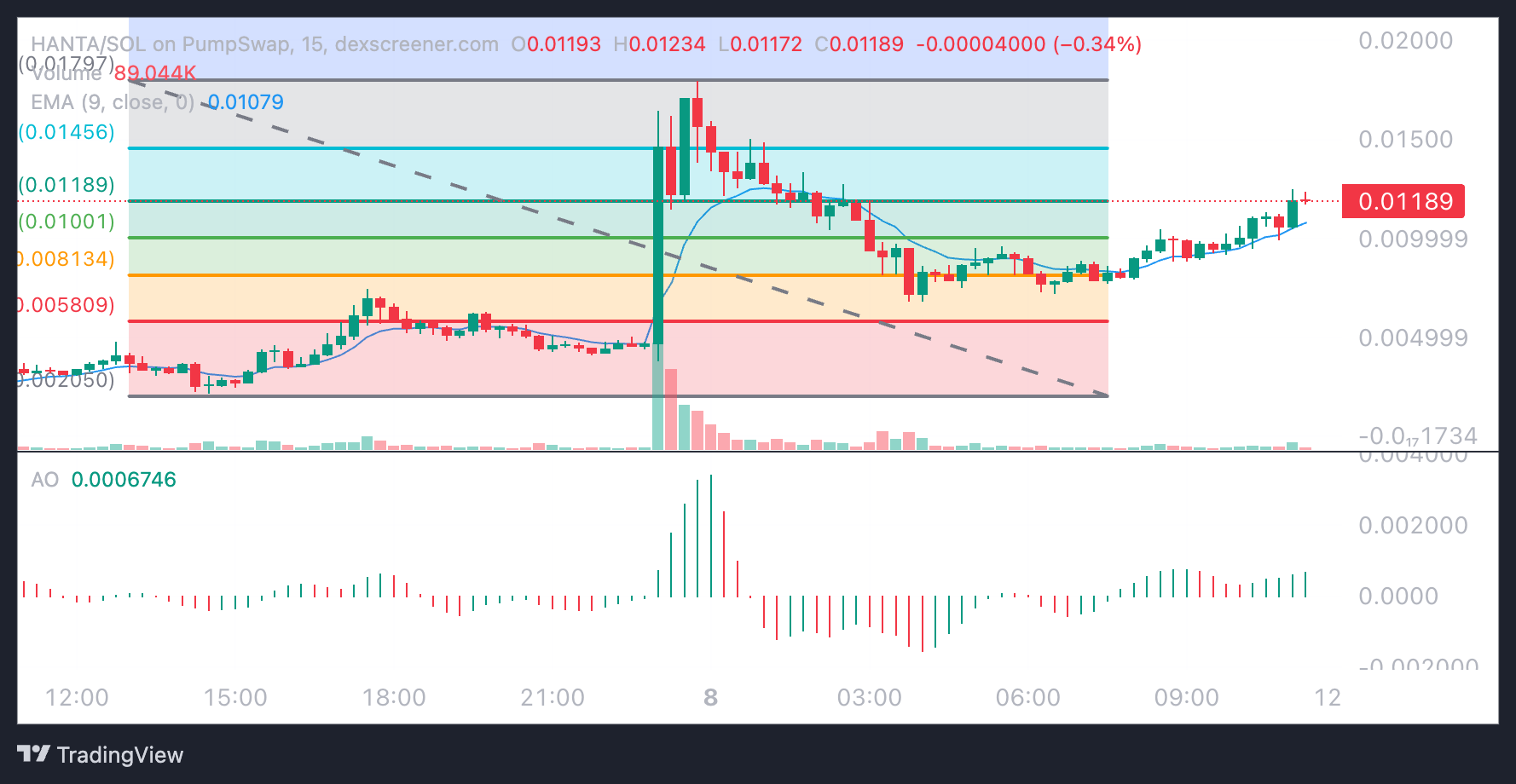
The bullish structure remains intact, with HANTA holding above key support near $0.010 amid extreme volatility.
Hantavirus (HANTA), a Solana-based memecoin, surged more than 10,000% and briefly reached a market capitalization above $17 million, while generating nearly $30 million in daily trading volume.
Early buyers who minted the token on the Pump.fun reportedly secured life-changing gains within hours.
However, the rally is now raising uncomfortable questions.
Unlike most memecoins, the Hantavirus memecoin wasn’t built solely around internet jokes. It was built around a real-world disease outbreak.
So, what’s next for HANTA’s price?
What Caused the Hantavirus Breakout?
As stated earlier, the catalyst came from a genuine health incident.
Try Our Recommended Crypto Exchanges
Sponsored
Disclosure
We sometimes use affiliate links in our content, when clicking on those we might receive a commission at no extra cost to you. By using this website you agree to our terms and conditions and privacy policy.
On May 4, the World Health Organization (WHO) and the Africa CDC confirmed a hantavirus outbreak aboard the MV Hondius cruise ship after it departed Argentina.
That headline spread online, leading crypto traders to do what they often do. They turned it into a narrative trade.
By May 6, traders on X were drawing dark comparisons between the cruise ship outbreak and the earliest days of the COVID-19 pandemic back in March 2020.
That speculation quickly evolved into a Hantavirus memecoin narrative.
Shortly afterward, crypto-trading app Moonshot verified the token, dramatically increasing visibility and triggering aggressive retail buying.
At that point, the rally turned vertical as the memecoin surged from a $170,000 market cap to $17 million.
Several prominent crypto traders began pushing a highly speculative theory online — that another global health scare could spark a “memecoin supercycle” similar to the pandemic-era retail trading boom.
One widely shared post asked:
“What if the Hantavirus shuts down everything and we enter a memecoin supercycle.”
That inflow helped trigger a secondary rally phase, pushing HANTA another 398% higher after its initial breakout.
Combined with the original launch move, the token eventually surged more than 100X from inception.
HANTA Price Prediction
From a technical perspective, the Hantavirus memecoin is showing signs of strength after successfully reclaiming the mid-range support zone following its explosive breakout.
Unlike COVID-19, hantavirus is not an airborne virus that spreads easily from person to person. The disease primarily spreads through exposure to infected rodent droppings.
While the Andes strain identified aboard the ship is one of the few variants capable of limited person-to-person transmission, experts emphasize that it requires prolonged close contact and is highly unlikely to cause a global outbreak.
Disclaimer:
The information provided in this article is for informational purposes only. It is not intended to be, nor should it be construed as, financial advice. We do not make any warranties regarding the completeness, reliability, or accuracy of this information. All investments involve risk, and past performance does not guarantee future results. We recommend consulting a financial advisor before making any investment decisions.
Victor Olanrewaju is a crypto analyst and reporter at CCN with deep roots in on-chain research and technical analysis. His crypto journey began in 2017, but it was the 2020 Uniswap airdrop that sparked a full-time pivot into the space.
With a foundation in copywriting, Victor honed his craft creating high-converting content for leading crypto brokers — most notably an XRP price prediction that ranked #1 on Google during the 2021 bull run.
He later joined AMBCrypto in 2022, where he combined storytelling with technical and on-chain analysis to cover key market narratives.
In 2024, he expanded his expertise at BeInCrypto, collaborating with analysts and using tools like Glassnode, Santiment, and IntoTheBlock to break down Bitcoin and altcoin trends.
At CCN, Victor covers the top cryptocurrencies, memecoins, macro shifts, blending real-time insights with deep-dive metrics.
He holds a Bachelor’s degree in Physics from the University of Ibadan, equipping him to simplify complex data for a wide audience. Follow his work or connect on LinkedIn or X.