How rapid blockchain tracing helped return approximately EUR 26,000 to a victim of a multi-currency crypto scam, while showing how investigators read transaction timing, wallet behavior and service exposure.
Editor’s note:
This article is based on a real investigative case. Names, platform identifiers, wallet addresses, transaction hashes, timestamps, service references and other identifying details have been removed or pseudonymized. Images have been edited so that no reliable conclusions can be drawn about the victim, involved platforms, wallets or ongoing investigative steps. The investigative chronology and methodological observations remain materially unchanged.
The case is used here for one purpose: to explain how a crypto fraud investigation moves from panic and screenshots to a usable evidence record. It is not a promise that funds can always be recovered. It is a practical example of why speed, documentation, flow-of-funds analysis and service-provider cooperation matter.
What Case Is Being Examined
The case began when a victim realized that an online investment platform that had appeared legitimate for weeks had stopped behaving like a real service. The dashboard still displayed balances. Support still answered. The account still looked active. But withdrawals no longer worked.
Instead of receiving the requested payout, the victim was told that additional steps were required before the funds could be released. First came administrative explanations. Then compliance requirements. Then further payment requests that were presented as necessary to unlock the account.
By that point, approximately EUR 50,000 had already been transferred across several cryptocurrencies. The victim asked the question investigators hear in almost every crypto fraud case: Is there still any chance?
At that moment, nobody knew. The assets were already moving. The only certainty was that every minute now mattered.
Key Facts
Metric
Case detail
Initial loss
Approximately EUR 50,000
Assets involved
Multiple cryptocurrencies
First operational success
Within the first 24 hours
Assets intercepted first
23 SOL, 3.4 LTC and 35 LINK
Further interception
Approximately 8,000 USDC around twelve hours later
Returned to victim at time of writing
Approximately EUR 26,000
Current status
Remaining stolen assets are still circulating and continue to be traced
Primary success factors
Fast reporting, complete documentation, immediate tracing and cooperation with service providers
Why This Case Matters
The first trace is rarely the transaction. It is the message that came before it.
A stranger appears in a chat application. The conversation does not begin with a demand for money. It begins with attention, routine and trust. A supposed investment opportunity is introduced slowly. A dashboard shows gains. Small withdrawals appear to work. Then the requests become larger: liquidity checks, tax payments, security deposits, account verification fees, wallet migrations.
By the time the victim realizes the platform was not legitimate, the funds may already have moved through a sequence of wallets, swap services, bridges, stablecoin routes and virtual asset service providers. What looked like a personal relationship has become a financial trail. For investigators, the visible case begins where the deception meets the ledger.
Core idea
The blockchain records movement. It does not automatically explain meaning. A professional investigation has to reconstruct chronology, value movement, wallet behavior, service exposure, possible beneficial control and evidentiary gaps. The work is not simply to draw a line from one address to another. It is to turn a scattered sequence of transfers into a record that can be understood, challenged and acted upon.
A Fraud Case Is Also a Financial Investigation
Many investment scams and so-called pig-butchering schemes are built through social engineering rather than technical intrusion. The victim is not necessarily hacked. The private key may never be stolen. Instead, the victim is persuaded to transfer assets voluntarily to wallets apparently used or controlled by the fraud network.
That distinction changes the investigative frame. A conventional cyber incident may start with a compromised device, server or credential. A crypto investment scam often starts with deception and then becomes a financial investigation. The relevant questions resemble those in fraud, money laundering and asset-tracing cases: Who appears to have controlled the receiving wallet? What happened to the value after receipt? Which intermediaries were used? Where did the funds become exposed to a regulated platform? Which off-chain records may exist?
Investigators describe this as flow-of-funds analysis. The objective is to reconstruct the movement of value from the victim’s wallet through subsequent hops, identify exchange exposure, assess service attribution and determine whether any point in the chain may support preservation requests, freezing requests where legally and operationally available, account identification or legal process.
The First 24 Hours
Although operational details have been anonymized, the sequence below accurately reflects the first day of the investigation.
Time
Investigation milestone
Hour 0
The victim contacted investigators immediately after realizing that withdrawals were no longer possible. Wallet addresses, transaction hashes, exchange confirmations and screenshots were secured before additional information could disappear.
Hour 1-3
Deposit transactions were verified on-chain and the first transaction paths were reconstructed across multiple cryptocurrencies.
Hour 3-8
The stolen assets had already split into several transaction routes. Investigators identified which branches remained operationally actionable and which had already progressed beyond realistic intervention.
Hour 8-16
Evidence packages containing blockchain intelligence, wallet analysis and transaction documentation were prepared and transmitted to relevant service providers capable of intervening.
Within 24 hours
Operational cooperation resulted in the interception of 23 SOL, 3.4 LTC and 35 LINK before those assets could progress further through the laundering process.
12 hours later
Continued monitoring of the identified transaction paths led to a second operational success, allowing approximately 8,000 USDC to be intercepted before those funds reached the next stage of the laundering chain.
Blockchain investigations rarely succeed because investigators already know everything. They succeed because investigators know enough to act before the opportunity disappears.
Securing the Evidence
The first operational task was not to tell the full story. It was to preserve enough reliable evidence to begin tracing immediately.
In the early phase of a crypto fraud investigation, the available material is usually incomplete. There is rarely a clean case file. What exists are fragments: screenshots, wallet addresses, exchange confirmations, transaction hashes, chat messages, account views, payment instructions and a victim trying to understand when an apparent investment became a fraud.
Those fragments matter. A transaction hash can prove that funds left a wallet. A withdrawal confirmation can connect a victim account to an on-chain movement. A screenshot can document what the victim was shown. A chat log can explain why a payment was made and whether further payments were demanded.
The value of this material lies in speed. If investigators receive the key data early, they can focus on the transaction flow. If they receive it late, the first hours are often lost to reconstructing basic facts while the funds continue to move.
The Screen Is Not the Truth
One of the most difficult parts for victims is that the platform often continues to look normal.
There may still be an account view. A balance. A button. A number that suggests the funds are still there. The interface creates calm at the very moment when the assets may already be moving elsewhere.
That is why screenshots matter, but not in the way victims often believe. A platform screenshot does not prove custody. It does not prove that the money is still inside the system. A fake account can display almost anything: profits, balances, pending withdrawals, tax notices, compliance checks or technical reviews.
For investigators, such screenshots are useful because they document what the victim was shown. The real question is different: where did the assets actually move?
Following the Money
Once the available evidence had been secured, the case changed shape. The victim’s story explained how trust had been built. The blockchain showed how value moved. Both were necessary, but they answered different questions.
In this case, the funds did not move in one simple line. They split across several routes and asset types. Some parts were already historical by the time the case was reviewed. Other parts were still operationally relevant.
That distinction was crucial. A trace can still exist after the money is gone. But only some traces lead to places where assets may still be stopped.
The first hours were therefore less like a finished investigation and more like triage. Which assets were still moving? Which wallets still held value? Which transactions were confirmed? Which service touchpoints were visible? Which branch of the flow could still be acted on?
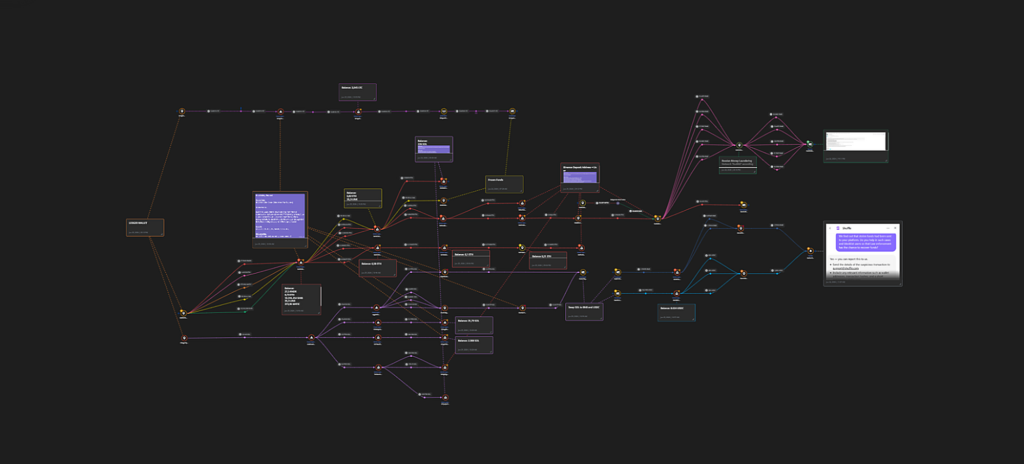
Source visual. An anonymized on-chain visualization of the asset flow. The graph shows how funds moved across multiple wallets, cryptocurrencies and service touchpoints. Identifying details have been removed.
How Analysts Read the Transaction Pattern
In crypto fraud investigations, the decisive question is often not whether a transaction exists. It is what the transaction pattern reveals. Analysts examine the chronological sequence of transfers: when the victim sent funds, how quickly the assets moved onward, whether several deposits were consolidated, and whether outgoing transactions occurred shortly after incoming victim payments. The timeline becomes the first witness the fraud network cannot coach.
Timing can indicate wallet function. A wallet that receives funds and forwards them within minutes may be an operational collection address or laundering waypoint. A wallet that receives repeated victim deposits before a larger outgoing transfer may be a consolidation wallet. A wallet that interacts repeatedly with a known exchange deposit address may represent an exchange-facing route. The point is not to label too quickly, but to test each interpretation against the transaction graph.
Transaction size matters as well. Analysts look for round amounts, test payments, split transfers, escalating deposits, structured withdrawals, rapid conversion into stablecoins and fragmentation across multiple wallets. They compare incoming and outgoing values, check whether amounts are preserved or shaved, and examine whether asset conversion changes the appearance of the trail without changing the economic logic.
Velocity analysis is another signal. If funds leave a receiving wallet seconds or minutes after arrival, that can suggest automation, operational discipline or pre-arranged laundering infrastructure. If funds remain static, the investigative focus may shift to account monitoring, preservation requests and future movement alerts. In either case, timing is not background detail. It is evidence of context.
The Investigative Checklist
A serious on-chain case file usually tests several questions in parallel. The goal is to move from raw blockchain data to an investigative theory that can be challenged, documented and used by compliance teams, lawyers or authorities.
Analytical focus
What investigators test
Timeline reconstruction
Build the chronological sequence of deposits, onward transfers, swaps, bridge movements, consolidation events and exchange-facing transactions.
Transaction-size analysis
Identify round amounts, split payments, test transactions, escalating victim deposits, structured withdrawals and repeated value patterns.
Velocity analysis
Measure how quickly assets move after receipt and whether forwarding behavior suggests automation, operational wallets or laundering waypoints.
Flow-of-funds mapping
Trace asset movement through collection wallets, intermediary wallets, swap services, DeFi protocols, bridges, stablecoin routes and exchanges.
Wallet clustering
Assess whether multiple addresses may be under common control using transaction behavior, timing, reuse, counterparty patterns and chain-specific heuristics.
Exchange exposure
Identify when assets appear to reach a virtual asset service provider and document chain, asset, amount, timestamp, deposit address and attribution confidence.
Counterparty mapping
Map recurring counterparties, known services, deposit addresses, payment processors, OTC-like routes and nested service patterns.
Asset conversion analysis
Review swaps between ETH, stablecoins and other assets, including whether conversion coincides with obfuscation or preparation for cash-out.
Evidence preservation
Preserve transaction hashes, screenshots, chat logs, wallet exports, platform messages, collection dates and chain-of-custody records.
Why This Case Was Still Recoverable
One question naturally follows: why could part of the assets still be returned while many other crypto fraud cases end with a complete loss?
The answer was not a single tool or a single platform. It was the combination of timing, documentation and the state of the laundering process at the moment the case became actionable.
The victim sought help quickly after the withdrawal problems appeared and was able to provide essential information without delay: wallet addresses, transaction hashes, exchange confirmations, screenshots of the fraudulent platform, communication with the scammers and approximate deposit times.
Because this information was available early, investigators did not lose critical hours reconstructing basic facts. They could move directly into verification, tracing and escalation.
Equally important, part of the stolen assets had not yet completed the laundering process. Some transaction paths were still moving through identifiable service providers where operational intervention remained possible. Had the report been delayed by only a few more days, those opportunities may no longer have existed.
Recoverability in crypto fraud cases is not determined only by whether a transaction can be traced. It depends on whether the trace still leads to an actionable point before the assets move further.
From Address to Transaction Graph
On-chain investigation begins with data that appears simple: wallet addresses, transaction hashes, timestamps, asset amounts and network information. The work becomes complex once analysts try to determine what those data points mean.
Analysts use transaction graph analysis, hop analysis, wallet clustering, address attribution, temporal correlation, counterparty mapping and exchange-exposure assessment. In account-based networks, they examine flows between addresses, smart contracts and token transfers. In UTXO-based systems, they may consider change-address behavior, transaction inputs and outputs, consolidation patterns and clustering heuristics.
A single address rarely tells the story. Fraud networks may use collection wallets, operational wallets, deposit addresses, intermediary wallets, bridge routes, DeFi liquidity pools, swap services, nested services and centralized exchanges. The investigative question is not only where the assets went, but what role each address or service appears to play in the broader structure.
Taint analysis can be useful, but it is not a substitute for judgment. Serious reports distinguish between observed transactions, analytical inferences and confidence levels. They explain why an address is believed to belong to a cluster, why a platform attribution is reliable, and what information still requires confirmation through KYC, CDD, EDD, account records or law enforcement process.
The Financial Investigation Layer
Traditional financial investigation concepts remain central. Asset tracing, source-of-funds analysis, source-of-wealth review, beneficial ownership, transaction monitoring, sanctions screening, suspicious activity indicators and AML typologies all apply in digital asset cases.
When funds appear to reach infrastructure associated with a virtual asset service provider, the focus shifts partly off-chain. A blockchain address may be visible, but the account behind a deposit address may only be identifiable through exchange records. Those records can include KYC files, IP logs, login history, device information, withdrawal addresses, account notes, linked bank details, travel rule data and internal transaction monitoring alerts.
This is why evidence packages need precision. A platform compliance team cannot act effectively on a broad statement that a victim was scammed. It needs the chain, asset, transaction hash, timestamp, amount, deposit address, exposure analysis, risk rationale and supporting legal or law enforcement documentation. In some jurisdictions, this may feed into a subpoena, production order, preservation request, suspicious activity report, suspicious transaction report or mutual legal assistance process.
This is also why cooperation with established service providers matters. In my work, and in the work of many professional investigators, the methodology is broadly consistent: preserve the evidence, reconstruct the flow of funds, identify service exposure and escalate only what can be properly documented. But when assets touch companies with mature compliance infrastructure, the process becomes more actionable. Providers at the level of ChangeNOW have internal procedures, escalation standards and compliance review capabilities that allow properly prepared evidence packages to be assessed quickly and routed to the right teams. For investigators, that does not replace legal process or guarantee recovery. It creates something more practical: a structured point of contact where blockchain intelligence, transaction documentation and risk rationale can be reviewed before the recovery window closes.
The First Success
Within the first 24 hours, the early reconstruction helped identify parts of the flow quickly enough for action to be taken. Operational cooperation resulted in the interception of 23 SOL, 3.4 LTC and 35 LINK before those assets could move further through the laundering chain.
This did not mean the full loss had been recovered. It meant that part of the trail had remained actionable long enough to stop value before it scattered further.
Twelve hours later, continued monitoring led to a second operational success. Approximately 8,000 USDC was intercepted before the funds could progress into the next stage of the laundering process.
That later result is important because it shows how the first day can continue to produce results beyond the first day itself. A rapid initial response creates the intelligence foundation for follow-up monitoring, provider escalation and further action.
What Nearly Went Wrong
This case was recoverable only because the opportunity window had not yet fully closed.
Had the victim waited another week, the outcome would almost certainly have been different. The assets could have been split further, swapped into additional currencies, bridged across more networks or moved through services where intervention was no longer realistic.
Had the transaction confirmations not been available, investigators would have lost valuable time establishing the first verified entry points. Had the screenshots and communication records not been preserved, the surrounding context would have been weaker. Had service touchpoints been identified too late, the same trace might have been useful only for documentation, not for intervention.
That is the practical difference between a historical trace and an operational lead. Both can be valuable. Only one can still create an opportunity to stop funds.
What Victims Usually Do Too Late
Many victims wait before asking for help. Not because they are careless, but because the fraud is designed to keep them waiting.
In practice, the delay often follows a predictable pattern. A withdrawal fails. Customer support explains that taxes must first be paid. The victim complies. A few days later, another explanation appears: anti-money laundering verification, account review, technical maintenance or an alleged regulatory hold. Another payment is requested. The victim waits again.
Each explanation appears reasonable enough to justify waiting just a little longer. Each explanation buys time for the perpetrators.
For investigators, however, every additional day changes the blockchain landscape. Assets continue moving. Wallets split. Services change. Cross-chain swaps occur. New cryptocurrencies appear. What could have been an operational tracing exercise becomes a reconstruction of historical events.
The moment a platform blocks withdrawals and demands additional payments, the situation should be treated as urgent. Not embarrassing. Urgent.
The Return of Assets
The recovery did not happen because a blockchain transaction was reversed. It did not happen because there is a universal freeze button.
It happened because parts of the asset flow were identified, documented and escalated quickly enough for action to be taken where action was still possible.
At the same time, intercepted assets should not automatically be confused with returned assets. Depending on the service provider involved, the jurisdiction and the applicable legal or compliance process, funds may remain subject to review before they can be released to a victim.
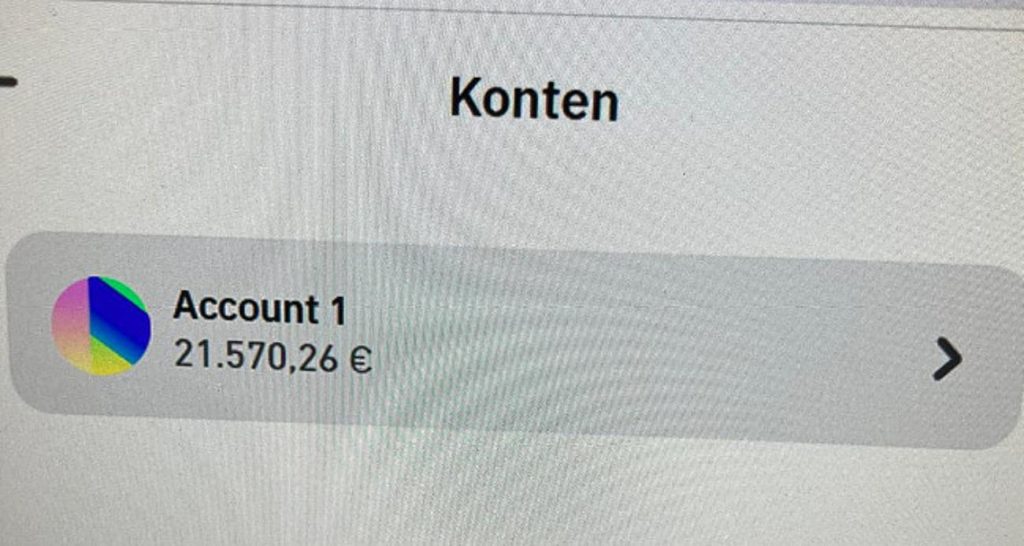
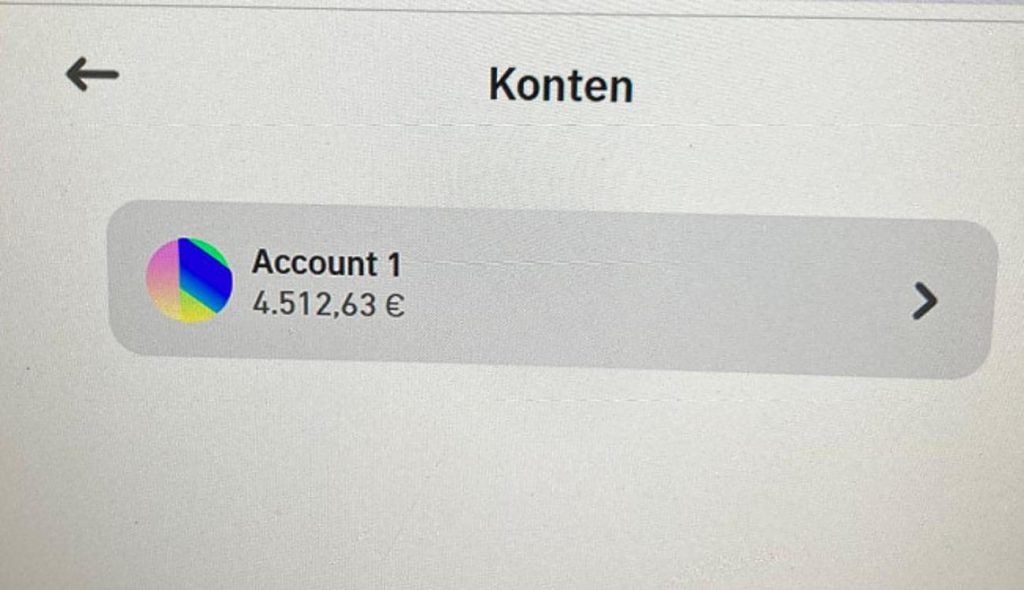
In this case, approximately EUR 26,000 had successfully been returned to the victim at the time of writing. Later, the returned amounts became visible in account views: one account showed EUR 21,570.26 and a second account showed EUR 4,512.63.
Source visuals. Anonymized account views showing returned cryptocurrency assets: EUR 21,570.26 and EUR 4,512.63.
The remaining stolen assets are still in circulation and continue to be traced. The investigation is therefore not over. It is entering its next phase.
Lessons Learned
Fraudsters can fake websites. They can fake account balances. They can fake customer support. They can fake profits, withdrawal confirmations and entire trading histories.
What they cannot fake is the movement of value on a public blockchain.
Every transfer leaves evidence. The challenge is reaching that evidence before it disappears into the next layer of the laundering process.
In this case, rapid reporting and immediate blockchain tracing led to the interception of multiple assets within the first 24 hours. Approximately twelve hours later, continued monitoring produced a further operational result. At the time of writing, approximately EUR 26,000 had been returned to the victim, while the remaining stolen assets continued to circulate and remained under active tracing.
This was not a perfect recovery. It was a practical demonstration of what fast reporting, complete documentation and operational blockchain tracing can still achieve.
In blockchain investigations, success is rarely defined by a single moment. More often, it is the result of preserving opportunities before they disappear.
The Limits of the Ledger
A blockchain does not show intent. It does not show the name of the person behind a wallet. It does not reveal the conversation that persuaded a victim to transfer funds. It does not automatically distinguish a fraud wallet from an exchange deposit address, an OTC desk, a payment processor or an intermediary service.
Those limits are important. Overstating on-chain certainty can weaken a case. A stronger approach states what is known, what is inferred, what confidence level supports the inference, and what external records are needed. In serious financial investigations, uncertainty is not hidden. It is managed.
The Real Measure of Success
In crypto fraud cases, success should not be measured by dramatic promises of recovery. Guarantees are a warning sign. The more realistic measure is whether investigators can turn fragmented digital traces into a coherent, usable record.
That record may support a freeze request, an exchange escalation, a civil claim, a criminal complaint, a source-of-funds review, an AML investigation or a request for account records. It may also show that recovery is unlikely but evidence preservation remains important for broader enforcement action.
The first message may have looked ordinary. The transaction graph does not. Between those two points sits the real work of the investigation: turning fragmented payments, wallet behavior, service exposure and human deception into a record that can be understood, challenged and acted upon. The ledger provides visibility. Financial investigation provides meaning. On-chain analysis connects the two.
About the Author
Albert Quehenberger | ChangeNOW Ambassador & CEO of AQ Forensics
Albert Quehenberger is a ChangeNOW Ambassador, CEO of AQ Forensics GmbH, and a specialist in blockchain forensics, cryptocurrency investigations, and on-chain analysis. With over a decade of experience in digital investigations, he supports authorities, law firms, companies, and private clients in complex crypto-related cases. He regularly trains law enforcement agencies and lawyers, has spoken at the United Nations, and is featured in the latest ChangeNOW documentary, where he raises awareness about common cryptocurrency fraud schemes.