Key Takeaways
- A minimum of 1TB is required to store the Ethereum network state. A minimum of 32 ETH is required to stake a validator node.
- Buterin has warned that the minimum staking and hardware requirements threaten the network.
- Ethereum’s Verge roadmap aims to establish “stateless clients” for block verification.
In part four of his “Possible Futures for Ethereum” series, Ethereum co-founder Vitalik Buterin has proposed a new upgrade that could democratize the network and bring fully verifiable nodes to devices as small as smartwatches.
Verge Upgrade
Now, two years after the Ethereum Merge, the network officially moved from proof-of-work (PoW) to proof-of-stake (PoS). Buterin wants to lower the hardware and cost barriers to staking and making smartphones, and even smart watches, capable of running nodes and validating the Ethereum blockchain.
In his Oct. 23 blog post, he writes, “Today, running a node is possible on a consumer laptop,” – this is due to the Ethereum clients needing “hundreds of gigabytes” of storage space (usually over a terabyte), plus a recommended 16 GB / 32 GB of RAM, (though it is possible with 8 GB).
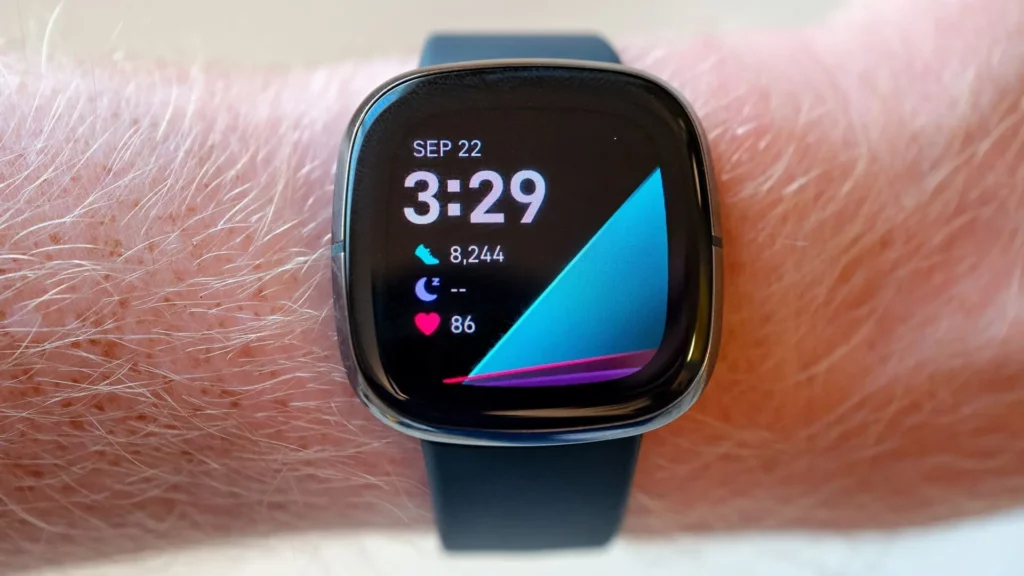
“The Verge is about changing this, and making fully-verifying the chain so computationally affordable that every mobile wallet, browser wallet, and even smart watch is doing it by default.”
He notes that the network’s raw state data increases by 30 GB a year, which can be difficult for single-node operators to keep up with. This could have long-term implications for the network’s longevity and decentralization.
Buterin Proposes 1 ETH Stake and Stateless Nodes for Ethereum
Buterin says that in a stateless model, clients and nodes wouldn’t store the entirety of the network’s state data but would instead receive the exact data needed to verify a block.
However, this would require changes to the structure of Ethereum’s state tree, which Buterin says has computational challenges. Another bit of tech wizardry is his proposal to make the Ethereum Virtual Machine (EVM) less resource-intensive. However, Buterin concedes that it will take years to finalize.
These latest tech musings follow Buterin’s recent warning that the 32 ETH (approx. $80,000) minimum stake requirement is also a huge risk to Ethereum. So, not only is it extremely difficult for people to run the Ethereum blockchain, but it’s also extremely expensive to begin doing so.
In an ideal world, Buterin sees the minimum stake lowered to just 1 ETH or a two-tier staking system that can bring in smaller stakers and reduce the dominance of larger ones.

Eddie is a gaming and crypto writer at CCN. Covering the often weird and wonderful world of Web3 with an adoring, but skeptical eye.
Prior to CCN, Eddie has spent the past seven years working his way through the crypto, finance, and technology industry. He began with PR and journalism with Bitcoin PR Buzz and BitcoinNews.com, eventually working his way to become a copywriter with a dozen firms, including the likes of Polkadot before returning to journalism in 2023.
Having studied Radio production and journalism at University in the UK, Eddie spent a few years making podcasts and presenting on a local London radio station as he built up his writing chops.
A lifelong skateboarder, Eddie can often be found at the skatepark or touring the streets looking for something new to try. That, or kicking back playing JRPGs on his original PSP.