Key Takeaways
- Coinbase CEO claimed their exchange doesn’t charge any listing fees.
- Andre Cronje and others disputed Brian Armstrong’s claim, alleging hefty fees.
- Exchanges like Coinbase and Binance may charge hidden fees, such as marketing costs, which can be mistaken for listing fees.
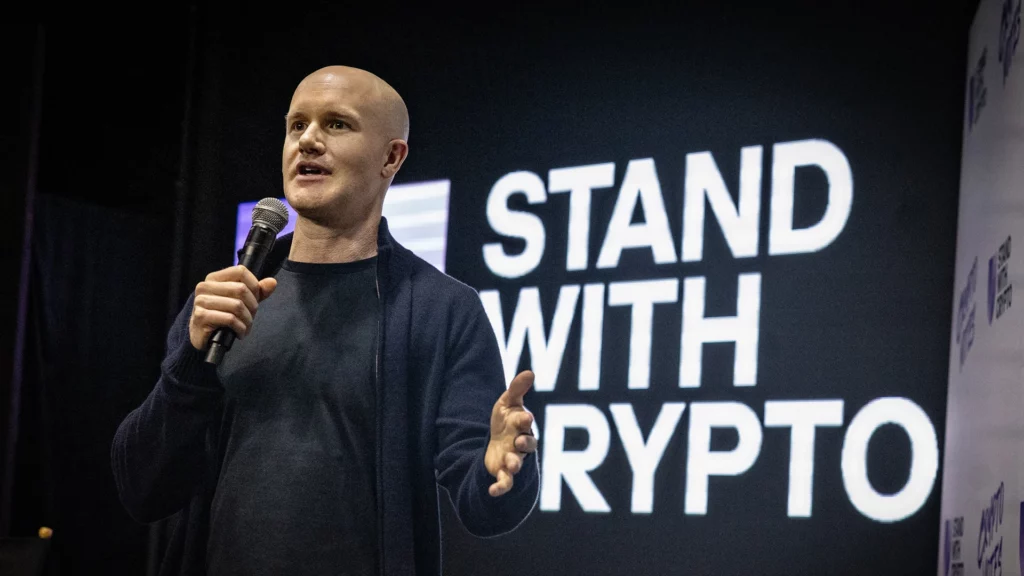
Coinbase CEO Brian Armstrong recently sparked controversy after boldly declaring that his exchange doesn’t charge a penny for listing new tokens.
However, Sonic Labs (previously Fantom Foundation) founder Andre Cronje was quick to call foul, revealing that his companies had been asked to cough up a staggering $100 million or more for the privilege of listing.
Coinbase’s Hidden Costs of Crypto Listings
The dispute began when Armstrong allegedly attempted to poach Moonrock Capital CEO Simon Dedic from rival exchange Binance, claiming they demanded a whopping 15% of the token supply.
While both exchanges claim to offer free token listings, many have alleged that they demand exorbitant fees or other forms of compensation.
At the heart of the controversy is the question of whether listing fees are indeed free.
According to Greg Osuri, founder of Akash Network, Coinbase did not charge his company any fees for listing their token.
However, Andre Cronje and Justin Sun paint a different picture.
According to Sun, Coinbase allegedly requested $80 million for listing TRX and $250 million in Bitcoin as collateral.
Luke Young, a former Ethereum staking builder at Coinbase, offered a nuanced explanation: while Coinbase does not charge listing fees, its Earn platform may offer educational campaigns that come with marketing fees, which could be mistaken for listing fees.
“I can see how Andre might have made an honest mistake assuming a Coinbase Earn campaign was required for a listing. It is unnecessary and an entirely different part of Coinbase that is unrelated to listings. In other words, whether you sponsor an Earn campaign has no relation to your ability to get a Coinbase listing, ” Young wrote.
Several other prominent figures in the crypto world backed Young, noting that while there are no listing fees, companies may still be charged for promoting their tokens.
Binance’s Listing Demands: A Deeper Look
As the debate over listing fees raged on, some claimed that Binance, like Coinbase, didn’t charge for listing. However, others alleged that the exchange demanded a hefty 20% of the token supply in exchange for listing.
According to crypto exchange expert Flood, Binance asks for a portion of the token supply to mitigate token inflation that can result from listing new tokens.
“These founders want to sell their worthless token loosely associated with a company that makes no money to unsuspecting retail. Binance doesn’t like this and wants to prevent the lifetime value of its accounts from being pillaged by inflationary vapor. So they extract a pound of flesh and give it all away via the Binance launch pad to BNB holders (traders).”
Crucially, Flood noted that Binance does not keep the token supply but rather distributes it to BNB holders via the Binance launchpad.
Binance co-founder Yi He shed further light on the exchange’s listing process, emphasizing that projects must meet certain standards to be listed.
Yi noted that the 20% supply demand for the airdrop is mentioned under the listing process.
“The airdrop rules for Binance’s launch pool and other listings are transparent and clear. Still, this does not mean that projects willing to give airdrops can be listed on Binance. If you have 20% tokens and want to cooperate with Binance for airdrops, you can use our Web3 wallet.”
The confusion surrounding listing fees and post-listing requirements sparked a renewed interest in decentralized exchanges, which promise more transparency and fairer listing practices.
dYdX, for example, has invited Dedic to list his tokens on DEX platforms, sidestepping the hefty listing fees associated with traditional exchanges.
Binance and Coinbase did not immediately respond to a request for comment.

Prashant Jha is a seasoned crypto journalist based in Delhi, India, with a Bachelor’s Degree in Computer Science Engineering. Passionate about the evolving world of blockchain and cryptocurrencies, he has been a dedicated voice in the industry since 2018. Prashant’s expertise lies in regulatory reporting, where he unravels complex legal and financial developments with clarity and precision. Before joining CCN in 2024, he honed his craft at Cointelegraph, establishing himself as a trusted name in crypto journalism.
His coverage spans major industry events, including the high-profile collapses of FTX, Three Arrows Capital (3AC), and LUNA, offering readers insightful analyses of their regulatory and market implications. Prashant’s technical background enables him to bridge the gap between intricate blockchain technology and its real-world applications, making his work accessible to novices and experts.
Beyond his professional pursuits, Prashant is an avid music enthusiast, often exploring diverse genres to unwind. A sports lover, he has a particular passion for cricket and frequently engages in discussions about the game. His multifaceted interests and sharp journalistic instincts make him a valuable contributor to CCN, where he continues shaping the crypto landscape's narrative.