Key Takeaways
- Under Fred Thiel’s leadership, MARA Holdings has become one of the largest corporate holders of Bitcoin in the world.
- Thiel’s path from software engineer to CEO is marked by immense risk and adaptability.
- The influential chief executive has a career spanning four decades across multiple sectors of technology.
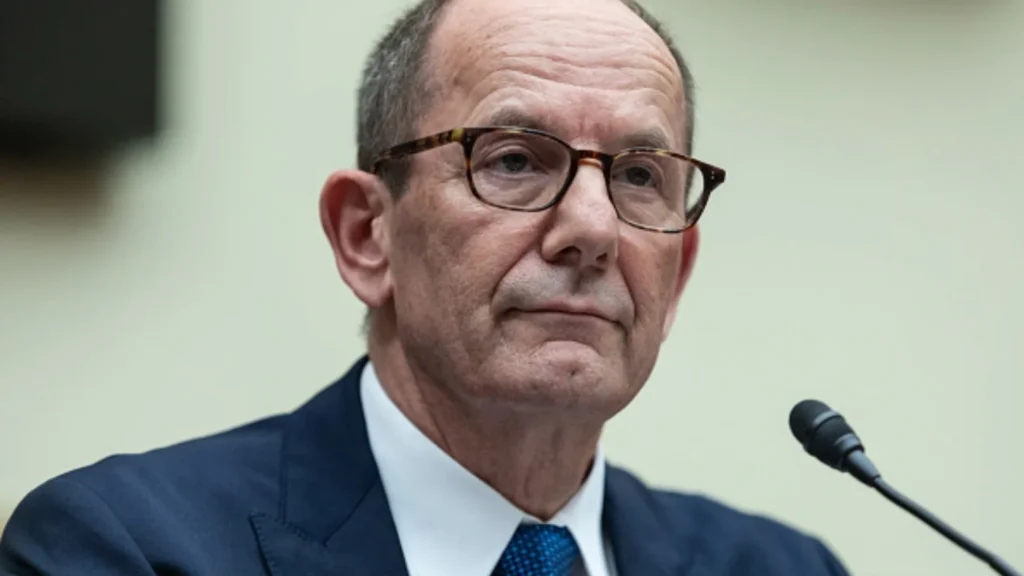
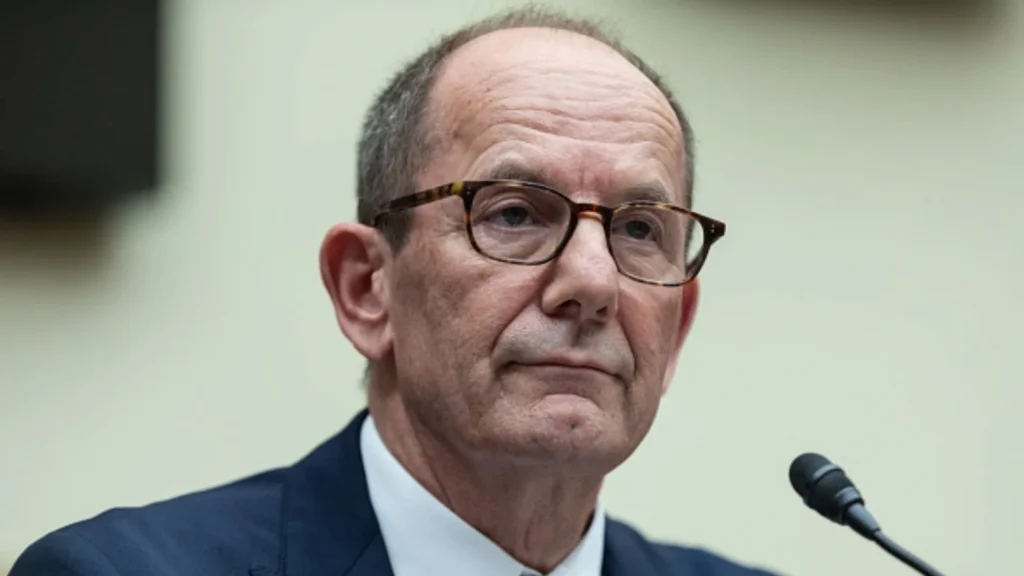
Fred Thiel, one of the most influential CEOs in the crypto space, has built his net worth by challenging traditional finance and taking huge risks.
The chief executive and chairman of MARA Holdings, previously known as Marathon Digital Holdings, has led the company on an all-in approach to Bitcoin, making it the world’s second-largest corporate holder of the digital asset.
Fred Thiel’s Net Worth
As of early April 2025, Fred Thiel’s estimated net worth ranges between $46 million and $62.5 million.
According to Quiver Quantitative, Thiel’s net worth was at least $55.6 million as of April 2. However, Benzinga reported his net worth at $57.1 million as of November 8, 2024.
This estimation is based on his substantial holdings in MARA stock and his compensation from the company.
As of reporting, Thiel currently owns 4.3 million shares of MARA stock.
Since 2021, Thiel has sold 165,037 shares for approximately $3.1 million, with his most recent sale of 27,505 shares occurring on February 18, 2025.
Since becoming MARA CEO, Thiel has filed seven insider trades, the largest of which was a sale of 27,512 shares in September 2024.
It’s important to note that net worth calculations vary based on the valuation of stock holdings and other assets.
Thiel’s Rise to Riches
Born in 1960, Thiel was raised in a European-American household that exposed him to a blend of international influences.
Thiel was born in France but emigrated to America when he was one year old.
While in high school, Thiel began writing software for commercial banks in London, developing a deep understanding and passion for IT.
He later studied at the prestigious Stockholm School of Economics.
Thiel’s education also occurred outside the classroom, as his international background helped him become fluent in four languages—English, Spanish, Swedish, and French.
Thiel describes going to “the dark side of sales and marketing” as his route to working his way up from being an engineer, in a 2021 interview with Thinking Crypto.
Over his forty-year career, Thiel has worked in everything from software and hardware to minicomputers and PCs.
In 2007, Thiel spent five years as a managing partner at Triton Pacific Capital Partners, a private equity fund focused on technology companies.
Thiel’s Introduction to MARA
Thiel joined the board of MARA, then Marathon, in 2018. The then-CEO, Merrick Okamoto, had been Thiel’s close friend for many years.
Thiel described how the two of them had previously “talked extensively about blockchain and crypto” and how Okamoto wanted someone on the board who truly understood Web3 technologies.
“I had the honor to serve with him on that board and execute the strategy that has brought Marathon to where it is today,” Thiel said in a 2021 interview.
In a statement at the time of Merrick’s departure, Thiel said: “When Merrick joined Marathon in 2017, the company was near insolvency and lacked a clear path to recovery.
“While serving as a board member and later as the company’s CEO, Merrick was instrumental in restructuring and redefining the business,” Thiel added.
Thiel Drives Bitcoin Adoption as CEO
Thiel described his promotion to CEO as a “great transition” from Merrick, who took the executive chairman spot at the company.
Under Thiel’s leadership, MARA went all-in on BTC by becoming the first miner to follow in the footsteps of MicroStrategy executive chairman Michael Saylor’s strategy.
MARA currently holds over 46,000 Bitcoin worth around $4 billion and recently filed plans for a massive $2 billion stock-selling spree.
MicroStrategy, now Strategy, was founded by Saylor in 1989. Strategy began buying Bitcoin in 2020 and hasn’t stopped since.
The company initially purchased BTC using hard cash and surplus capital but has since expanded to accumulating more using convertible notes, debt, and preferred stock.
Since then, its market capitalization has grown from $1 billion to over $80 billion, significantly outpacing traditional software organizations.
MARA has aggressively followed this playbook. In 2024, to increase its Bitcoin holdings, the mining company launched a $1.5 billion at-the-market offering program and sold $1 billion in zero-coupon convertible notes.
“We are very close to Michael Saylor and great supporters of what he is doing,” Thiel said in 2021.
“If you take the treasury assets of a corporation and allocate them to Bitcoin, it makes sense because it’s an asset class that, over time, is going to be more and more impervious to inflation,” he added.
MARA’s Call to U.S. Government
In November, Thiel-led MARA issued a warning of “national security” to the U.S. Government over its need to back BTC.
The Bitcoin mining giant highlighted in an X article that the U.S. only holds 200,000 BTC, just slightly ahead of China, which holds 190,000.
However, the U.S. significantly leads in gold, holding 8,133 metric tonnes compared to the 2,264 tonnes owned by China.
“Historically, gold has been regarded as the premier store of value, but it faces growing challenges in the digital era,” MARA said.
“As a physical asset, it is inefficient for global transactions, and its supply is difficult to audit accurately.”
The company urged the U.S. to hold Bitcoin as a backup asset, much like it holds gold, to ensure protection if the dollar declines — much like its own business strategy.
In Thiel’s Own Words
“Blockchain technology, in my mind, is the perfect evolution of the internet.”
“But as miners, we are very excited to go into a halving, where for once prices have not declined prior to the halving; rather, prices have gone up, so everybody is obviously maximizing to that.”
“Our vision long-term when mining bitcoin is that we are not consuming energy that could otherwise be used by consumers.”

Kurt Robson is a London-based reporter at CCN, specialising in the fast-moving worlds of crypto and emerging technology. He began his career covering local news in Cornwall after graduating from Falmouth University with First Class Honours in Journalism. There, he cut his teeth on everything from council meetings to missing swans.
He quickly rose through the ranks to become a frontline journalist at several of the UK’s leading national newspapers. Over the years, he has interviewed musicians and celebrities, reported from courtrooms and crime scenes, and secured multiple front-page exclusives.
Following the upheaval of the COVID-19 pandemic, Kurt shifted his focus to technology journalism—just ahead of the AI boom. With a natural curiosity and a trained eye for emerging trends, he has found a new rhythm in reporting on innovation.
At CCN, Kurt's work focuses on the cutting edge of crypto, blockchain, AI, and the evolving digital world. Drawing on his background in people-first reporting and his deep interest in disruptive tech, Kurt delivers stories that are insightful, entertaining, and human-centric.