As competitive gaming scales into a billion-dollar industry, questions around identity, trust, and fairness have become more than academic. In a world where player reputations can lead to sponsorships, fame, and career paths, digital identity in esports remains largely broken, fragmented, siloed, and vulnerable to abuse.
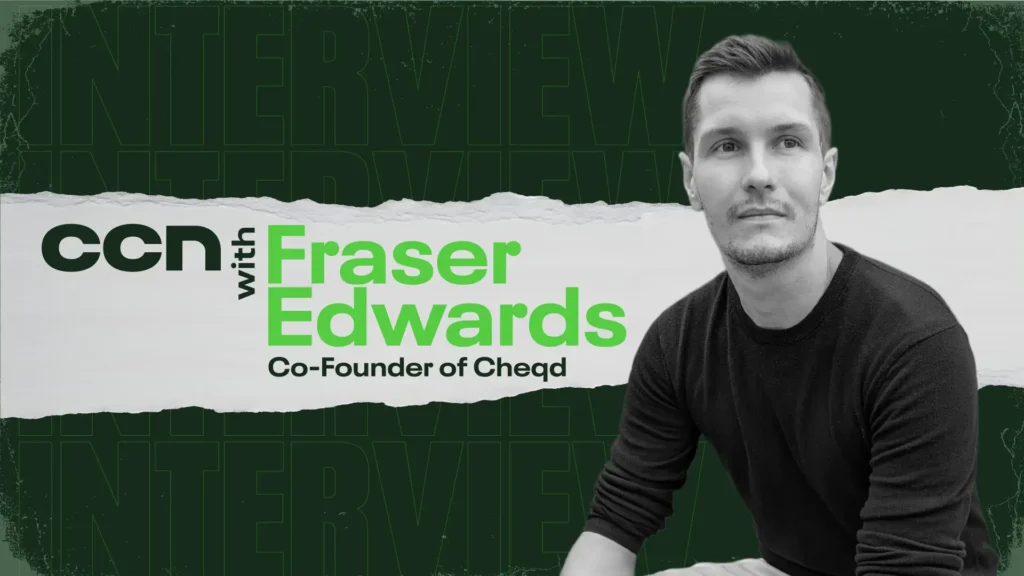
CCN spoke with Fraser Edwards, co-founder and CEO of cheqd, the company powering Creds, a platform designed to solve these identity challenges through verifiable credentials and decentralised infrastructure.
With deep roots in digital identity, including roles at Accenture and leading the Known Traveller Digital Identity project, Edwards is now focused on bringing privacy-preserving, interoperable credentials to gaming, AI, and beyond.
Why Identity in Esports Is Still Broken
Identity in esports, Edwards emphasized, has lagged behind the industry’s growth. “The industry evolved rapidly without a shared infrastructure for trust.”
He pointed out that most systems still rely on usernames and email accounts:
- Not portable or verifiable
- Easy to spoof or reset
- Fragmented across platforms
“This makes it easy for bad actors to impersonate others or re-enter competitions under new aliases,” Edwards noted. “That undermines fair play and reputation building.”
Why now?
Edwards highlighted three key reasons:
- Ecosystem maturity: With careers and sponsorships on the line, identity matters more than ever.
- Tech readiness: Decentralized identity tools are now scalable and user-friendly.
- Demand for fairness: Fans, sponsors, and players all want more transparency.
How Creds Verifies Players Without Sacrificing Privacy
In a landscape filled with bots and deepfakes, Edwards explained that cryptographic verification alone isn’t enough.
“In the Creds system powered by cheqd, credentials are cryptographically verifiable,” he said. “But the real assurance comes from the issuer.”
He noted that:
- Tournament organizers verify identity before issuing credentials
- Trust Registries control who can issue what
- Layered identity allows players to combine ID credentials (e.g. verified profiles) and performance credentials (e.g. tournament wins)
This composable model, Edwards emphasized, creates robust identity without forcing players to give up privacy.
Preventing Spoofing, Selling, and Black Market Credentials
“That’s exactly the kind of risk we’re designing against,” Edwards stressed.
He laid out a three-layer defense:
- Wallet binding: Credentials are tied to the player’s wallet. They can’t be transferred or resold.
- Optional additional verification for elite events:
- Biometric checks
- Platform account links (e.g. Steam, PSN)
- Gameplay analysis
- Trusted issuance: Only vetted organizers can issue meaningful credentials
“These protections make spoofing far harder, while still letting players control their identity,” Edwards said.
Avoiding a New Identity Silo
Edwards was clear: “The last thing the space needs is another identity silo.”
He emphasized that Creds is built on:
“We’re not asking publishers to rip out what they’ve built,” he said. “We’re plugging into what already exists.”
Key features
- Credentials are portable across ecosystems
- They integrate with existing logins
- Players own and control their credential data
“It’s like a digital passport,” Edwards explained. “You collect stamps wherever you go and decide when and where to show them.”
Who Owns the Data?
Edwards didn’t hesitate: “The player controls their data. That’s the core principle behind Creds and cheqd.”
He outlined how it works:
- Credentials are issued to the player’s wallet
- Players choose what to share, and when
- Players can delete claimed credential, decline to claim any credential and challenge or appeal credentials through the issuer
“Just like in the real world,” he said, “the issuing party is responsible for what they put their name to.”
Can Credentials Be Revoked?
“Yes,” Edwards confirmed. “If a result is invalidated due to cheating or appeal, the credential can be revoked by the original issuer.”
He explained that:
- Revocations are digitally signed and verifiable
- The credential will still exist, but show as revoked
- Governance remains with the organizer or issuer
“This gives organizers a tamper-proof way to reflect outcomes. Over time, we may even see shared or community-led governance,” Edwards noted.
How cheqd Makes Money—Without Exploiting Players
“We’re very deliberate about how we approach monetization,” Edwards said. “This space doesn’t need another pay-to-play scheme.”
Revenue comes from
- SaaS plans for organizations issuing credentials
- Transaction fees on the cheqd network (paid in $CHEQ tokens)
He emphasized:
- Players don’t pay to earn credentials
- Any paid elements (tournament entry, bonuses) are add-ons
- The core identity system remains free and open
“We make money when the ecosystem grows — not by locking players out,” Edwards said.
Could This Lead to Credential Capitalism?
“The goal isn’t to gatekeep,” Edwards said. “It’s to level the playing field.”
Today, newer players are already disadvantaged, he noted:
- Achievements are scattered across screenshots, usernames, and chat logs
- There’s no reliable way to prove progress
“With Creds, players can build a record from day one. It grows with them and belongs to them.”
He added that premium events might still have credential requirements—“just like needing a leaderboard rank—but the process becomes fairer and more transparent”.
What About Indie and Grassroots Events?
“That’s one of the most important things to get right,” Edwards emphasized.
Creds was built to support:
- Indie organizers
- University leagues
- Community-led tournaments
“You don’t need a huge tech team or budget,” he said. “Credential issuance can be set up in a few clicks.”
Edwards pointed out that grassroots organizers benefit too:
- Greater legitimacy
- Easy credential verification
- Connection to a broader trust network
“A local win becomes part of a player’s verifiable journey,” he added.
Addressing Privacy and Surveillance Concerns
Edwards was direct: “This isn’t surveillance tech. It’s player-first infrastructure.”
He explained that:
- Players own and control their data
- They can remain pseudonymous
- No one is forced to share anything
“If they don’t want to share a credential, they don’t. If they want to compete under a pseudonym, they still can,” he noted.
“We’re giving players the choice to prove trust, without giving up freedom.”
Is This Over-Quantifying Fun?
When asked whether verifiable credentials risk over-quantifying gaming, Edwards was clear that Creds is designed to enhance meaningful moments, not reduce play to data points.
The system is entirely opt-in. Not every match or moment becomes a credential, and players decide what’s worth recording or sharing.
“The goal isn’t to turn fun into a transaction,” he said. “It’s to make sure that when something does count, it can count fairly and the player owns it.”
He concludes by underscoring that the mission behind Creds is not to gamify identity, but to protect what makes gaming valuable: freedom, creativity, and trusted recognition when it truly matters.
The information provided in this article is for informational purposes only. It is not intended to be, nor should it be construed as, financial advice. We do not make any warranties regarding the completeness, reliability, or accuracy of this information. All investments involve risk, and past performance does not guarantee future results. We recommend consulting a financial advisor before making any investment decisions.

Onkar Singh has three years of experience as a digital finance content creator. Throughout his career, he has collaborated with various DeFi projects and crypto media outlets. In his leisure time, he enjoys fitness activities at the gym and watching movies across different genres. Balancing his professional and personal interests, Onkar continues to contribute to the digital finance landscape while pursuing his hobbies.


 Easy
Easy