The cryptocurrency market has created one of the largest wealth-building opportunities in modern financial history. Over the past three years alone, Bitcoin has risen more than 217%. Yet most people do not enter this market with inherited wealth or large pools of capital. They start small, and that often makes them vulnerable to hype, fear, and short-term thinking.
One of the biggest misconceptions is that serious wealth requires privileged access: large starting capital, exclusive networks, or sophisticated financial tools. In reality, what separates those who stay stuck from those who grow is not what they start with, but how strategically they think and plan for the long term.
Another widespread mistake is believing that the only winning strategy is to HODL forever. While long-term conviction is essential, simply holding can trap capital. When markets fall, investors who lack liquidity are often forced to sell at the worst possible time. Capital that cannot move is capital that cannot protect itself — or grow.
Modern crypto finance is evolving beyond passive holding. Today’s most successful investors operate more like asset managers: they preserve capital during downturns, unlock liquidity when needed, and deploy assets dynamically as new opportunities emerge.
From HODLing to Managing XRP Strategically
Imagine having access to the best opportunities of traditional finance, but with the speed, transparency, and flexibility of crypto. That’s what put CoinRabbit on our radar.
We discovered the platform this February while attending Consensus HK 2026. What stood out wasn’t just the CoinRabbit product itself, but the philosophy behind it: treating crypto not as something you simply hold, but as something you manage and grow, the same way investors build capital in traditional finance.
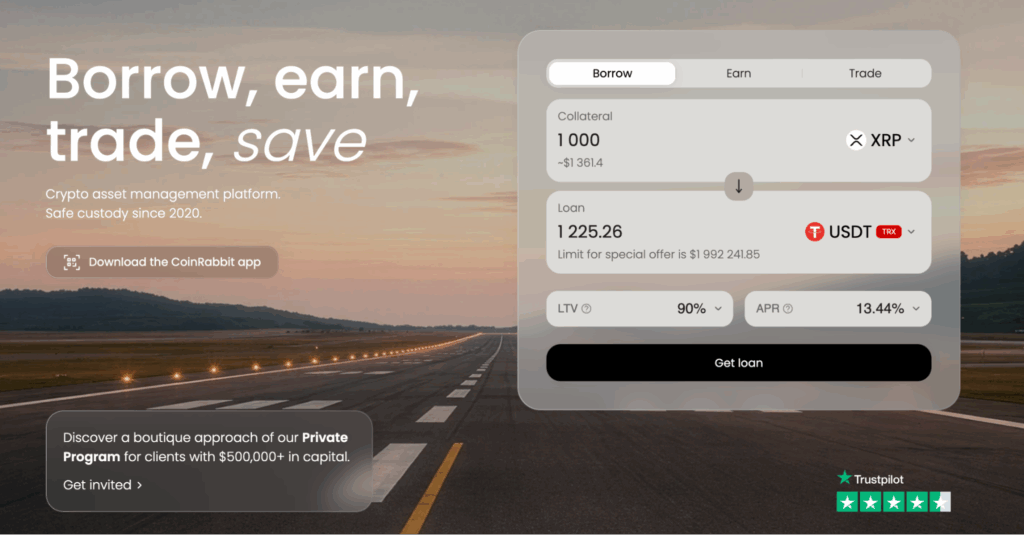
At its core, CoinRabbit is built around capital preservation. It allows clients to borrow against their crypto holdings without selling, avoiding unnecessary taxable events while maintaining full market exposure. At the same time, clients gain a unified view of their portfolio, allowing them to store and trade assets in one place — more like an all-in-one crypto platform than a simple crypto wallet.

What makes the CoinRabbit approach different is that it extends far beyond Bitcoin, covering 350+ cryptos across the ecosystem. Instant XRP loans, in particular, have become one of the most popular options on the platform. That’s largely because XRP has always occupied a distinct place in crypto, closely associated with liquidity solutions, cross-border payments, and real-world financial infrastructure. That’s why many XRP holders see themselves not just as traders, but as participants in a growing payment network. Using XRP as collateral lets them unlock liquidity while continuing to hold an asset they trust for the long term.
Private XRP Lending in Practice
The platform offers a client-first approach for all XRP holders, while also providing a more personalized Private Program solution. Designed for users with $500,000+ in active loans, CoinRabbit Private offers a comprehensive suite of tools to preserve and grow capital. At the program’s core are:
- Dedicated Relationship Manager
Enhanced communication, proactive alerts, guidance tailored to clients’ strategies, and 24/7 human support.
Depending on a client’s financial goals, reduced interest rates are available.
In the event of liquidation, a loan can be manually restored if the client pays the required amount to reclaim their collateral.
- Portfolio Cross-Collateralization
Clients can manage multiple loans across 350+ assets in a unified, cross-collateralized view.
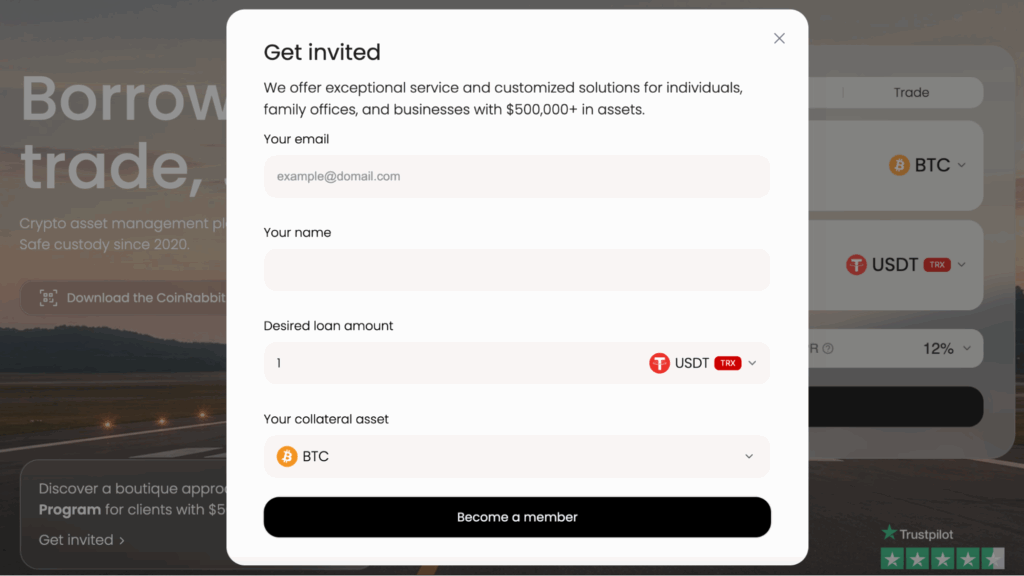
CoinRabbit has recently reduced its loan interest rates, making the Private Program even more attractive to XRP holders. Learn more =>
What makes CoinRabbit particularly relevant is that it is not limited to high-net-worth clients with generational wealth. Since 2020, 42% of CoinRabbit Private users began with modest portfolios and reached private-level thresholds through disciplined capital management.
With the clients’ permission, the team shared a few of their success stories (names have been changed for privacy).
Case #1: XRP Lending for Instant Liquidity
After the 2022 Celsius collapse, P. started with the CoinRabbit XRP wallet. He had bought 158,000 XRP back in 2020 at around $0.1472 each, totaling roughly $23,250. The service gave him the confidence to take a different approach than many investors: instead of selling during uncertainty, he borrowed against his XRP. This allowed P. to unlock liquidity for his personal needs while keeping his long-term holdings intact.
Over the next few years, the value of XRP gradually rose. By the end of 2025, it had reached around $3.167, and P.’s portfolio had grown to approximately $500,000. At that point, he joined CoinRabbit Private and started working with a dedicated relationship manager. He had dozens of loans across multiple assets, which made it hard to keep track of everything. The manager suggested implementing cross-collateralization to bring all his loans into a single view. The CoinRabbit dev team put the solution in place, and managing finances became much simpler.
Not long after, P. bought a house in Miami. Instead of selling any XRP, he used it as collateral to secure a loan and complete the purchase. This way, he had the money he needed while keeping his holdings unchanged.
Case #2: XRP Loan Arbitrage
wanted to keep his crypto while having quick access to cash. He didn’t want to sell, as he expected his XRP holdings to grow. Around 2020 to 2021, he tried BlockFi lending before rehypothecation policies impacted it.
Looking for an alternative, J. began using CoinRabbit and quickly completed his first loans. Over the next few years, he used the platform regularly, gradually increasing both the number and size of his loans. J. developed a strategy of redoing loans: he took a loan against an asset, repaid it, and then opened a new loan at its current value.
For example, J. bought 100,000 XRP at $0.61, for a total of $61,000. Instead of selling, he used them as collateral to borrow $30,000, keeping all 100,000 XRP. Later, the price rose to $2.61, and the value of his 100,000 XRP increased to $261,000. He could then borrow a larger amount against the same XRP without selling a single coin.
At first, he kept his Loan-to-Value (LTV) ratio around 50–65% to stay cautious. As he gained experience, he gradually became comfortable using LTVs closer to 90%, carefully managing the risk while making more of his capital available when needed. J. also stayed in regular contact with the CoinRabbit team. They understood his financial goals and provided support that helped him work toward achieving them.
The New Path to Generational Wealth
The above case studies highlight how investors are increasingly prioritizing active capital management over passive HODLing. As the crypto market evolves and management platforms gain traction, investor focus is shifting toward efficient asset use.
At the same time, crypto is moving beyond simple price exposure. CoinRabbit introduces a structure where assets can be preserved and used strategically to generate income and fund liquidity needs without leaving the market.
Learn how to build your crypto wealth with CoinRabbit

Passionate about how technology can empower people to create a more just and sustainable world.


