Crypto Lifestyle Index – Evaluating crypto life in Sweden across Usability, Livability, and Adoption.
Rank
14 / 14
Total Score
6.5 / 10
Usability
7.0
Livability
6.5
Adoption
6.0
Last Updated 02 April 26
Sweden: Compliance-Driven Nordic Crypto Hub
Sweden is a country where Nordic technological leadership meets strict regulatory oversight, known for its advanced digital payments ecosystem, strong fintech sector, and highly connected population. Cash usage is among the lowest in the world, and mobile platforms like Swish have normalized instant digital payments, creating a population comfortable with financial technology. Within the EU framework, crypto activity operates under MiCA and robust anti-money-laundering supervision, with regulators and banks prioritizing transparency, tax compliance, and consumer protection.
Within this environment, Sweden’s crypto ecosystem is shaped less by lifestyle migration and more by technical communities, fintech infrastructure, and institutional experimentation. Grassroots Bitcoin and Web3 groups in cities such as Stockholm, Gothenburg, Malmö, and Uppsala organize meetups focused on Lightning payments, self-custody, privacy tools, and developer education, often connected to research hubs like KTH Royal Institute of Technology and Chalmers University. Online communities centered around platforms like Divly and local newsletters also play a practical role, helping users navigate Skatteverket’s detailed crypto tax reporting rules, making Sweden’s ecosystem one where compliance literacy and technical experimentation evolve side by side.
At a Glance
Capital
Stockholm
Population
10.6 million (Worldometer)
Internet
98% internet penetration (2025); ~139 mobile subscriptions per 100 resident
Crypto Ownership
Crypto ownership estimated at 8-10% of adults, broadly in line with the eu
Usage in Sweden is limited and mainly tied to trading and DeFi, with tokens
Sweden Crypto Lifestyle Index
Usability
7.0 / 10
Can Citizens easily access and use crypto here?
Access
7.5 / 10
Connectivity
Sweden boasts 98.3% internet penetration across 10.5 million individuals and near-universal mobile access, enabling seamless wallet and exchange use.
With 139% cellular mobile connection penetration, indicating multiple devices per person, mobile-based crypto apps and transactions are highly accessible across the population.
Exchange availability
Since Sweden operates under the MiCA framework, crypto exchanges are pushed for registration and compliance.
Accessible exchanges include Kraken, Bitpanda, eToro, Coinbase, Gemini, and local options such as Safello, BTCX, and Trijo, providing diverse choices for Swedish users.
On-ramps
Bank transfers via Swish (local mobile payment service launched by the central bank and 6 local banks) and SEPA dominate, and due to no BTC ATMs availability in the country, fiat-to-crypto conversion can be done directly via regulated apps.
Credit and debit card purchases are widely supported on crypto platforms, often integrated with Swish for instant and secure funding.
Integration with BankID makes on-ramping via local platforms like Safello instantaneous and secure.
Insight
Sweden’s high connectivity, MiCA-regulated exchanges, and easy on-ramps via Swish, SEPA, cards, and BankID make crypto access seamless despite no Bitcoin ATMs.
Usage
6.5 / 10
Everyday crypto use
The efficiency of the domestic payment system Swish, that is used by over 80% of the population, reduces the daily incentive for crypto as a medium of exchange.
Stablecoins see medium uptake for remittances and hedging under MiCA.
Most Swedes who use crypto via crypto-linked Visa cards (like Bitpanda or Coinbase), which convert to SEK at the point of sale.
Limitations
A 2024 Blockchain Sweden Industry Report highlighted that 84% of local companies have considered moving operations abroad due to challenges with Swedish banks.
Finansinspektionen’s strict stance on AML led to many major banks blocking or flagging transfers to and from crypto exchanges.
Evidence from Skatteverket, Swedish Tax Agency, shows that the complexity of reporting transactions for capital gains (30% tax) acts as a significant psychological and administrative barrier to using crypto for small, everyday purchases.
Insight
Sweden’s efficient Swish payments and strict banking/tax rules limit everyday crypto use, with most activity happening through stablecoins or crypto Visa cards converting to SEK
Livability
6.5 / 10
Can crypto meaningfully support life, work, and income?
Earning Power
5.8 / 10
Crypto income opportunities
Freelancers and contractors in Sweden’s high-tech landscape frequently utilize platforms like Deel to receive portions of their pay in crypto.
High-speed internet and cheap surplus hydro-power in Northern Sweden have historically supported home mining and industrial mining setups, though recent tax changes on energy for data centers have narrowed margins for small players.
Industry and jobs
Stockholm functions as a premier global “unicorn” hub, giving rise to major crypto-native companies.
Stockholm’s fintech scene hosts blockchain startups, with 89+ crypto firms.
Insight
Sweden’s strong tech sector supports crypto activity, with freelancers paid in crypto, mining linked to cheap northern hydropower, and Stockholm hosting 80+ crypto startups.
Legal Climate
6.9 / 10
Regulatory clarity
Sweden is fully aligned with the EU’s MiCA framework as of 2025, providing a clear legal perimeter for exchanges and custodial services.
The Swedish CARF (Crypto-Asset Reporting Framework), set to take full effect in 2026, increases transparency but also adds a layer of mandatory reporting that many casual users may find intrusive.
Finansinspektionen oversees registrations, actively warning against unregulated platforms.
Tax-friendliness
Crypto profits are taxed at 30% as capital gains tax; income tax is up to 52% on mining/staking.
Only 70% of losses may offset gains in the same year, creating an asymmetric risk that discourages active trading compared to traditional stock market investments.
Swedish banks offer crypto ETFs or ETPs in an ISK (Investeringssparkonto), where all tax reporting is automated and pre-filled.
Buying actual coins via an exchange requires manually tracking every transaction and filing Skatteverket’s K4 form for non-ISK holdings.
Insight
Sweden has clear MiCA-aligned regulation, but 30% capital gains tax and strict reporting rules make direct crypto trading less attractive than holding crypto ETPs in ISK accounts.
Adoption
6.0 / 10
Is crypto present in culture, identity, and conversation?
Cultural Integration
6.0 / 10
Crypto in society
Sweden leads the Nordics in ETP adoption, with 33% of crypto owners (about 208,000 people) using ETPs for exposure.
Strong presence in the “Sthlm Tech” scene; crypto is discussed as a professional necessity rather than just hype.
Few crypto-focused conferences; Nordic Blockchain Conference hosts 1,300+ attendees.
Top NFT artists (or agencies facilitating them)
Sweden’s design-centric culture has embraced non-fungible tokens (NFTs) as a tool for digital rights and community building.
In 2024, the Stockholm-based music platform Anotherblock collaborated with global artists like The Weeknd and Metro Boomin to tokenize music royalties, allowing fans to own a “piece” of a song’s streaming revenue via NFTs.
Jonas Lund, a conceptual artist from Sweden who explores data and algorithms in his work, won the 2025 Digital Arts Prize for his blockchain-integrated pieces, including NFT series that critique art market dynamics.
EvilBiscuit (pseudonym), an emerging Swedish creator in the Avant NFT scene, produces provocative digital works, emphasizing grassroots and experimental themes in Web3 art.
NFT galleries/events
Fotografiska Museum in Stockholm has featured NFT exhibits, including immersive digital art shows that bridge photography and blockchain.
Despite Sweden’s growing interest in blockchain and Web3, most activities are limited to broader conferences rather than focused art displays.
Notable DAOs/Web3 projects
Chromia, a Gothenburg-based blockchain platform founded in 2012, enables scalable dApps and NFTs with relational database tech; it’s used for games and DeFi.
Trailblazer Games, a Stockholm startup, develops NFT-integrated blockchain games, allowing players to own and trade in-game assets on decentralized networks.
Shido, based in Bromma, is a Web3 project offering multi-chain DeFi tools and NFT utilities, focusing on cross-chain interoperability and user-owned data in the Nordic ecosystem.
Insight
Sweden’s crypto culture is tech-driven, with strong ETP adoption, NFT experimentation, and Web3 startups, but relatively few dedicated crypto events.
Sweden's Index Dimensions and Total Score
Sweden ranks as a compliance-driven EU crypto market shaped by institutional fintech leadership rather than grassroots retail speculation.
Rank
14 / 14
Total Score
6.5 / 10
Usability
7.0
Livability
6.5
Adoption
6.0
Use cases that matter
Sweden, a Nordic leader in financial innovation, combines a cautious regulatory approach to crypto with a high level of digital literacy. In this pioneering cashless society, crypto acts as a buffer against inflation and a doorway to global finance, even if it is not a daily necessity among locals.
According to a Nordic Crypto Adoption Index survey from 2025, 7.4% of Swedes own crypto, with Bitcoin being the most popular choice. Though daily use lags behind due to complex finance regulation, this base demonstrates growing institutional interest.
All of this points to a mature market: Swedes use regulated exchanges to purchase, hold for long term, and incorporate cryptocurrency into diverse portfolios rather than use it for daily spending.
Where crypto hits real life in Sweden:
Daily purchases via Bitrefill: Because direct crypto acceptance is niche in Sweden’s “Swish-first” economy, citizens use Bitrefill (Stockholm-based) to spend BTC and Lightning. This allows them to effectively buy groceries at ICA, furniture at IKEA, or train tickets from SJ by instantly swapping crypto for digital gift cards.
Cross-border settlements: Swedish expats and tech workers use stablecoins like USDC and EURe to bypass the slow SWIFT network. For those sending money to non-SEPA regions or receiving international contract pay, crypto serves as a high-speed bridge that avoids the high FX markups typical of traditional Nordic banks.
NFTs and music royalties: Stockholm’s status as a global music hub has birthed platforms like Anotherblock, where Swedish creators tokenize song royalties. Fans buy these NFTs to receive a direct share of streaming revenue, turning the “starving artist” model into a decentralized investment opportunity.
Freelance Web3 contracts: With a high concentration of developers, many Swedes work for international DAOs or remote tech firms. Receiving payment in stablecoins or ETH is common to avoid the administrative delays of traditional payroll, though most use tools like Divly to stay compliant with Sweden’s strict 30% capital gains tax.
Web3 gaming & eSports: As a major gaming exporter (DreamHack, Mojang), Sweden has a tech-savvy youth population active in Play-to-Earn ecosystems.
Citizen Voices
The tax demands are unreasonable because I am being charged 300 percent of my total profits.
Linus, Crypto Trader
This reflects growing frustration among Swedish crypto users over taxation, particularly how capital gains rules can create disproportionately high liabilities. For active traders, the system can lead to scenarios where tax obligations exceed actual profits, discouraging participation and pushing some users to reconsider their activity or even relocate.
Sweden is probably one of the least safe countries to be active in the cryptocurrency sector in at the moment. I've personally left Sweden and I don't expect to return until the laws around personal privacy change.
Eric, Crypto Analyst and Developer
This sentiment highlights concerns around privacy and regulatory pressure in Sweden’s crypto environment. For developers and advanced users, issues around surveillance, compliance, and reporting requirements are increasingly shaping decisions about where to build and operate.
Bitcoin is now a national strategic asset.
Dennis Dioukarev, Member of Swedish Parliament
At the political level, perspectives are evolving. Some policymakers are beginning to view Bitcoin not just as a speculative asset, but as a strategic component of national financial resilience, reflecting a broader global shift in how governments approach digital assets.
Crypto cost of living: What 1 BTC buys here
A glimpse into the lifestyle economy — measured in sats, not cents.
In Sweden, 1 BTC buys 7,350 Big Macs, 24,990 cups of coffee, or 39 months of rent.
BTC-to-Housing: The Long View
How far 1 BTC has gone over time in the housing market
How prices were estimated:
BTC historical price data translated via average USD/EUR over time
Housing estimate based on current rent and approximate value of small apartments
2010 17882600 BTC
Fiat Price (Est.)
EUR 178826
Notes
Between 2010 and 2013, rents in the Portuguese
2017 20000 BTC
Fiat Price (Est.)
EUR 306658
Notes
Market analyses of the late 2010s place typical Lisbon one-bed rents
2024 3.5 BTC
Fiat Price (Est.)
EUR 348937
Notes
In Portugal, renting an apartment in Lisbon typically
Housing inflation in Stockholm has roughly doubled the BTC needed to rent a typical one-bed annually compared with the early 2010s.
Regulatory + Economic Snapshot
Government Viewpoint
Status: Cautious / Highly structured
Sweden has transitioned from a skeptical “wait-and-see” approach to a strictly regulated framework led by the Financial Supervisory Authority (Finansinspektionen). Following the full implementation of the EU’s MiCA regulation in late 2024, crypto-asset service providers (CASPs) must now obtain formal authorization and adhere to rigorous AML/KYC standards. The government’s focus is on “same activity, same risk, same regulation,” treating crypto as a financial instrument that must integrate into the existing Swedish administrative state rather than exist as a parallel system.
Crypto Taxes
Status: Aggressive / No Exemption Threshold
Sweden has no minimum tax-free threshold; every gain is taxable from the first Swedish krona. Crypto is taxed as “other assets” at a flat 30% capital gains rate. The primary administrative hurdle is the K4 form, which requires a line-by-line reporting of every action (sale, swap, or payment for goods). Mining is treated as hobby income or business income depending on scale, while staking rewards are taxed as interest income (30%) at the fair market value upon receipt, creating potential liability if the token’s price crashes later.
CBDC Progress
Status: In development (e-krona)
Sweden’s Riksbank is in the stage of researching CBDCs with its e-krona project. While a digital krona is not yet in public circulation, the Riksbank views it as an essential “digital public good” to ensure state money remains accessible as physical cash disappears. Currently, Sweden is closely aligning its timeline with the European Central Bank’s Digital Euro to ensure cross-border interoperability.
Banking/Crypto Relationship
Status: Moderate integration
Swedish banks remain some of the most conservative in Europe. Major institutions like Nordea prohibited employees from trading Bitcoin, a policy that faced legal challenges but set a tone of institutional hostility. While retail transfers to regulated exchanges like Safello are generally permitted, crypto-centric startups often struggle to obtain corporate bank accounts.
Crypto Crime and Enforcement
Status: Low-major incidents
Sweden has not been a primary target for massive protocol hacks, but it faces a surge in crypto-related phishing and “social engineering” scams targeting elderly citizens via BankID. In 2025, European data breaches rose 22%, and Swedish authorities have increased enforcement on “unreported gains” as the DAC8 directive (starting 2026) mandates exchanges to share data directly with Skatteverket. The Police (Polisen) and Skatteverket now use sophisticated chain-analysis tools to track high-value tax evaders.
Pro-Crypto Leaders
Status: Sverigedemokraterna (SD), the Sweden Democrats party
In Sweden, crypto adoption is shaped less by outspoken individuals and more by a deep-seated culture of digital pragmatism and institutional trust. Progress is deliberate and systematic, favoring highly regulated on-ramps and technical excellence over “to-the-moon” culture. For the Swedish citizen, crypto is moving from a niche experiment to a standard, transparent component of a modern, cashless financial identity.
Risk Barometer
Gives time-sensitive readers a feel for how volatile or stable the legal landscape is.
Exchange Access
Easy
Major global exchanges are available in Sweden; local fully compliant exchanges like Safello are integrated with BankID.
Token Bans
None
Sweden follows EU guidelines; no specific tokens are banned by Sweden specifically.
Legal Protection
Limited
Consumer protection applies to platforms, but not to market volatility; investor safeguards via EU law; no deposit insurance for crypto.
Risk of Crackdown
Low
Focus is on tax compliance, not banning ownership; ban focus is on unregistered providers.
Crypto Adoption Timeline
2011
Bitcoin made its first significant appearance in the Swedish market.
2017
Sweden's debt collection agency, Kronofogden, made international headlines by holding its first official public auction for seized Bitcoin.
2021
Over 270,000 Swedes began holding crypto-linked products within their traditional Avanza and Nordnet accounts.
2023
Virtune presented the first crypto index Exchange Traded Product (ETP) on Nasdaq Stockholm.
2024
Sweden aligned its national laws with the MiCA regulation.
2025
Swedish lawmakers introduced a formal motion in Parliament to investigate establishing a Strategic Bitcoin Reserve.
2026
The implementation of the DAC8 directive allows Skatteverket to automatically receive data from exchanges.
Meet Your Fellow Crypto Citizens
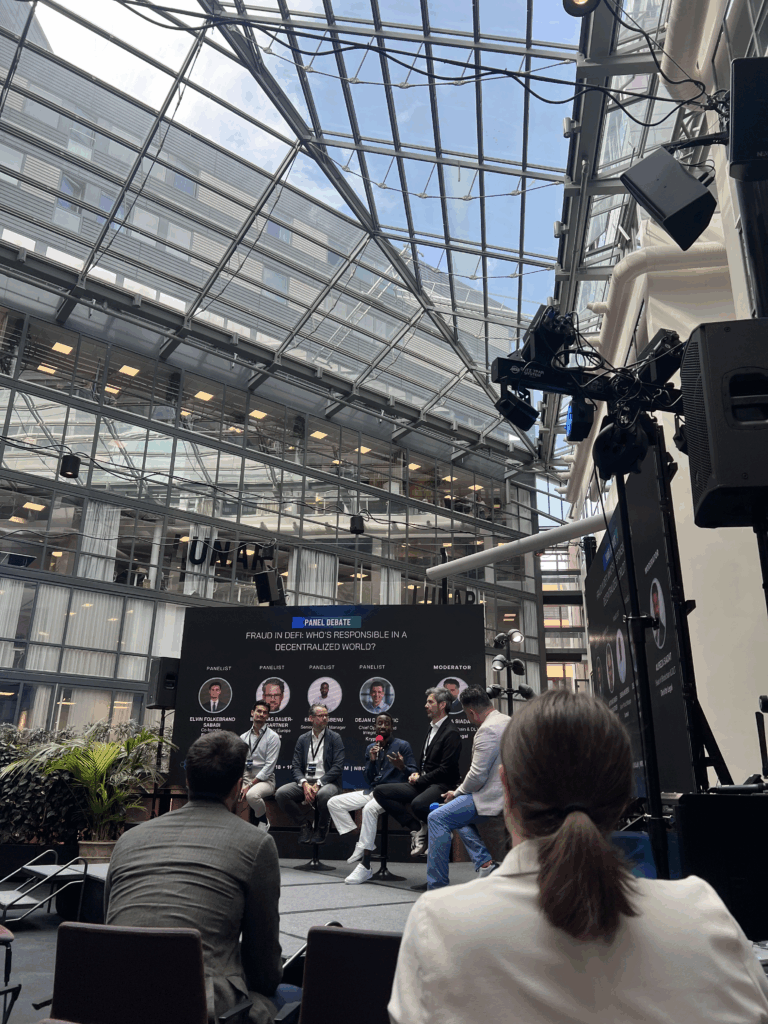
Sweden’s crypto community is more understated and innovation-driven than in hype-heavy markets like the U.S., but it is deeply embedded in fintech ecosystems, academic institutions, and professional circles. Engagement occurs both offline and online, with a strong focus on education, regulatory compliance, sustainability, and practical applications aligned with Nordic values.
Key Crypto and Fintech Events
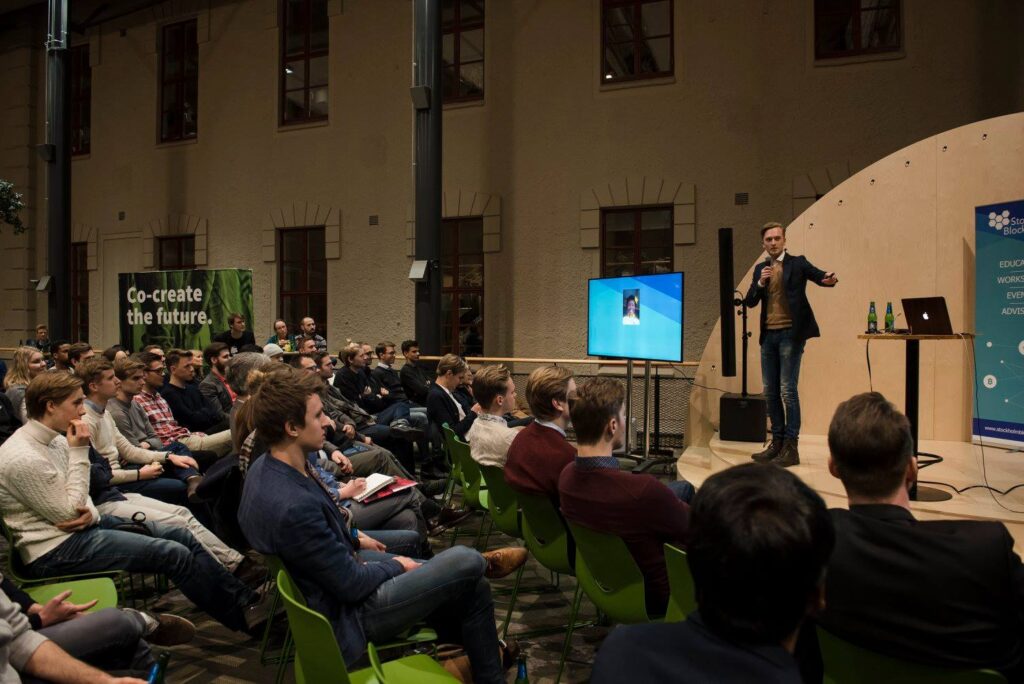
Bitcoin Stockholm Meetup
Recurring Stockholm
One of Sweden’s most active grassroots crypto gatherings, featuring informal talks on Bitcoin self-custody, Lightning Network tools, privacy technologies, and practical security practices for long-term holders.
Ethereum & Web3 Developer Sessions (KTH)
Recurring Stockholm
Developer-focused meetups connected to the KTH Royal Institute of Technology ecosystem, bringing together engineers, researchers, and startup builders to discuss smart contracts, DeFi protocols, and Ethereum infrastructure.
Chalmers Web3 & Blockchain Workshops
Recurring Gothenburg
Community-led technical sessions tied to Chalmers University of Technology, where students and developers collaborate on hackathons, blockchain research, and experimental Web3 applications.
Swedish Crypto Community Meetups
Recurring Stockholm, Uppsala, Malmö, Gothenburg
Regional meetups across Sweden’s major cities attract a tech-savvy, internationally oriented crowd including freelancers, startups, and EU-based remote workers discussing stablecoins, fintech integration, and sustainable blockchain innovation.
Web3 & NFT Showcases at Swedish Design Festivals
Various dates Stockholm and other cities
Pop-up exhibitions and talks during design and tech festivals explore the intersection of NFTs, digital art, and Sweden’s creative innovation culture, blending Web3 experimentation with the country’s strong design ecosystem.
Top 5 Trends to Watch
1. Bitcoin Reserves
Following a formal parliamentary motion in late 2025, a major trend for 2026 is the national conversation regarding a Strategic Bitcoin Reserve.
2. Automated Tax Compliance
In 2026, the era of manual “K4” bookkeeping is ending. Following the implementation of DAC8 and the Crypto-Asset Reporting Framework (CARF), Swedish exchanges now automatically report transaction data to Skatteverket.
3. The e-krona & Digital Euro Convergence
With the Riksbank’s technical pilot concluded, 2026 is the year of political and legal integration.
4. Self-Sovereign BankID
In Sweden, BankID is the “linchpin” of society, used by 99.9% of adults for everything from taxes to medical records. However, because BankID is a centralized system owned by a consortium of banks, there is a growing movement in 2026 toward Self-Sovereign Identity (SSI).
5. Sustainable Mining 2.0
Using the country’s surplus of hydropower and wind in the North, new-generation data centers are integrating heat-recycling technology to provide “green” hashing power that meets Sweden’s strict 2026 ESG requirements.
Neighbour Watch: What’s Happening Next Door?
What crypto looks like across the border — and why it matters.
Around Sweden, the dominant pattern is “legal, MiCA-aligned, and transparency-focused.” Neighbouring jurisdictions share EEA ties (Norway, Estonia) or EU membership (Denmark, Finland), emphasizing sustainable innovation, tax reporting, and fintech integration. Sweden benefits from Nordic collaboration on green energy and digital finance, while aligning with EU standards to foster cross-border compliance and growth.
🇳🇴 Norway: EEA-aligned, green mining pioneer
Regime: While it’s not in the EU, Norway has integrated MiCA via the Crypto Asset Act since July 2025, treating crypto as assets with 22% capital gains tax.
Access: Retail and institutional trading via FSA-registered providers with AML focus; mining legal but subject to energy efficiency scrutiny.
What’s next: Implementation of DAC8/CARF reporting from January 2026; potential restrictions on data centers for sustainable mining, aligning with Nordic green energy priorities.
Regime: Finland implements DAC8 reporting from 2026, with capital gains taxed at progressive rates up to 34%.
Access: Retail and institutional via compliant CASPs; focuses on real-time tax tools for crypto users and providers.
What’s next: The Finnish Tax Administration (Vero) is pioneering real-time reporting tools that Sweden is now studying for its own DAC8 rollout.
🇪🇪 Estonia: Pro-crypto, digital-first
Regime: Estonia leads with e-residency and low 20% capital gains tax, with drastically tightened laws to match MiCA standards.
Access: Remote setup via e-Residency; attracts Web3 startups with FSA-issued CASP licenses and EU passporting.
What’s next: Full MiCA compliance by July 2026 for existing VASPs; continued e-Residency enhancements to boost digital governance and crypto businesses.
Our editorial team combines expertise in economics, technology, regulation, and journalism to provide comprehensive crypto lifestyle insights across global markets.
Dr. Guneet Kaur
Dr. Guneet Kaur is a senior editor at CCN.com and a Science Fellow at Exponential Science. She is a fintech and blockchain expert with extensive experience in digital finance education, blockchain ecosystems, and cryptocurrency markets. She has worked with global media such as Cointelegraph, as well as education and blockchain platforms, to design and lead strategic content and learning initiatives. As an educator and assessor for top-tier executive programs, she bridges real-world fintech trends with academic insight.
Dr. Kaur is also a published researcher and peer reviewer across fintech and data science journals, including Financial Innovation Journal and International Journal of Big Data Intelligence and Applications. Her work spans data-driven analysis, Web3 innovation, and technical content development. With a strong foundation in both industry and academia, she translates complex financial technologies into practical applications, empowering learners, professionals, and institutions across the rapidly evolving digital finance landscape.
Dr. Lorena Nessi
Dr. Lorena Nessi is an award-winning journalist and media technology expert with 15 years of experience in digital culture and communication. Based in Oxfordshire, UK, she combines academic insight with hands-on media practice.
She holds a PhD in Communication, Sociology, and Digital Cultures, and an MA in Globalization, Identity, and Technology.
Lorena has taught at Fairleigh Dickinson University, Nottingham Trent University, and the University of Oxford. She is a former producer for the BBC in London, with additional experience creating television content in Mexico and Japan.
Her research focuses on digital cultures, social media, technology, capitalism, and the societal impact of blockchain innovation.
She has written extensively on digital media and emerging technologies, with her work featured in both academic and media platforms. Her Web3 expertise explores how blockchain technologies shape culture, economics, and decentralized systems.
Outside of work, Lorena enjoys reading science fiction, playing strategic board games, traveling, and chasing adventures that get her heart racing. A perfect day ends with a relaxing spa and a good family meal.
Ryan James
Ryan is the Managing Editor at CCN, specializing in the crypto markets with a strong focus on technical and on-chain analysis across a broad spectrum of digital assets. His areas of expertise include Layer-1 and Layer-2 solutions, artificial intelligence (AI), real-world assets (RWA), decentralized finance (DeFi), decentralized physical infrastructure networks (DePIN), meme coins, and altcoins.
Before his current role, Ryan worked as a managing editor for BeinCrypto, while also contributing to Blockchain.com as a customer success associate, where he played a pivotal role in launching the company's margin trading product. He also has extensive experience in the financial sector, having served as a sales manager for foreign exchange brokerages such as Tradeview Markets and IronFX.
Ryan holds a bachelor's degree in Marketing and an honors degree in Business from the University of South Africa.
Elizaveta Savenko
Curious about how technology and crypto reshape global finance, Elizaveta Savenko explores blockchain, AI, decentralized systems, their applications, and regulatory requirements. She contributes to research, educational initiatives, and industry collaborations, examining trends in digital assets and fintech innovation, increasing awareness of the crypto space and its impact on financial systems.
Giuseppe Ciccomascolo
Giuseppe Ciccomascolo began his career as an investigative journalist in Italy, where he contributed to both local and national newspapers, focusing on various financial sectors.
Upon relocating to London, he worked as an analyst for Fitch's CapitalStructure and later as a Senior Reporter for Alliance News. In 2017, Giuseppe transitioned to covering cryptocurrency-related news, producing documentaries and articles on Bitcoin and other emerging digital currencies. He also played a pivotal role in establishing the academy for a cryptocurrency exchange website. Crypto remained his primary area of interest throughout his tenure as a writer for ThirdFloor.
Insha Zia
Insha Zia is the News Editor at CCN. Based in Dubai, United Arab Emirates, he ensures the CCN newsroom provides value to readers by educating, informing, and engaging them with accurate and timely coverage.
Before joining CCN, Insha was a Senior Journalist at DailyCoin, where his career in crypto journalism took off. At DailyCoin he garnered ample experience by covering some of the biggest news in the crypto industry, especially in the Cardano ecosystem, and maintain solid relations with KOLs in the industry.
Insha has worked as a ghostwriter and a developer for three years. He has co-authored numerous articles in reputable publications, including Hackernoon, Yahoo Finance, and Nasdaq. He also has experience as a Solidity Developer and a Data Analyst.
Insha’s developer and journalist backgrounds go hand in hand when educating readers on technically complex concepts within the crypto space. He values accuracy, transparency, and delivering valuable insights to his readers.
Insha firmly believes education can propel the mass adoption of the crypto space. He is committed to giving CCN readers a greater understanding of the technology using his technical background.
Insha earned a Bachelor of Science in Computer Systems Engineering at the University of Engineering and Technology, Peshawar, in 2022. His technical foundation includes expertise in quantitative and qualitative research, data analysis, programming languages, and cybersecurity.
His comprehensive skill set enables him to communicate complex concepts to crypto readers with authority and clarity, making his articles both informative and engaging for his audience.
Insha is determined to take CCN to the top of the industry. When he’s not working on his next article or editing, Insha enjoys playing video games, mainly in FPS and MMORPG genres. He also loves playing soccer and has supported Arsenal since he was six.
Max Moeller
Max Moeller is a Chicago‑based writer and video editor passionate about games, tech, and crypto. Whether it’s crafting clear, insightful articles or piecing together engaging video retrospectives, he’s driven by curiosity and takes pride in keeping things human. Since 2017, Max has been published in a variety of notable crypto magazines.
All data is independently researched and verified. We maintain editorial independence and do not accept compensation for rankings.
Score Methodology
We measure how easy, useful, and culturally present crypto is in a country.
The total score is out of 10 and is based on 5 pillars, each scored from 0 to 10 using public data, local reports, and publicly available expert input.
1
The 5 Pillars
We evaluate crypto lifestyle across five key dimensions. Each pillar is scored independently from 0 to 10 based on public data, local reports, and expert input.
1
Access
How easy is it to buy, sell, and store crypto? Are there ATMs, exchanges, and wallets available?
2
Usage
Can you pay with crypto for everyday goods and services? Is it accepted by merchants?
3
Earning Power
Can you earn income in crypto? Are there jobs, freelancing, or business opportunities?
4
Legal Climate
How clear and supportive are the crypto regulations? Is it treated fairly by authorities?
5
Cultural Integration
How normalized is crypto in society? Do people talk about it, understand it, and trust it?
Scoring Scale
0-3
Limited or rare
4-6
Growing or niche
7-8
Common but not dominant
9-10
Highly integrated into daily life
2
Group into 3 Dimensions
The five pillars are grouped into three lifestyle dimensions that reflect different aspects of crypto integration:
🔧 Usability
Average of Access + Usage
🏠 Livability
Average of Earning Power + Legal Climate
🌍 Adoption
Cultural Integration (standalone score)
Why three dimensions?
These represent the practical (can I use it?), economic (can I live on it?), and social (is it accepted?) aspects of crypto lifestyle.
3
Calculate the Lifestyle Index Score
The final Crypto Lifestyle Index score is the average of the three dimensions, giving equal weight to each aspect of crypto integration.
Final Formula
Lifestyle Index Score =
(Usability + Livability + Adoption) ÷ 3
Result: Score out of 10
Countries with scores above 8.0 are considered highly crypto-friendly, offering strong infrastructure, legal clarity, and cultural acceptance.




 Recurring
  Stockholm