


Use Cases That Matter
Where crypto hits real life:
- Daily purchases: Very limited. Most merchants still don’t accept crypto directly.
- Remittances from abroad: Less common as a crypto use case; more through traditional financial channels.
- Artists selling NFTs: Growing activity. Local platforms like Upbit NFT, Kakao’s Klip Drops. Creatives are experimenting with digital art, collectibles.
- Freelancers paid in crypto: Possible but not widespread. Regulatory/tax clarity still uncertain for income in crypto.
- Gamers earning tokens: Some involvement via blockchain games and NFTs, but regulatory definitions (and whether NFTs are “virtual assets” or not) affect this.
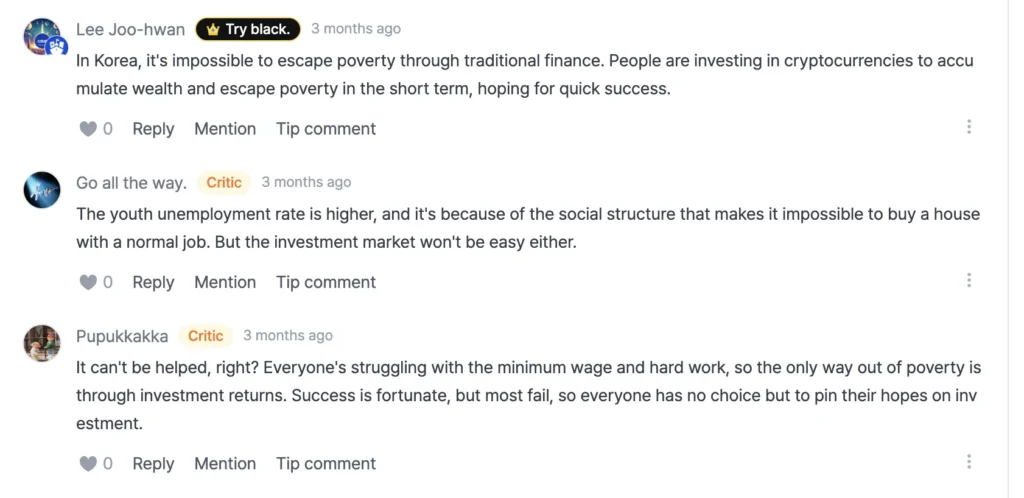
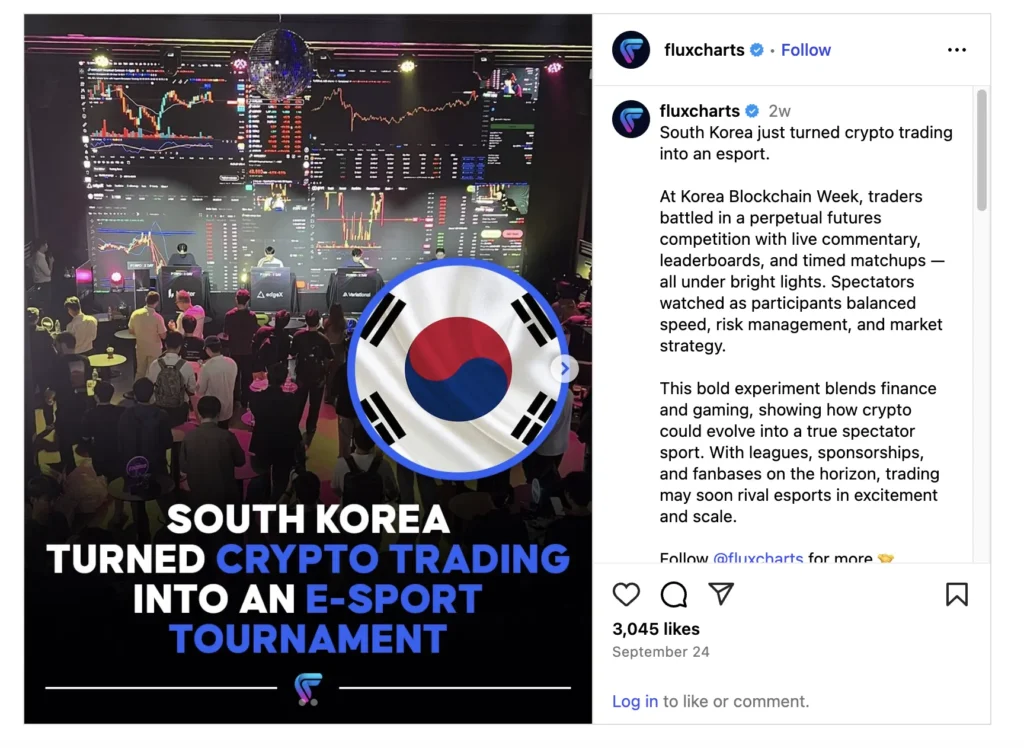
Citizen Voices
Crypto Cost Of Living: What 1 BTC Buys Here
A glimpse into the lifestyle economy — measured in sats, not cents.
Core Lifestyle Benchmark
BTC-to-Housing: The Long View
How far 1 BTC has gone over time in the housing market
Regulatory + Economic Snapshot
Insight: Authorities have increased investigations into unlicensed exchanges, frauds, and suspicious transactions. While no single hack in 2025 has dominated headlines in the way Mt. Gox or others did, smaller cases of phishing, Ponzi schemes, and mismanagement have occurred. These feed into the government’s cautious posture and the push for stricter licensing and oversight.
Risk Barometer
Crypto Adoption Timeline
-
2017
Crypto boom; Bithumb and Upbit gain traction.
-
2019
Major exchange hacks prompt tighter regulations.
-
2021
Specific Financial Information Act enforces KYC/AML.
-
2023
Busan Blockchain Zone grows.
-
2024
Virtual Asset User Protection Act strengthens oversight.
-
2025
Capital gains tax delayed; metaverse and NFT adoption surges.
Meet Your Fellow Crypto Citizens
South Korea hosts some of Asia’s top crypto gatherings, blending education, networking, and cultural flair (think K-pop vibes meets blockchain panels).
Many of the country’s biggest events take place during Korea Blockchain Week (KBW), turning Seoul into a global Web3 hub each September. Here are the main ones:
 22–28 September 2025
 Seoul
21 September 2025
Gangnam, Seoul
25 September 2025
Seoul
22 September 2025
Seoul
23–25 September 2025
Seoul
2 July 2025
Seoul
Seoul
21 September 2025
Gangnam, Seoul
25 September 2025
Seoul
22 September 2025
Seoul
23–25 September 2025
Seoul
2 July 2025
Seoul

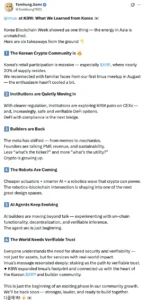
Top 5 Trends To Watch
- Cross-border crypto regulation & reporting requirements: From H2 2025, businesses handling cross-border virtual asset transactions must register and report their activity to the Bank of Korea.
- Push for won-pegged stablecoin issuance / regulatory tension: The ruling party is proposing laws to allow nonbanks to issue won-based stablecoins, while the Bank of Korea is pushing back over financial stability risks.
- Lifting of “kimchi bond” ban & foreign capital mechanisms: The government ended a 14-year ban on domestic institutions investing in kimchi bonds, foreign-currency bonds issued within South Korea, to attract overseas capital and ease FX pressure. This move supports liquidity in local markets but is unrelated to the crypto “kimchi premium”.
- Feasibility of mining using surplus electricity: An academic study published in May 1, 2025, shows that leveraging Korea’s surplus electricity for Bitcoin mining can be economically viable and could help optimize energy utilization for KEPCO.
- Strengthening of regulatory & offering oversight on crypto assets: In the next phase of legislation, Korea plans to more tightly regulate public offerings of crypto assets, white paper disclosures, and admission criteria for trading.
Neighbour Watch: What’s Happening Next Door?
🇯🇵 Japan — Legal, tightly regulated
-
Regime: Crypto is legal and regulated, with exchanges required to be licensed under Japan’s financial authorities.
-
Market & innovation: Tokyo leads with licensed exchanges, strong NFT and gaming adoption, and active stablecoin trials.
🇨🇳 China — Crypto trading banned, blockchain supported
-
Regime: Crypto trading is banned for the public, while blockchain development is actively supported at the state level.
-
Market & policy: Despite the ban, blockchain R&D continues to thrive, with Hong Kong operating as a separate, regulated crypto gateway.
🇸🇬 Singapore — Legal, regional crypto hub
-
Regime: Exchanges are regulated by the Monetary Authority of Singapore (MAS) under a clear licensing framework.
-
Market & adoption: Singapore sees growing retail and institutional adoption, positioning itself as one of Asia’s leading crypto hubs.
🇹🇼 Taiwan — Legal, cautious approach
-
Regime: Crypto is legal and treated as a virtual commodity under existing financial and consumer protection rules.
-
Market & oversight: Adoption continues under a cautious regulatory stance, with emphasis on risk management and compliance.
🇰🇵 North Korea — State-controlled, illicit-linked usage
-
Regime: Crypto activity is fully state-controlled, with no legal framework for public ownership or trading.
-
Market & risk: Usage is widely linked to reported illicit activities, with no legitimate public crypto adoption.
🇭🇰 Hong Kong — Legal, licensed crypto market
-
Regime: Licensed exchanges operate under the Securities and Futures Commission (SFC), which oversees virtual asset trading.
-
Market & positioning: Hong Kong positions itself as a regulated crypto hub with cautious openness, focusing on investor protection and stablecoin oversight.
References
- Worldometer. South Korea Population
- Stablecoin Insider. Stablecoin Usage in South Korea (2025)
- Cobak. Community Post (ID 1648797)
- Instagram. Post (DO_01skiVsE)
- World Population Review. Big Mac Index by Country
- Shuttle Delivery. Starbucks Menu (Restaurant 2743)
- IFC Review. Asia, South Korea to Delay Crypto Tax (Dec 2024)
- The Paypers. South Korea Delays Crypto Capital Gains Tax to 2027
- Digital Watch (DiploFoundation). South Korea Pauses Central Bank Digital Currency Project
- Luma. TBE Opening Party (Korea)
- Korea Blockchain Week. Official Website
- XRP Seoul. Official Website
- Luma. RWAiFi Summit (KBW)
- PiBazar. Pi Network Sign Seoul Meetup, Strategic Partnership
- Luma. Event Page
- X (Twitter). Tomhung1103 Post (ID 1975954349764247796)
- Financial Times. Article (106a1e79-0a64-4c51-b74f-ad4d4f8896f6)
- CCN. Kimchi Premium
- arXiv. Paper
- ScienceDirect. Article