


Use Cases That Matter
Where crypto hits real life in Italy:
- Daily purchases in USDT: In Italy, some merchants and online stores accept USDT and other stablecoins for everyday payments, including food delivery, digital services, and small retail. Adoption remains limited but is growing in crypto-friendly cities such as Milan, Rome, and Turin, often via crypto payment processors.
- Remittances from abroad: Crypto is increasingly used for cross-border transfers, particularly by families and workers sending money to and from Italy. Stablecoins help reduce fees and settlement times compared to traditional remittance services, especially for transfers involving Latin America, Eastern Europe, and North Africa.
- Artists selling NFTs: Italian artists, designers, and photographers are actively minting and selling NFTs on platforms like OpenSea, Foundation, and Rarible, using blockchain to reach global collectors without intermediaries.
- Freelancers paid in crypto: Italian freelancers in tech, design, and Web3 increasingly receive payments in BTC, ETH, and stablecoins through platforms such as Bitwage, Deel (crypto options), and direct wallet-to-wallet payments, particularly when working with international clients.
- Gamers earning tokens: Play-to-earn and blockchain gaming remain niche but active within Italy’s gaming and Web3 communities, with participation in ecosystems like Axie Infinity, The Sandbox, and Immutable-based games.
Citizen Voices
Real stories from Italy-based crypto users:
Marco, retired teacher
Ivan, 40, pizza restaurant owner
Gianpaolo Rossi, bar owner
Ulisse Dell’Orto, Managing Director for the Asia-Pacific region at Chainalysis and Blockchain Bible founder
- On long-term outlook: In Italy, many retail users approach crypto cautiously and increasingly view it as a long-term component of personal savings rather than a short-term trading tool. Digital assets are often treated as a future-oriented hedge alongside traditional instruments, with gradual accumulation favored over frequent speculation.
- On returns and early gains: Unlike more speculative markets, Italian retail investors tend to be less driven by expectations of rapid returns. Interest in crypto is shaped more by macroeconomic uncertainty, inflation concerns, and generational wealth preservation than by viral success stories, although bull markets still attract renewed attention, particularly among younger investors.
- On starter portfolios: Most Italian newcomers begin with small, diversified allocations focused on established assets such as Bitcoin and Ethereum, with limited exposure to major altcoins. Access is primarily through European exchanges and apps such as Binance, Coinbase, Bitpanda, and Young Platform, reflecting a preference for regulated platforms and a more conservative entry into the crypto market.
Crypto cost of living: What 1 BTC buys here
A glimpse into the lifestyle economy — measured in sats, not cents.
Core Lifestyle Benchmarks
Here’s how everyday prices in Italy translate into cryptocurrency terms, based on retail sources and Bitcoin (BTC) prices as of December 2025.
Prices reflect urban averages and vary significantly between northern cities (Milan, Bologna) and southern regions. BTC equivalents are indicative, not fixed, and fluctuate with market price volatility.
In practice, Italians using crypto for payments often rely on stablecoins or crypto-linked cards to avoid price swings.
BTC-to-Housing: The Long View
How far 1 BTC has gone over time in the housing market
Regulatory + Economic Snapshot
- European Central Bank (Italy representation): Involved in shaping Digital Euro policy.
- CONSOB: Focuses on investor protection and market transparency.
- Young Platform and Italian fintech leaders: Promote compliant crypto education and adoption.
- Academic and Web3 communities (Milan, Turin, Rome): Drive research, blockchain startups, and developer ecosystems.
- Insight: In Italy, crypto adoption is shaped less by outspoken individuals and more by institutional alignment, EU policy, and regulated infrastructure. Progress is steady rather than explosive, favoring legitimacy and long-term integration over speculative acceleration.
Risk Barometer
Gives time-sensitive readers a feel for how volatile or stable the legal landscape is.
Crypto Adoption Timeline
-
2014
Early Bitcoin meetups and merchant experiments emerge in Italy; the first local exchanges and payment processors appear.
-
2017
Global crypto bull market drives Italian retail interest; CONSOB issues initial warnings on crypto investment risks.
-
2020
Pandemic accelerates digital payments; Italian users increasingly explore crypto and DeFi as alternative financial tools.
-
2021
NFT adoption grows among Italian artists, fashion brands, and sports organizations; luxury and creative sectors experiment with blockchain.
-
2023
Italy aligns with EU-level crypto rules ahead of MiCA; tax reporting and wallet disclosure requirements gain enforcement focus.
-
2024
MiCA implementation begins across the EU, bringing regulatory clarity to exchanges, stablecoins, and custody services in Italy.
-
2025
Crypto payments and stablecoin usage expand in e-commerce, freelancing, and travel; lifestyle and utility-based adoption increases.
Meet Your Fellow Crypto Citizens
Italy’s crypto community is smaller and less flashy than in other countries like the U.S., but it is deeply rooted in local meetups, academic circles, and professional networks. Engagement happens both offline and online, with a strong emphasis on education, compliance, and real-world use cases.
- Bitcoin-focused groups organize regular meetups in cities such as Milan, Turin, Rome, and Bologna, ranging from informal discussions to technical sessions on self-custody, Lightning payments, and privacy. Turin, in particular, has become a reference point for Bitcoin-only communities.
- Ethereum and Web3 communities are closely linked to universities and innovation hubs. Active groups operate around institutions such as Politecnico di Milano, Bocconi University, Sapienza University of Rome, and Politecnico di Torino, hosting workshops, hackathons, and developer-focused events.
- Regional crypto communities are present across northern and central Italy, often multilingual and internationally oriented due to the presence of freelancers, startups, and EU-wide remote workers. Stablecoins are frequently discussed as practical tools for cross-border payments and salaries.
- On the digital side, Italian-language Telegram, Discord, and X communities act as primary coordination hubs. Channels focused on Bitcoin education, trading, DeFi, NFTs, and regulatory updates attract thousands of Italian users and serve as entry points for newcomers.
- Smaller pop-ups and cultural events also play a role. NFT exhibitions, fashion-tech showcases, and Web3 art events, often linked to Milan’s design and fashion ecosystem—help bridge crypto culture with Italy’s creative industries.
Hubs, Players, Personalities & Coworking Spaces
Milan stands out as Italy’s main crypto and fintech hub, hosting startups, investor networks, and regulated platforms. The city benefits from proximity to fashion, finance, and international business communities.
Secondary hubs such as Turin, Rome, Bologna, and Naples support active grassroots scenes, with Turin maintaining a strong Bitcoin infrastructure focus and Rome connecting policy, academia, and EU-level discussions.
- Coworking and innovation spaces: Including talent hubs, university incubators, and fintech accelerators, frequently host blockchain meetups, workshops, and demo days. While less branded than other crypto centers, these spaces play a key role in ecosystem continuity.
- Major Italian and EU players include regulated exchanges, fintech platforms, and payment providers operating under MiCA, alongside Web3 startups focused on NFTs, supply-chain tracking, and digital identity.
- Notable voices in the Italian crypto scene are often educators, developers, founders, and legal experts rather than celebrity figures. Their influence reflects Italy’s measured, compliance-first approach, where legitimacy and long-term integration matter more than hype.
Main Events in Italy
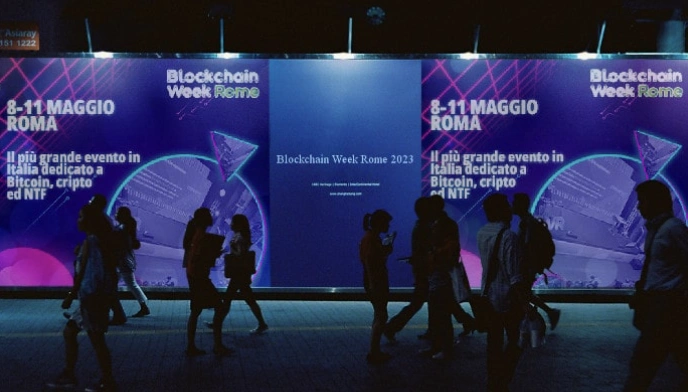
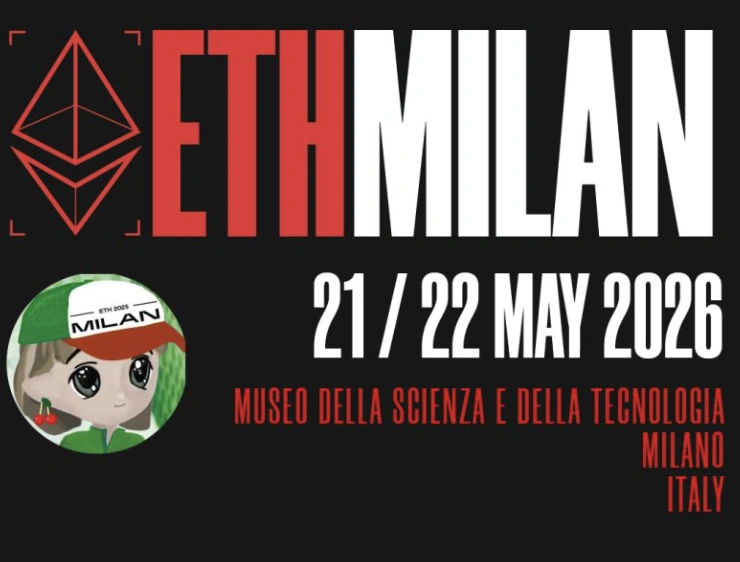
 Spring, Annual
 Rome
May 21-22, 2026
Milan
Rome
May 21-22, 2026
Milan

Top 5 Trends to Watch
1. Tokenized real estate moves from concept to experimentation
- Early-stage pilots explore blockchain-based ownership structures, with a focus on commercial and luxury real estate rather than mass residential markets.
- Projects remain small-scale and compliance-first, reflecting Italy’s cautious regulatory and legal environment.
2. NFT fashion collaborations extend brand experimentation
- Italian fashion houses and independent designers continue to test NFTs for authentication, limited digital releases, and brand storytelling.
- Most initiatives prioritize IP protection and provenance over speculative secondary-market trading.
3. Crypto P2P commerce grows quietly through stablecoins
- Stablecoins are increasingly used by Italian freelancers and remote workers dealing with international clients.
- Usage is pragmatic and transactional, rather than consumer-facing or retail-driven.
4. Stablecoin regulation reshapes market structure
- EU-wide rules under MiCA are redefining exchange operations, custody requirements, and stablecoin issuance across Italy.
- The emphasis is on disclosure, governance, and AML alignment rather than rapid product expansion.
5. Institutional interest focuses on permissioned infrastructure
- Banks, supply-chain firms, and luxury brands explore permissioned blockchain and Web3 systems rather than public, retail-facing platforms.
- Adoption is framed as infrastructure modernization, not crypto-native disruption.
Italy Crypto Legal Developments
Italy follows a centralized, EU-aligned approach rather than regional experimentation.
National and EU-Level Overview:
European Union
2023–2024 (implementation)
OAM (Organismo Agenti e Mediatori)
2022
CONSOB
Ongoing
Italian Revenue Agency (Agenzia delle Entrate)
Clarified 2023–2024
Bank of Italy
Ongoing
European Central Bank (ECB)
Preparation phase
Neighbour Watch: What’s Happening Next Door?
What crypto looks like across the border — and why it matters.
🇫🇷 France — Legal, regulated, institution-friendly
- Regime: Clear national framework reinforced by EU MiCA; early PSAN licensing professionalised exchanges and custodians
- Market & ecosystem: Paris hosts a growing Web3 scene with strong participation from banks, luxury brands, and startups
- Policy signal: Demonstrates how crypto can integrate into traditional finance under tight supervision
🇩🇪 Germany — Legal, conservative, long-term oriented
- Regime: Crypto treated as private money; favourable long-term tax treatment with capital gains often exempt after one year
- Market & adoption: Bank-led services and institutional custody licences set a benchmark for compliant crypto adoption
- Key hub: Berlin remains a major centre for developers, DAOs, and Web3 infrastructure
🇨🇭 Switzerland — Pro-crypto, innovation-first
- Regime: Clear, early regulatory clarity with strong banking access, despite being outside the EU
- Market & influence: “Crypto Valley” in Zug attracts foundations, protocol teams, and global investors
- Regional impact: Switzerland’s model influences neighbouring markets, including northern Italy
🇪🇸 Spain — Legal, retail-driven
- Regime: Regulation aligned with EU standards, with strong enforcement around advertising and consumer disclosures
- Market & adoption: Rapid retail growth, particularly among younger users
- Key hubs: Madrid and Barcelona host active Web3 and NFT communities, positioning Spain as a southern Europe adoption benchmark
References
- Boerse Stuttgart Digital. Politecnico di Milano study (Italian) (PDF)
- Unsplash. Venice, Italy, Grand Canal photo
- ISTAT. Population and Households
- World Bank. Individuals using the Internet (% of population), Italy
- ISTAT. Indicatori demografici, anno 2024
- ESMA. Markets in Crypto-Assets Regulation (MiCA)
- Gemini. Italy Leads the Way in Crypto Gender Diversity (Survey)
- Banca d’Italia. Soggetti mercato cripto-attivita (Accesso al mercato)
- Coin ATM Radar. Bitcoin ATMs in Italy
- CONSOB. Press Release (PR_20251010)
- CCN. Stablecoin Glossary
- OpenSignal. Italy Mobile Network Experience Report (November 2024)
- EUR-Lex. Regulation (EU) 2023/1114 (MiCA), Official Journal
- Kraken. Italy
- Binance Square. Post 327101
- Osservatori.net. Pagamenti digitali, come funzionano
- Reuters. Ferrari extends cryptocurrency payment system to Europe (July 24, 2024)
- Binance Pay. Merchant Stores
- Bitwage. Crypto Payroll in Italy (Bitcoin)
- Deel Help Center. How to Withdraw Money Using Digital Currency Transfer
- Fintech District. Official Website
- Politecnico di Milano Web3. Research
- Reuters. Intesa buys €1 mln of Bitcoin in first proprietary trade (Jan 14, 2025)
- CCN. What Is the Markets in Crypto-Assets (MiCA) Regulation
- Organismo AM. VASP Vademecum
- CONSOB. Press Releases
- Reuters. Italy launches in-depth review of cryptocurrency risks (Dec 4, 2025)
- EY. Italy issues 2023 budget law (Tax Alert)
- Agenzia delle Entrate. Circolare criptoattivita del 27 ottobre 2023 (PDF)
- Boerse Stuttgart Digital. Politecnico di Milano study (English) (PDF)
- X. Post by @BTCWire
- EICMA. Launches its first NFT collection
- The Offside. AC Milan launches first NFT collection for charity
- SuperRare. Curation Editorial 13858
- Luma. NFT Rome
- Rome Art Week. Events (code GVOEMP)
- Young Platform. MiCA regulatory transition for crypto services
- Conio. Official Website
- Conio. Business Case Study
- Nasdaq. In this Italian mountain town everyone knows about Bitcoin (Mar 16, 2018)
- Italtel. Blockchain Week Rome
- ETHMilan. Official Website