Using the best Ripple wallets ensures your XRP stays safe. However, with almost all wallets on the market touting their security, it can be hard to find the right fit.
In this article, we’ll look over which Ripple wallets adhere to the highest security standards. Furthermore, we’ll dive into other factors, including features, design, supported coins, and build quality, to find the best XRP wallets available.
Key Takeaways
- With crypto theft on the rise, your primary concern when choosing an XRP wallet should be security. All the features in the world won’t make up for waking up with your holdings gone.
- The best Ripple wallets need to be safe, facilitate seamless XRP transactions, support multiple chains, and enable DeFi activities.
- Cold wallets are generally the safest choice, as they keep your Ripple holdings entirely offline.
- Hot wallets, though slightly less secure, are much more convenient for trading. Because of this, we recommend using both a hot and a cold wallet, one to trade with and one to keep the majority of your portfolio in.
- Make sure to always have at least 1 XRP in your wallet. This reserve is a protocol-level requirement for keeping a wallet address active.
Top Ripple Wallets – Best Wallet Picks
Below you’ll find a short rundown of our standout picks for the best ripple wallets on the market.
Detailed Reviews of the Best Ripple Wallets
Now, let’s take a closer look at what makes each of these wallets unique and who they are best suited for.
Overview of the Best Ripple Wallets 2026
| Casino |
Welcome Bonus |
Our Rating |
|
Safepal
|
Trusted, Secure & Crypto Friendly |
4.0 |
|
Tangem
|
Receive Up to $10 in BTC when you buy and activate a Tangem Wallet. |
4.0 |
|
RockWallet
|
|
4.0 |
|
Kraken
|
Get $10 in Bitcoin when you register through a referral link from an existing member. |
4.5 |
|
Uphold
|
Trusted, Secure & Crypto Friendly |
4.0 |
|
Coinbase
|
Earn $10 in Ethereum (ETH) when you stake $100 in ETH for the first time, up to $30 in rewards |
4.5 |
|
Trezor
|
Trusted, Secure & Crypto Friendly |
3.0 |
|
Zengo
|
Earn $10 in Bitcoin by referring your friends. |
4.0 |
Disclaimer: Investing in cryptocurrencies carries significant risk. Values are highly volatile. Never invest more than you can afford to lose. This site does not provide financial advice. Act based on your own research and consult with a financial professional before making decisions. Don’t invest unless you’re prepared to lose all the money you invest.
Affiliate disclosure: This website may contain affiliate links, which means we may earn a commission if you click on a product link and make a purchase/register.
Why Trust CCN Reviews
CCN is a free platform dedicated to delivering high-quality, insightful content on the crypto market. We keep you updated with the latest trends and analysis, empowering you to make smarter trading decisions.
Every review, guide, or comparison we publish is crafted by a team of experts with years of experience in crypto trading, blockchain, and financial markets. We don’t just compile data—we test platforms, tools, and strategies ourselves to provide trustworthy, firsthand insights.
Most importantly, our content is rigorously fact-checked and unbiased. Our goal isn’t to sway your decisions but to equip you with reliable knowledge. Whether you’re learning how to buy Bitcoin or comparing best crypto wallets, you can count on CCN for accurate, transparent information.

How We Determine the Best Ripple Wallets
To find the best ripple wallet, we needed a way to objectively measure each wallet’s merits and compare them to the rest of the field. To do this, we came up with a set of objective criteria, covering all the most important aspects of an XRP wallet:
- Security Architecture
- Open-source Transparency
- Usability & User Experience
- Backup, Recovery & Migration
- Supported Coins & Chains
- Transaction Functionality
- Firmware & Longevity
- Reputation
- Price Value
Security Architecture
In almost all cases, your number one priority when choosing a Ripple wallet should be security. No matter a wallet’s other features, if its security isn’t up to par, it won’t earn a spot on this list.
It’s worth noting that generally, cold wallets (those that don’t connect to the internet) are safer than hot wallets (those that do connect to the internet).
When looking at cold wallets, the first thing we want to check is whether there is a Secure Element (SE). SE chips are tamper-resistant and protect your private key from malicious actors, ensuring it never interacts with the internet.
Looking at the chips, we want to see CC EAL5+ or EAL6+ certifications. These certificates prove that the chip has been thoroughly penetration-tested and won’t succumb to a brute-force attack.
Since crypto theft can occur in transit, we look for Ripple wallets that use tamper-evident seals and allow you to authenticate that your wallet wasn’t tampered with during delivery.
On the account side, we want to see optional protection measures like biometric logins or additional passphrases. Setting these up puts another layer of security between you and a would-be attacker. Here, peripheral features like decoy PIN codes are a great bonus.
Next, we examine the wallet’s air gap. Features like NFC, microSD, or QR code support all increase a wallet’s potential attack surface. We review each one and ensure they’re implemented so that, even if they’re attacked, your funds remain isolated.
We also don’t want to ignore the importance of high-quality construction. Your wallet should be able to take a substantial fall, endure weather, and other physical damage. Similarly, we want to ensure the wallet’s construction is protected against side-channel attacks and other forms of electrical interference.
Open-source Transparency
An open-source, transparent wallet is trustworthy. For some brands, this just means open-source code, while for others it’s a whole philosophy. Some brands open-source almost all of their firmware, hardware schemas, and even companion apps.
Similarly, we look for reproducible build verification. The community should be able to verify the firmware hash to ensure safety. However, some wallets are built on innovative, proprietary technologies that give them a competitive advantage.
In these cases, we look at the open-source components and expect to see routine independent audits of the closed-source components of the wallet.
For the audits themselves, we value them based on the auditor’s reputation, favoring those with public audit reports.
Usability & User Experience
No matter if you’re completely new to Web3 or an industry veteran, the best XRP wallet should provide you with a smooth user experience. This means being able to cater to new users on first launch, while offering enough customization for experienced users.
For beginners, setting up a Ripple wallet is usually the hardest part. Because of this, we focused on wallets with clear onboarding, easy device pairing, and quick seed generation. For hardware wallets, this also means avoiding unwieldiness by adopting appropriately-sized screens with high visibility.
Given that most of the best Ripple wallets use a companion app for convenience, we evaluated its impact on the overall UX. We paid attention to the frequency of firmware updates, the intuitiveness of the app, and the extent of customization for transaction signing.
Lastly, we looked at the wallets’ recovery options and error resolution. Even the best Ripple wallets will face issues at some point, and it’s important to have a smooth resolution process to mitigate their impact.
Backup, Recovery & Migration
No matter how careful you are, something unexpected will happen at some point. Maybe you’ll lose your password, your seed phrase, or your wallet itself may be damaged.
When these happen, you want your wallet to have the best recovery and backup options available. For example, cloud backups let you restore your wallet even if it gets damaged. Meanwhile, MPC technologies help ensure you don’t lose your seed phrase.
If, instead, you decide to switch to another wallet, you’ll want to use a wallet equipped with cross-compatibility features and multiple supported seed formats.
Finally, we looked at recovery processes. Here, we focused on identifying Ripple wallets that strike the right balance between ease of recovery and robust security checks to protect against fraud.
Supported Coins & Chains
Even if you’ll mainly be using your crypto wallet to store Ripple, you’re likely to become interested in another token or DeFi project eventually. When this happens, you don’t want to switch wallets; making a wallet that supports many different tokens is the ideal choice.
For more active traders/investors, support for many tokens makes shifting your portfolio in response to market movements far easier. Similarly, we considered the frequency with which the wallet adds support for new tokens, making it easier to jump in on a promising token before the rest of the market.
While Ripple doesn’t support native staking, we valued wallets’ native support for wrapped yield-generating options like XBRP and cbXRP. If the wallet offers NFT and DeFi support on top of this, you can further streamline your Web3 experience.
If you plan to use multiple wallets (which we recommend if you’re an active trader), integration with 3rd-party wallets can be especially useful. If your cold wallet can integrate directly with a hot wallet, you can retain the trading convenience of a hot wallet with the cold wallet’s security.
Transaction Functionality
Of course, all the wallets on this list fully support the XRP ledger, including sending and receiving XRP. Beyond that, we looked for features that improve security or convenience in the wallet’s transaction processing.
For example, multi-signature support is crucial for maximizing your security. This requires every transaction to be signed off on by multiple devices.
Similarly, features like QR code signing and other offline signing methods are a great way to add some extra convenience.
For XRP enthusiasts who also deal with Bitcoin, Segregated Witness (SegWit) compatibility allows you to reduce your fees when transacting in BTC. Taproot, Miniscript, and Partially Signed Bitcoin Transactions (PSBTs) all take a different approach to improve your security.
If you also use Ethereum, features like EIP-1559 support help you estimate ETH fees with greater accuracy.
Generally speaking, the more transaction types you support, the more convenient, safe, and cost-effective your experience will be.
Firmware & Longevity
The best Ripple wallet should work from the day it arrives at your doorstep until your children are well into their retirement. Because of this, we look for wallets that release regular firmware updates to stay on top of emerging threats. On top of this, hardware wallets need to be sturdy enough to withstand the wear and tear of regular usage.
In cold wallets, we also look for ways to update without connecting the wallet to the internet. Usually, this is done via microSD or QR code.
Lastly, we look into each wallet manufacturer and inspect how dedicated they are to supporting their wallets throughout their lifetimes.
Reputation
Technical information about construction and code isn’t everything. A manufacturer’s reputation can be just as important. For example, if a manufacturer has a past riddled with security problems or unresponsiveness to bug reports, it’s hard to consider them a serious contender for the best.
In this list, we focused on wallets created by transparent manufacturers with a public-facing team and active community involvement. We looked at social media like Reddit and Discord, as well as communities on GitHub, BitcoinTalk, and more.
This way, we ensure that the manufacturers on this list promptly respond to feedback, bug reports, and any other issues.
Price Value
When deciding a wallet’s price, we considered its price relative to its quality, as well as its price flexibility with optional add-ons.
For budget options, we looked for those where the lower price tag doesn’t mean compromising on security. For higher-priced options, we wanted to see a plethora of additional features and well-built firmware to justify the price point.
We also prioritized wallets that have optional accessories that could significantly improve your experience. This means higher-quality casing, optional touch displays, seed cards, and the like.
Conclusion – Finding the Right Ripple Wallet
To find the best Ripple wallet for you, you’ll want to compare every wallet on this list to your needs and budget.
Notably, if you’re planning to trade Ripple, we recommend using a combination of a hot and cold wallet that have native integration with each other. This way, you get the trading speed and convenience of a hot wallet with the security benefits of a cold wallet.
For newcomers to crypto, we also recommend exploring your wallet’s recovery options. You want to be prepared just in case something happens.
No matter your needs and budget, this list of the best Ripple wallets out there has the right wallet for you.
Frequently Asked Questions
Yes. Trezor is one of the best XRP wallets out there. With native support on the Trezor Suite app and robust security, Trezor is a great choice if you’re looking for a cold wallet to HODL XRP.
Yes. To keep a ripple wallet address active, you must hold at least 1 XRP in your wallet at all times.
Yes. You can use MetaMask to hold your XRP. You’ll first need to add the XRP Ledger to MetaMask via XRPL Snap.
Yes. Ripple wallets are generally safe when you choose reputable providers and follow good security practices. Hardware wallets offer the highest level of protection because they store XRP offline, reducing hacking risks. Software wallets are also secure if downloaded from official sources and protected with strong passwords, biometric login, and two-factor authentication where available. Always back up your recovery phrase securely and never share your private keys.
The best wallet for storing Ripple depends on your needs and how you plan to use your crypto. If security is your top priority, hardware wallets like Ledger Nano X and Trezor Safe 5 are excellent choices because they keep your private keys offline. For everyday convenience and quick access, software wallets provide user-friendly mobile interfaces with XRP support. When choosing an XRP wallet, consider security features, backup options, ease of use, and whether the wallet supports staking or other XRP ecosystem tools.
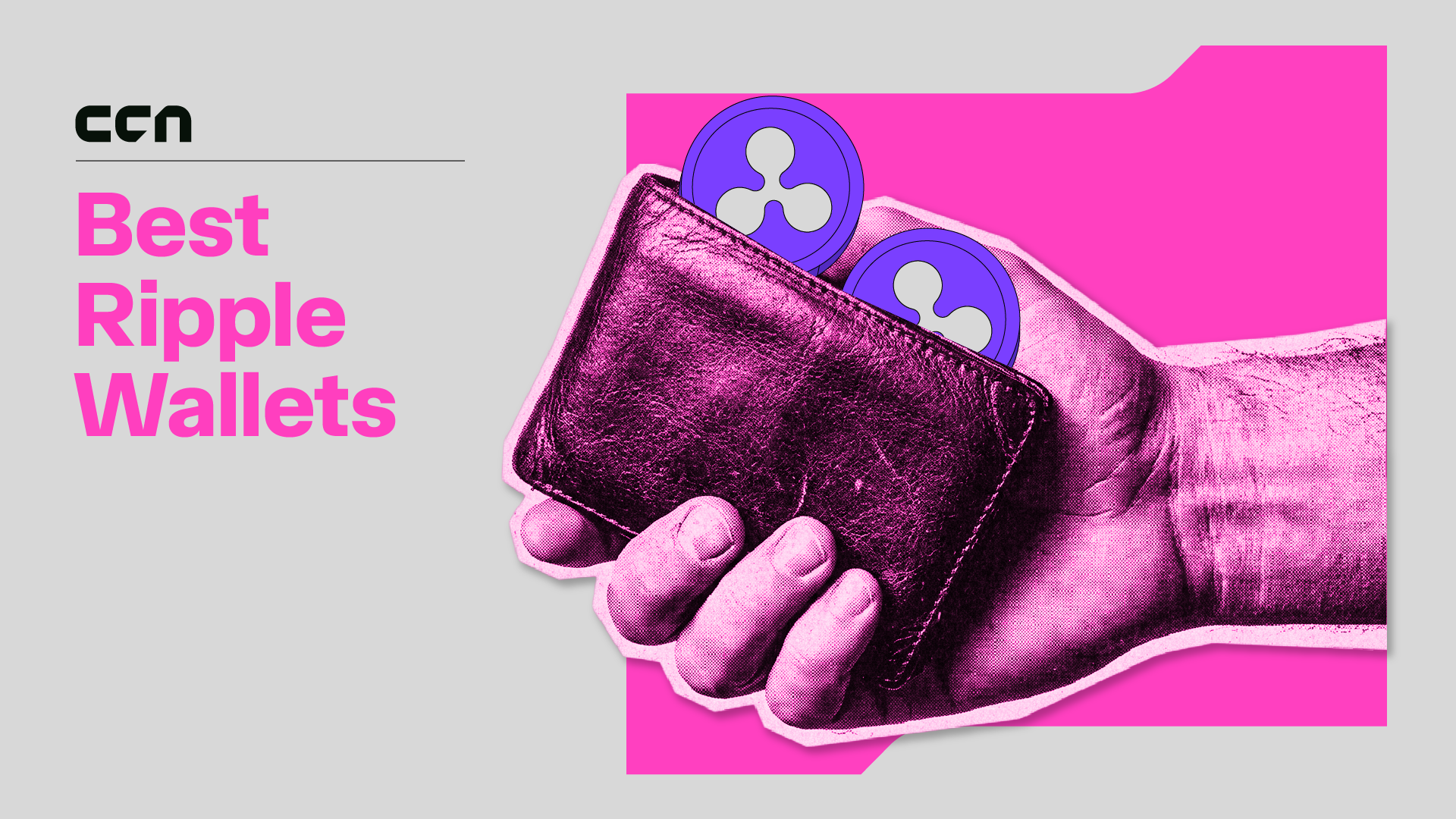
Rundown of the Best Ripple Wallets 2026
-
Safepal
-
Tangem
-
RockWallet
-
Kraken
-
Uphold
-
Coinbase
-
Trezor
-
Zengo

Ilija is a CCN writer with 7 years of experience covering all things crypto. Ever since a fateful run-in with Litecoin in 2013, he's been an avid investor and writer in the space. When he's not maniacally hacking away at his keyboard, Ilija spends his time either hiking in nature or holed up in his apartment gaming.