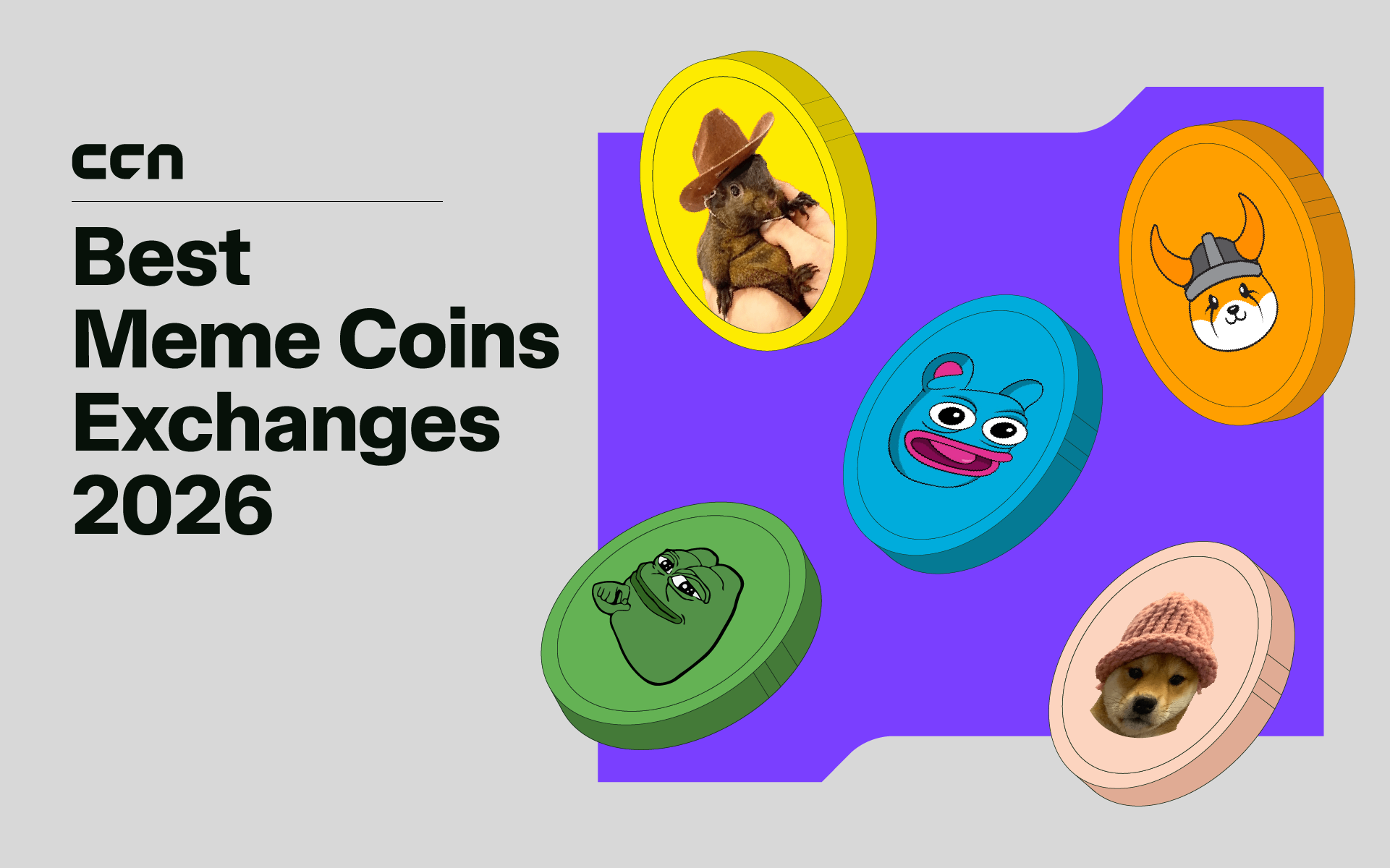
The best meme coin exchanges need to do more than offer you a place to buy meme coins when they go viral. They need to blend high meme coin availability with listing speed, security, small-cap liquidity, and more.
We’ve tested the top meme coin exchanges on the market across the Solana, BSC, Ethereum, Base, and MemeCore blockchains. Our team set benchmarks for each exchange on objective metrics, comparing them head-to-head to help you find the best meme coin exchange for you.
In this guide, we’ll be going over the results of these tests, what you should look at when choosing an exchange, and what kind of exchange infrastructure you should choose depending on your needs.
Key Takeaways:
Trading established meme coins like DOGE and PEPE
Most meme coins experience their biggest pumps right after launch. Decentralized exchanges and Telegram bots are your best bet for catching a token early.
To be successful trading meme coins, you need to shield yourself against rug pulls, honeypots, and MEV bots running rampant in the space.
Telegram bots allow you to “snipe” tokens as soon as they launch, ensuring you can capitalize on any short-term pumps.
While centralized exchanges are slow to list new tokens, their high liquidity makes them a great choice for trading established meme coins.
Best Meme Coin Exchanges in 2026
Filters
Crypto accepted
Disclosure
We sometimes use affiliate links in our content, when clicking on those we might receive a commission at no extra cost to you. By using this website you agree to our terms and conditions and privacy policy.
Established in 2011, Kraken is a trusted cryptocurrency exchange renowned for its longevity and diverse trading interfaces, catering to a broad user base.
Promotions
Get $10 In Bitcoin When You Register Through A Referral Link From An Existing Member.
ChangeNow is one of the best hybrid crypto exchanges out there. While offering crypto custodial services, users also enjoy some other decentralized exchange features, like dApps integration. Here, you can swap, buy, sell, and enjoy others services like Now payments, Now Nodes, a white label wallet that allows you launch your own non-custodial wallet, a telegram bot, a widget, a tracker, and a native token. It's centralized nature comes in the fact that you can buy and sell crypto with lots of fiat payment methods and currencies, so it is a full package.
Promotions
Unlock 1,500+ Cryptocurrencies And Seamless Instant Swaps In The All-in-one Crypto Super App ChangeNOW
Fees (Maker/Taker)
$0 Per Month, $15 Per Month, $100 Per Month
Products
Trade, Spot Trading, OTC Trading+7
Trade
spot trading
OTC trading
peer to peer
day trading
Earn/stake
pay
loans
NFTs
wallet
Cryptocurrencies
Bitcoin, Ethereum, Tether+219
Bitcoin
Ethereum
Tether
Build'N'Build
USD Coin
Solana
Ripple
Dogecoin
Cardano
Toncoin
Shiba Inu
Avalanche
TRON
Chainlink
Polkadot
Polygon Matic
Wrapped Bitcoin
Litecoin
Dai
NEAR Protocol
Bitcoin Cash
Monero
Stellar
Cosmos
Filecoin
Ethereum Classic
Aptos
Hedera Hashgraph
Immutable
Optimism
Arbitrum
VeChain
The Sandbox
Decentraland
Axie Infinity
Injective Protocol
Render Token
The Graph
Maker
Aave
Chiliz
Helium
PAX Gold
Compound
Lido DAO Token
THORChain
Stacks
Arweave
Sui
Conflux Network
Lido Staked ETH
Bitget Token
Wrapped Ethereum
OKB
Uniswap
Pepe
Ondo
Mantle
First Digital USD
Bittensor
Kaspa
Celestia
XDC Network
Artificial Superintelligence Alliance
Jupiter
Quant
Worldcoin
PayPal USD
Bonk
Flare
Tether Gold
Sei
JITO
JasmyCoin
PancakeSwap
Core
Floki Inu
Ethereum Name Service
SushiSwap
Kava.io
1inch Network
Tezos
Algorand
Flow
Trust Wallet Token
Curve DAO Token
KuCoin Token
MultiversX
Gitcoin
Zcash
IOTA
Basic Attention Token
Frax
Ethena
Ethena USDe
Fasttoken
Pi Network
SATS
Adventure Gold
Audius
Alchemy Pay
Arkham
API3
Bounce Token
Altlayer
Aergo
Amp
Aevo
ARPA Chain
Astar
Ark
Ankr
AirSwap
Alpaca Finance
Blur
Badger DAO
Bancor
BakeryToken
Biconomy
Chromia
Celer Network
Celo
Shentu
Civic
Convex Finance
Cartesi
Cyber
COTI
DigiByte
DIA
ether.fi
FUNToken
FLUX
Firo
Ampleforth
Golem
GMX
Gnosis
Moonbeam
Holo
IoTex
ICON
Illuvium
JUST
Kadena
Liquity
Livepeer
Lisk
Memecoin
Manta Network
Treasure
Mask Network
MetisDAO
Origin Protocol
ORDI
Ontology
Osmosis
Powerledger
Phala Network
Pendle
Portal
Pyth Network
ConstitutionDAO
Polkastarter
Quickswap Old
Qtum
iExec RLC
Rocket Pool
Reserve Rights
Ronin
Ravencoin
Starknet
Storj
Status
Spell Token
Sun (New)
SuperVerse
Toko Token
Theta Fuel
Tellor
Tensor
LayerZero
Usual
Eigenlayer
Hamster Kombat
Neiro - First Neiro on Ethereum
Catizen
Berachain
KAITO
Pudgy Penguins
Solayer
Bio Protocol
ChainGPT
Cookie DAO
Solv Protocol
Alchemix
Bitcoin SV
Movement
DeXe
Binance Staked SOL
Nexo
Wrapped eETH
Hyperliquid
Casper
Zilliqa
Secret
Nervos Network
TrueUSD
BitTorrent
Mina
Dash
STEPN
Gemini Dollar
UNUS SED LEO
Synthetix
APEcoin
Gala
Theta Network
Fantom
Cronos
Internet Computer
Binance USD
Payment Methods
Bank Transfer, Bank Wire Transfer, SEPA (Single Euro Payments Area)+230
Bank transfer
Bank Wire Transfer
SEPA (Single Euro Payments Area)
ACH (Automated Clearing House)
Visa
MasterCard
Apple Pay
Google Pay
PIX
FPS (Faster Payments Service)
Revolut
Bitcoin
Ethereum
Tether
Build'N'Build
USD Coin
Solana
XRP
Dogecoin
Cardano
Toncoin
Shiba Inu
Avalanche
TRON
Chainlink
Polygon
Polkadot
Wrapped Bitcoin
Litecoin
Dai
NEAR Protocol
Bitcoin Cash
Monero
Stellar
Cosmos
Filecoin
Ethereum Classic
Aptos
Hedera Hashgraph
Immutable
Optimism
Arbitrum
VeChain
The Sandbox
Decentraland
Axie Infinity
Injective Protocol
Render Token
The Graph
Maker
Aave
Chiliz
Helium
PAX Gold
Compound
Lido DAO Token
THORChain
Stacks
Arweave
Sui
Conflux Network
Lido Staked ETH
Bitget Token
Wrapped Ethereum
OKB
Uniswap
Pepe
Ondo
Mantle
First Digital USD
Bittensor
Kaspa
Celestia
XDC Network
Artificial Superintelligence Alliance
Jupiter
Quant
Worldcoin
PayPal USD
Bonk
Flare
Tether Gold
Sei
JITO
JasmyCoin
PancakeSwap
Core
FLOKI
Ethereum Name Service
SushiSwap
Kava.io
1inch Network
Tezos
Algorand
Flow
Trust Wallet Token
Curve DAO Token
KuCoin Token
MultiversX
GateToken
Zcash
IOTA
Basic Attention Token
Frax
Ethena
Ethena USDe
Fasttoken
Pi Network
SATS
Adventure Gold
Audius
Alchemy Pay
Arkham
API3
Bounce Token
Altlayer
Aergo
Amp
Aevo
ARPA Chain
Astar
Ark
Ankr
AirSwap
Alpaca Finance
Blur
Badger DAO
Bancor
BakeryToken
Biconomy
Chromia
Celer Network
Celo
Shentu
Civic
Convex Finance
Cartesi
Cyber
COTI
DigiByte
DIA
ether.fi
FUNToken
FLUX
Firo
Ampleforth
Golem
GMX
Gnosis
Gitcoin
Moonbeam
Holo
IoTex
ICON
Illuvium
JUST
Kadena
Liquity
Livepeer
Lisk
Memecoin
Manta Network
Treasure
Mask Network
Metis
Origin Protocol
ORDI
Ontology
Osmosis
Powerledger
Phala Network
Pendle
Portal
Pyth Network
ConstitutionDAO
Polkastarter
Qtum
iExec RLC
Rocket Pool
Reserve Rights
Ronin
Ravencoin
Starknet
Storj
Status
Spell Token
SUN
SuperVerse
Toko Token
Theta Fuel
Tellor
Tensor
LayerZero
Usual
Eigenlayer
Hamster Kombat
Neiro - First Neiro On Ethereum
Catizen
Berachain
KAITO
Pudgy Penguins
Solayer
Bio Protocol
ChainGPT
Cookie DAO
Solv Protocol
Alchemix
Bitcoin SV
Movement
DeXe
Binance Staked SOL
Nexo
Wrapped eETH
Hyperliquid
Casper
Zilliqa
Secret
TrueUSD
BitTorrent
Mina
Dash
STEPN
Gemini Dollar
UNUS SED LEO
Synthetix
APEcoin
Gala
Theta Network
Fantom
Cronos
Internet Computer
Binance USD
QuickSwap (Old)
Languages
Azerbaijani, Catalan, Czech+55
Azerbaijani
Catalan
Czech
Danish
German
Estonian
English
Spanish
French
Hausa
Croatian
Indonesian
Italian
Swahili
Latvian
Lithuanian
Hungarian
Malay
Dutch
Norwegian
Uzbek
Filipino
Polish
Portuguese
Portuguese (Brazil)
Romanian
Slovenian
Slovak
Serbian
Finnish
Swedish
Vietnamese
Turkish
Zulu
Greek
Bulgarian
Kazakh
Russian
Tajik
Ukrainian
Georgian
Armenian
Hebrew
Urdu
Arabic
Farsi
Amharic
Hindi
Bengali
Sinhala
Thai
Lao
Burmese
Khmer
Korean
Japanese
Chinese (Simplified)
Chinese (Traditional)
Licenses
N/A
Security
256-Bit SSL Encryption, 2FA Google Authenticator, 2FA Authy
Zoomex Crypto Exchange, launched in the United States in 2019, is a dynamic platform offering a diverse range of cryptocurrency trading pairs and innovative financial services.
Promotions
Claim Up To $14,000 In Exclusive Rewards By Completing Various Tasks.
Fees (Maker/Taker)
Inverse Contract Fee, USDT Contract Fee, Deposit And Withdrawal Fees+1
Disclaimer: Investing in cryptocurrencies carries significant risk. Values are highly volatile. Never invest more than you can afford to lose. This site does not provide financial advice. Act based on your own research and consult with a financial professional before making decisions. Don’t invest unless you’re prepared to lose all the money you invest.
Affiliate disclosure: This website may contain affiliate links, which means we may earn a commission if you click on a product link and make a purchase/register.
Why Trust Us?
At CCN, transparency, research, and due diligence are our core tenets. We ensure each article is thoroughly vetted and fact-checked to bring you analyses you can trust.
Each of the hundreds of reviews on our site has been researched, written, and edited by a team of seasoned veterans in the Web3 space, with more than 50 years of cumulative experience. We’ve covered everything from the best meme coin exchanges to approaches on minimizing emotional trading for veterans.
All of our reviews are backed by thorough internal testing, rather than relying entirely on 3rd-party data. We do this to ensure you and our community of 1M+ monthly readers can trust us to show you the good, bad, and ugly of all things crypto.
How to Choose an Exchange for Meme Coins
To find the best meme coin exchange for you, you’ll need to decide which aspects of an exchange are most important to your needs. Let’s take a look at some of the factors you should evaluate.
Listing Speed for New Tokens
Most meme coins experience their biggest pump during the first few days, hours, or even minutes that they’re out. This gives traders who get in earliest a distinct advantage, allowing them to capitalize on the token’s full gains.
Because of this, the best meme coin exchange needs to list upcoming promising meme coins quickly. Even many of the best day-trading exchanges fall short of the required listing windows.
While this is less relevant if you’re looking to invest in pre-established meme coins, if you’re sniping tokens early in their life cycle, your exchange’s listing speed should be high on your priority list.
Chain Coverage (Solana, BSC, Ethereum, Base)
Meme coin activity spans multiple blockchains. If you’re interested in getting the highest meme coin coverage, you’ll need Solana.
Meanwhile, many of the biggest established meme coins, like PEPE and SHIB, are on Ethereum, while chains like Binance Smart Chain (BSC) and Base host many viral tokens. MemeCore, a L1 designed for meme coins from the ground up, is also gaining popularity in the space.
If you’re looking to introduce a wide variety of meme coins to your portfolio, you’ll need an exchange that operates natively across these chains or provides sufficient aggregation to access them through a single interface.
DEX vs CEX Trade-offs
Centralized exchanges (CEX) and decentralized exchanges (DEX) each have their own benefits and drawbacks for meme coin enthusiasts.
For beginners, centralized exchanges are easier to use, whilst having deep liquidity for established traders and offering more advanced trading features.
Decentralized exchanges, on the other hand, let you keep custody of your tokens, tend to support more meme coins, and have higher listing speeds on average.
Which one of these you’ll use will vary depending on your experience, risk tolerance, and trading style. Keep in mind that you’re not locked into one exchange, so you can use both a CEX and a DEX to fulfill different needs.
Liquidity on Small Caps
Most meme coins are low-cap tokens that are often plagued by low liquidity. In a low-liquidity market, you’ll experience higher spread slippage and may struggle to exit your position.
Because of this, low-cap traders are best off going with an exchange that maximizes liquidity in these markets. This can either mean simply having deep liquidity on the exchange, such as on top CEXs, or employing sophisticated aggregation algorithms to route multiple sources of liquidity to your trade.
Anti-Rug Protection / Honeypot Detection
The meme coin market is rife with rug pulls, honeypots, and other scams. Weeding these out manually through experience and research is possible, but it can take a prohibitively long time in these volatile markets.
Top meme coin exchanges have mechanisms to address this. For CEXs, this usually means an internal review process before a token is ever allowed onto the exchange.
The best decentralized exchanges, on the other hand, use automated smart contract scanners to delve into the token’s code and discover any malicious activity.
If you’re using a DEX, make sure you verify the token’s contract before placing a trade.
Fees & Slippage Controls
Your exchange and the blockchain itself each charge a fee per transaction. Slippage can similarly eat into your profits, especially in low-liquidity markets. The more trades you make, the more you’ll be losing to these fees.
Both slippage and blockchain fees are variable, depending on network congestion, liquidity, and other factors.
If you’re looking to trade frequently, you’ll want to choose an exchange that lets you set tolerance levels for slippage and blockchain fees. This way, you can push through important trades at a cost, or let less time-sensitive trades ride it out until fees and slippage go down.
MEV Protection
Maximal Extractable Value (MEV) bots are extremely common on decentralized exchanges. They reap profits for their owners by front-running your trades to sell into them for a profit. This, in turn, causes you to pay more for your trades than you otherwise should.
To combat this, many DEXs use measures like mempool shielding, batch auctions, and private transactions. If you’re looking to trade without a MEV bot, it’s worthwhile choosing a DEX with these anti-MEV features, or using a centralized exchange that is immune to these bots.
CEX vs DEX for Meme Coin Trading
Most of the best crypto exchanges on the market are centralized exchanges (CEX). The convenience, token vetting, and advanced trading features of CEXs keep them relevant in the meme coin market.
That said, there’s a strong case for decentralized exchanges (DEXs). These exchanges, albeit slightly harder to use, are a trader’s best bet for getting into a new meme coin as soon as it launches.
Let’s take a look at when to use each of these and what the recent advent of Telegram sniping bots brings to the table.
When to Use a DEX
You should use a DEX if you’re interested in jumping into new projects early in their lifecycle. Top meme coin DEXs like Uniswap v2 list most tokens as soon as they launch, letting you get in before the rest of the market. Centralized exchanges, meanwhile, usually take weeks to list a new project, and may not even list a meme coin unless it goes viral.
By getting in early, you can capture a meme coin’s earliest pumps. For most meme coins, upward momentum only lasts a few hours to a few days, giving DEX investors a significant edge.
When to Use a CEX
While CEXs take a little longer to list new tokens, they offer a host of benefits. If you’re just starting out, the best exchanges for beginners are all CEXs, due to their significantly lower technical complexity.
For more serious traders, CEXs generally offer deeper liquidity pools for top meme coins. This reduces slippage and makes it easier to execute large trades. On top of this, CEXs offer a wide range of fiat on- and off-ramp options, making cashing out a breeze.
Telegram Bots as a Third Option
Telegram trading bots are a relatively new participant in the space. In essence, these bots, such as Maestro and Banana Gun, allow you to snipe token launches, execute orders automatically based on preconfigured parameters, and place trades quicker than a human can.
These bots can be incredibly useful in frontrunning MEV bots and accessing new launches directly before the rest of the market. However, you need to ensure the bot is trustworthy, as it’ll have access to your wallet during use. Only use vetted bots with a good reputation and a history of audits.
Frequently Asked Questions
Where can I buy meme coins?
The best place to buy meme coins is a reputable crypto exchange. There’s no single answer to this, as it depends on the tokens you’re interested in and your specific trading needs.
If you’re looking for the best place to trade meme coins as soon as they launch, a DEX like Uniswap v2 may be your best bet. Alternatively, if you’re more interested in established tokens and appreciate a low-fee, high-convenience environment, a CEX like MEXC will be a better fit.
What's the best chain for meme coin trading?
Solana is by far the most popular chain for meme coin trading and development, followed by chains like BNB and Ethereum. Solana comes out on top due to its low network fees (often under $0.01) and quick resolution times.
MemeCore is another notable chain, launched in February of 2025; it’s a layer 1 blockchain designed from the ground up for meme coins. It has been gaining popularity quickly since, with its native token running right behind DOGE as the world’s 2nd-largest meme coin.
Should I use a DEX or CEX for meme coins?
Both are viable options, coming with their own perks and drawbacks. Centralized exchanges are generally easier for beginners, streamline fiat on- and off-ramping, and are usually the superior choice for mainstream meme coins.
Decentralized exchanges, on the other hand, tend to list tokens more quickly and offer greater variety. In a market where tokens pump early, this is an invaluable asset. However, it comes with an increased risk of falling for malicious smart contracts and scams.
How fast do CEXs list trending meme coins?
It depends, as each exchange has its own listing parameters and schedule. For example, an exchange like Binance may take weeks, or even months, to list a token after it has gone viral.
More specialized exchanges like MEXC typically take only one or two days. This can be extremely impactful, as most meme coins make their biggest moves early in their lifecycle. Because of this, m
What is a honeypot and how do I avoid one?
A honeypot is a malicious smart contract that allows tokens to be bought but blocks sales. It’s difficult to manually detect one, as you’d have to read through the smart contract itself.
Thankfully, most of the top meme coin exchanges feature built-in honeypot scans and protection. If you’re trading on a DEX outside of this list, you may consider using a scanning tool that analyzes smart contracts to ensure the project is legitimate.
Are meme coin trades subject to MEV?
Yes, Maximal Extractable Value (MEV) bots will often target meme coin trades. This is especially true for large buy orders on low-liquidity tokens, which are extremely susceptible to sandwich attacks.
The way this works is that the bot will front-run your trade, moving the price against you, and then sell to you to turn a profit.
Thankfully, you can minimize your exposure to MEV bots by using meme-coin exchanges that offer private transaction routing or mempool shielding. Alternatively, you can set low slippage tolerances for your trades, though this increases the risk of a transaction failing.
Looking for Meme Coins? Here Are the Best Exchanges in 2026.
Ilija is a CCN writer with 7 years of experience covering all things crypto. Ever since a fateful run-in with Litecoin in 2013, he's been an avid investor and writer in the space. When he's not maniacally hacking away at his keyboard, Ilija spends his time either hiking in nature or holed up in his apartment gaming.